Baby Accessories Beyond Clothes: Brand Guide
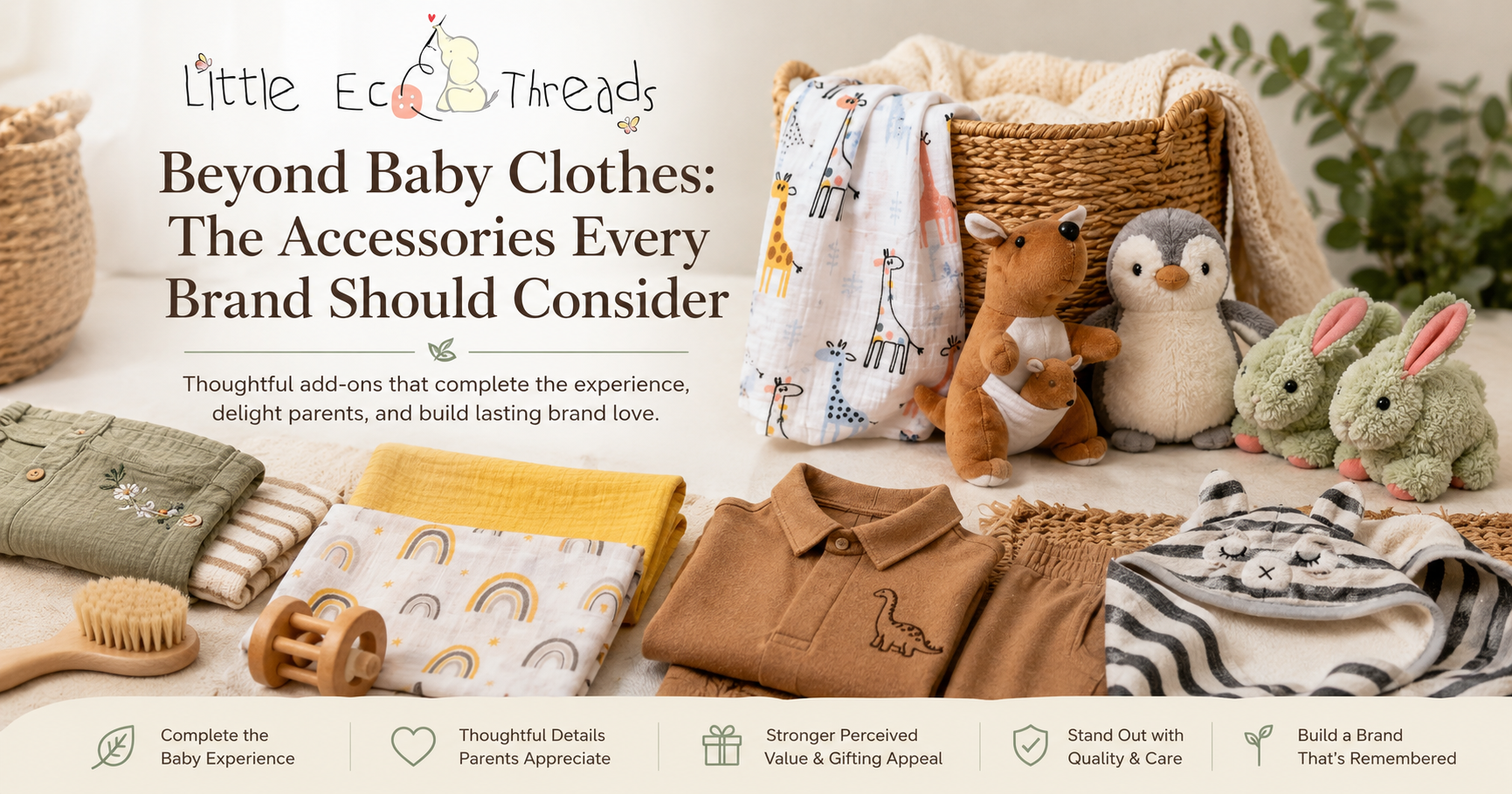
Baby Accessories are no longer minor add-ons for growing baby brands. A customer may start with an organic cotton romper, then add a matching bib, burp cloth, swaddle, baby quilt, soft toy, or gift set before checkout. One clothing purchase can become a complete baby collection when the product range is planned well.
For baby and children's brands, accessories can increase average order value, strengthen brand identity, create gifting opportunities, and keep customers returning between clothing size changes.
The key is not to add every product at once. The strongest accessory ranges are built around useful categories, consistent fabrics, safe construction, and a clear merchandising strategy.
Why Baby Accessories Are No Longer Optional
Parents today are not only buying a romper or sleepsuit. They are buying practical newborn products, nursery textiles, gifts, and daily-use items from brands they trust.
A brand that sells only clothing may still build a strong first purchase, but a brand that also offers sustainable baby accessories can support more of the customer's real routine.
Accessories help brands:
- Increase basket size through natural add-ons
- Build coordinated collections around the same print or fabric
- Create baby shower and newborn gifting products
- Extend customer relationships beyond clothing sizes
- Improve merchandising for online stores and boutiques
- Support private label or wholesale collections with stronger perceived value
This matters because babies outgrow clothes quickly. Accessories such as quilts, swaddles, soft toys, play mats, and gift sets can stay in use, in photos, and in memory for longer.
Baby Product Accessories Brands Should Consider
Not every brand needs every accessory category. The right mix depends on audience, price point, sales channel, season, and production budget.
A practical starting point is to choose one or two products that naturally match your existing clothing range, then expand once the brand understands demand.
Baby Bibs
Bibs are one of the easiest accessories to introduce because they can reuse the same fabrics, colors, and print logic as a brand's apparel.
Baby Bibs work well as individual products, multipacks, and gift-set components. They are practical, easy to photograph, and useful across a longer stage of baby development than many newborn garments.
From a manufacturing point of view, fabric softness, absorbency, snap strength, shape retention, and wash durability matter. A bib that looks good but curls, fades, or feels rough after washing will hurt the customer's impression of the whole brand.
Burp Clothes
Burp Clothes are simple, useful, and easy to pair with bibs. They are often bought in multiples, which makes them valuable for both online bundles and retail displays.
For a brand, burp cloths are a low-complexity way to repeat a print or colorway across the accessory range. They also keep the collection practical instead of purely decorative.
The most important manufacturing details are absorbency, fabric hand feel, stitching durability, and colorfastness through repeated washing.
Swaddles
Swaddles are one of the strongest newborn accessory categories because they are useful, giftable, and visually powerful.
Large swaddle panels give brands more room to show print quality. A coordinated swaddle can anchor a newborn collection, match a romper, or become the core piece in a baby gift set.
Muslin and soft cotton fabrics are common choices because they feel lightweight, breathable, and suitable for everyday use. Brands should still confirm fabric performance before production, especially shrinkage, wash behavior, and hand feel.
Baby Quilts
Baby Quilts sit at the premium end of the accessory range. They are often gifted, displayed in nurseries, and kept longer than everyday clothing.
Baby Quilts can support higher perceived value because they allow more detail: quilting, patchwork, applique, embroidery, print placement, and coordinated backing fabrics.
They also require more careful manufacturing. Multi-layer construction, padding, edge finishing, stitching alignment, and final pressing all affect whether the quilt feels premium or unfinished.
Baby Gift Sets
Baby Gift Sets are less a single product and more a merchandising strategy. A brand can combine a romper, bib, swaddle, burp cloth, bonnet, quilt, or soft toy into one finished giftable unit.
Gift sets can raise average order value and simplify buying for baby showers, newborn arrivals, holidays, and boutique gifting tables.
The mistake is treating gift sets as leftover products placed in a box. A strong set should be planned from the beginning with matching fabric, color, packaging, and product purpose.
Soft Toys For Babies
Soft Toys carry emotional value. They are often bought as keepsakes, photographed with the baby, and remembered long after clothing sizes have changed.
Soft Toys for Babies also need careful construction. Stitching, filling, trims, embroidered details, and small-parts risk all matter. Depending on the market and product design, brands may need to review toy safety expectations and official resources such as the Consumer Product Safety Commission.
This is a category where manufacturing experience matters. A soft toy is not just a decorative add-on; it is a baby product that needs safety-first development.
Baby Play Mats
Play Mats sit between nursery decor and daily function. They can help a brand move beyond clothing into the wider baby lifestyle space.
Baby Play Mats are usually larger, padded, and more construction-heavy than bibs or swaddles. They require careful cutting, quilting, padding selection, edge finishing, and packaging.
They also photograph well, which makes them useful for brand storytelling, nursery campaigns, and bundled baby product accessories.
Sleeping Bags
Sleeping Bags, often called baby sleep sacks, are functional products with strong repeat-purchase potential.
Parents may buy more than one as a baby grows or as seasons change. That makes sleeping bags useful for brands that want reorders rather than one-time accessory purchases.
Because sleep products can have market-specific safety and labeling expectations, brands should confirm construction, sizing, fabric weight, and documentation requirements before production.
Baby Nests
Baby Nests are popular as lounging, nursery, and photography accessories.
They combine soft textile construction with padded structure, so they require experience in fabric selection, filling, stitching, and shape consistency. Brands should be careful with product positioning and any safety-related claims, because use expectations can vary by market.
For brands already producing quilts, play mats, or sleeping bags, baby nests can be a logical next product to evaluate.
Bed Bumpers
Bed Bumpers usually belong in a broader nursery textile range. They are often introduced after a brand has already developed quilts, sleeping bags, play mats, or baby nests.
They require careful attention to padding, ties, stitching, dimensions, and finishing. As with any nursery product, brands should confirm market-specific safety guidance and avoid unsupported use claims.
What Makes Manufacturing Baby Accessories Different
Baby accessories may look simple, but they bring their own manufacturing requirements.
Compared with apparel, accessories often need more attention to:
- Absorbency
- Padding
- Filling
- Trim security
- Repeated washing
- Color matching across categories
- Packaging and presentation
- Safety expectations for baby use
- Certification documentation where claims are made
If a brand markets organic or sustainable baby accessories, certification language needs to be handled carefully. GOTS is an official standard for organic textiles, and OEKO-TEX offers textile testing and certification systems used by brands and manufacturers. Textile Exchange is also a useful industry source for material and textile standards.
The right certification depends on product type, fabric, claim, and market. Brands should confirm requirements before production, not after products are ready to ship.
Why Accessories Increase Brand Value
Accessories change the economics of a baby brand because they create more ways for a customer to buy.
A parent buying a romper may add a matching bib. A grandparent may choose a quilt. A friend may buy a gift set. A boutique buyer may prefer a coordinated display of swaddles, burp cloths, and soft toys instead of one clothing rail.
Accessories can support:
- Higher average order value
- Better product bundling
- Stronger gifting appeal
- More repeat-purchase moments
- Better wholesale merchandising
- More visual brand consistency
- A fuller product ecosystem
The strongest brands do not treat accessories as afterthoughts. They use them to make the whole collection feel more complete.
How Little Eco Threads Supports Baby Accessory Development
Little Eco Threads works with baby and children's brands that want clothing and accessories to feel like one coordinated range.
That can include:
- Bibs and burp cloths
- Swaddles and muslin textiles
- Baby quilts
- Baby gift sets
- Soft toys
- Play mats
- Sleeping bags
- Baby nests
- Bed bumpers
- Fabric and print coordination
- Private label trims and packaging
- Sampling before production
- Export-ready communication and documentation
Because the same development process can cover apparel and accessories, brands can match fabric, print, color, quality, and packaging across the full collection.
For smaller brands, the practical starting point is usually one or two categories, not a full accessory range. A bib-and-burp-cloth set, a swaddle-led newborn bundle, or a quilt-and-soft-toy gift story can be enough to test demand before scaling.
Frequently Asked Questions
What are Baby Accessories?
Baby Accessories are products that support a baby's daily routine beyond clothing, such as bibs, burp cloths, swaddles, quilts, soft toys, play mats, sleeping bags, baby nests, bed bumpers, and gift sets.
Why should baby brands sell accessories?
Accessories help brands increase order value, create gifting opportunities, improve merchandising, and give customers more reasons to return between clothing purchases.
Which baby accessories are easiest to start with?
Bibs, burp cloths, and swaddles are often the easiest starting categories because they can reuse existing fabrics, prints, and color palettes.
Which baby accessories feel most premium?
Baby quilts, gift sets, soft toys, play mats, and sleeping bags often feel more premium because they are substantial, giftable, and visually strong.
Can baby accessories be made with organic cotton?
Yes. Many sustainable baby accessories can be made with organic cotton, muslin, cotton voile, terry, or other soft natural-fiber fabrics depending on product use.
Can baby accessories be private labelled?
Yes. Brands can develop private label baby accessories with custom prints, labels, packaging, embroidery, trims, and coordinated product stories.
Do baby accessories need certification?
Certification needs depend on the product, market, fabric, and claims being made. Organic, textile safety, toy safety, and nursery product expectations should be reviewed before production.
Build A Complete Baby Brand, Not Just A Clothing Line
Baby Accessories are often the next logical step for brands that already sell baby clothing. They make the range more useful, more giftable, and more memorable.
For growing brands, the opportunity is not simply to add more SKUs. It is to build a coordinated product ecosystem where a bib matches a romper, a quilt matches a swaddle, and a gift set introduces new customers to the brand.
If you are planning sustainable baby accessories, baby product accessories, baby bibs, burp clothes, baby quilts, baby play mats, or soft toys for babies, contact Little Eco Threads. We can help you choose the right categories, fabrics, samples, and production path for your next collection.