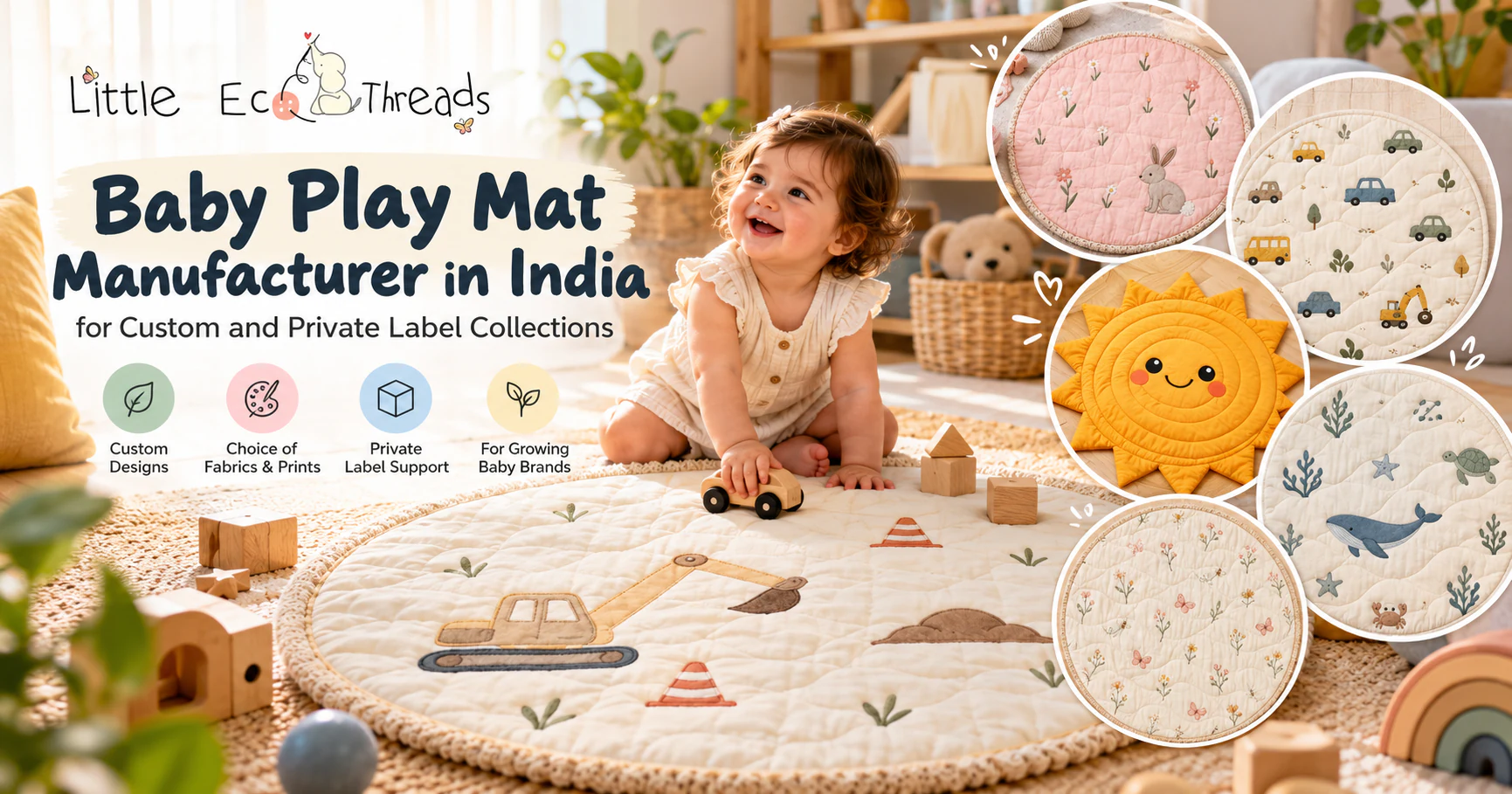
Baby Play Mat Manufacturer in India for Custom and Private Label Collections
As a baby product brand grows, there often comes a time when selling products made by other companies is no longer enough. Brands want to create something of their own, something that matches their style, meets their customers’ needs, and reflects the quality they believe in. Baby play mats are one such product where brands can bring their own ideas to life by working with the right manufacturer.
This is where custom and private label manufacturing comes in. Instead of selling products under another company's name, brands can work with a manufacturer to create their own collection. They can choose the size, fabric, colours, prints, design, and packaging to make the product feel like a natural part of their brand.
Little Eco Threads, based in Noida, Uttar Pradesh, India, works with businesses looking to develop their own baby and children's product collections. In this article, we will explore how custom baby play mat manufacturing works, what brands can customise, which materials to consider, what safety factors matter, and how to choose the right manufacturing partner for your business.
Why Baby Product Brands Work With a Dedicated Play Mat Manufacturer
Buying finished play mats from a catalogue is quick, but it limits what a brand can control. A baby play mat supplier that only sells fixed designs leaves little room to adjust specifications, and the same product may appear in several competing stores.
Working directly with a manufacturer changes that. Brands can usually take a more active role in decisions that shape the product, including:
- Product specifications such as dimensions, weight and construction
- Fabric and material discussions based on the brand's quality position
- Colours and prints that suit the wider collection
- Consistency across a range, so related products look and perform as a set
- Coordination between product development and production, which reduces handoffs between separate parties
- A differentiated offer that is harder for competitors to copy
The exact options depend on the manufacturer's capabilities, the order size and the product specification. A brand should never assume that every option is available from every factory.
Little Eco Threads works in the baby and children's products space and serves brands rather than selling to parents. That makes it a potential manufacturing partner for businesses developing baby products, with the suitability of each play mat project confirmed through direct discussion of the brief.
Custom Baby Play Mat Manufacturing: What Can Brands Develop?
Custom baby play mats start from a design brief written by the brand. The manufacturer then reviews it for technical feasibility, material compatibility and cost, and the two sides refine it before production. The areas below are common points of customisation across the market. They are general options, not a list of confirmed services from Little Eco Threads.
Common areas of customisation
- Dimensions and shape. Rectangular, round or irregular shapes, and sizes suited to the intended use, from compact travel formats to larger floor mats.
- Colours and prints. Solid shades, patterns or brand artwork, with attention to print colour consistency across production batches.
- Fabric selection. The surface textile affects handfeel, appearance, washability and cost.
- Surface texture and construction. Quilted, panelled or plain surfaces change how the mat looks and wears.
- Padding and filling. Where a design is padded, the filling type and thickness need to suit the intended construction.
- Stitching and finishing. Edge binding, seam placement and finishing details affect durability and appearance.
- Presentation and packaging. Labels, hang tags, folding method and outer packaging should match how the brand sells.
What to confirm before finalising a design
Before a design is locked, brands should confirm four things with the manufacturer: whether the chosen materials work together, whether the design is technically feasible at the intended price, which safety requirements apply in the target market, and what minimum production quantity applies to that specific product. Quantities in particular vary by product and should be agreed for the exact play mat, not assumed from another item.
A manufacturer that has worked across baby and children's textiles can often discuss these points in a practical way, but the options available for each play mat project should be verified directly with Little Eco Threads.
Private Label Baby Play Mats for Retailers and Growing Brands
Private label manufacturing means a business develops a product under its own name instead of reselling another brand's finished item. The manufacturer produces the mat to the brand's specification, and the brand owns the positioning, labelling and customer relationship.
This model suits established retailers that want an exclusive range, e-commerce sellers that want control over quality and margins, and startups that need a product line with a clear identity. It also lets a brand extend a play mat into a coordinated collection with other baby textiles.
A private label project usually moves through these stages:
- Define the target customer and the market where the product will be sold.
- Select the product category and concept, such as a padded mat or a lighter portable format.
- Prepare a design brief covering size, look, fabric preferences and budget.
- Confirm material and construction requirements with the manufacturer.
- Agree the written specification, including tolerances and finishing.
- Review samples, where sampling is available for the product.
- Confirm production quantities and order conditions.
- Discuss labelling, care label content and packaging requirements.
Little Eco Threads operates as a B2B manufacturer for baby and children's products, which fits this kind of brief driven project. Minimum order quantities, sampling and lead times for play mats are not stated here because they should be confirmed for each specific product. Brands are encouraged to raise them early in the conversation.
Choosing Materials for Baby Play Mats
The right materials depend on the intended use, the construction, durability needs, care instructions and the safety standards of the target market. No single material suits every play mat, and a fabric that works well in a quilted mat may be unsuitable for a thicker padded design.
Material considerations
- Surface fabric. This is what the baby and the customer touch first. Brands weigh softness, breathability, appearance and how well the fabric holds a print.
- Inner padding or filling. Padding affects comfort, thickness, weight and how the mat holds its shape after washing.
- Backing material. The backing influences grip on the floor, stability and wear.
- Stitching and finishing. Thread, seam type and edge finishing affect strength and the risk of loose threads.
- Washability and maintenance. Parents will wash these products often, so materials need to tolerate the care method printed on the label.
- Durability under normal use. Fabrics should be assessed for wear, pilling and colour retention.
- Compatibility. The surface, filling and backing must work together in the chosen construction.
Cotton and muslin are textiles widely used in baby products, and they may be considered for some play mat designs where they suit the construction. Other textile options exist, and the final choice should come from a technical discussion, not a default.
Little Eco Threads works with sustainable materials across its baby and children's range. That broader experience does not mean any specific material is available for its play mats, and a brand should not assume it does. Claims such as organic, non toxic or certified should only be made when product specific evidence supports them.
Baby Play Mat Features That Brands Should Consider
A clear feature list is the base of a good product specification sheet. The points below help a buyer decide what to define before approaching a manufacturer. Which of them can be delivered depends on the manufacturer and the product, and none should be assumed.
Features to define in your specification
- Size and dimensions. A baby floor mat for a living room needs different dimensions from a compact mat for travel.
- Surface comfort. Define the handfeel you want and how the surface behaves under a baby's weight.
- Padding. A padded play mat needs a stated thickness and a filling type that suits the construction.
- Portability. Consider weight, how the mat folds or rolls, and whether it needs a carry option.
- Storage. Folded dimensions matter for retail packaging, shipping and the end customer's home.
- Cleaning and care. State the washing method and check that every component tolerates it.
- Print and colour consistency. Agree how colour matching will be approved across production runs.
- Durability. Set expectations for seam strength and wear over repeated washing.
- Intended age group and use. A tummy time mat for newborns carries different design needs from a kids play mat for toddlers.
- Applicable safety requirements. Identify these by market before the design is finished.
Putting these items in writing before the first sample request saves time. It also gives both sides a shared reference when a design change comes up.
Brands that want products such as foam mats, foldable mats or play gyms should ask directly whether those are within the manufacturer's capabilities. Little Eco Threads has not confirmed them here, so they are treated as questions for discussion.
Safety, Quality, and Compliance Considerations for Baby Play Mats
Baby products are used by infants who cannot protect themselves, so safety has to be built into the design and sourcing process from the start, not checked at the end. Requirements differ between countries, and one certificate does not prove a product is safe in every market. This article is general information, not legal advice, and brands should confirm current requirements with qualified advisers or the relevant authorities.
During development, brands and manufacturers should work through the following:
- Selecting materials that are appropriate for the intended use and age group
- Identifying the requirements that apply in the target market before production
- Reviewing the material and product testing that the market expects, and who arranges it
- Checking labels, warnings and product documentation for completeness
- Setting quality control expectations, including inspection points and approval steps
- Confirming the care instructions that will appear on the product
- Assessing design hazards, such as small parts that could present a choking risk, loose trims, or gaps and cords that could cause entrapment
If you want an official reference, check the product safety authority for your destination market, such as the Consumer Product Safety Commission in the USA, or the equivalent bodies in the UK and Australia.
Little Eco Threads has not been confirmed here as holding specific product certifications or completing specific play mat tests. Buyers and the manufacturing team should agree the applicable requirements, testing responsibilities and documentation before production and shipment.
How to Choose the Right Baby Play Mat Manufacturer in India
Choosing a baby play mat manufacturer in India is easier when you ask the same structured questions of every candidate. Use this checklist and ask for clear written answers before you commit to an order.
- Can the manufacturer work with your product specifications, including size, construction and finishing?
- Which fabrics and construction options are available for this product?
- Can the customisation you need, such as prints, colours or trims, be accommodated?
- What is the minimum order quantity for this specific product?
- Is product sampling available, and what does the sample process involve?
- What quality checks are performed during and after production?
- Which testing and compliance documents can be provided for your target market?
- Can the manufacturer support private label requirements, including labelling and packaging?
- What are the production timelines and order conditions?
- How will design changes and production approvals be managed and recorded?
Vague or unwritten answers are a warning sign, particularly on quantities, testing and approvals. A reliable partner should be comfortable putting these terms in writing.
Businesses with a baby or children's product project can contact Little Eco Threads to discuss their broader manufacturing requirements and to confirm whether a specific play mat project fits its current capabilities.
Why Consider Little Eco Threads for Your Baby Product Manufacturing Requirements?
Little Eco Threads is a baby and children's product manufacturer based in Noida, Uttar Pradesh, India. Its business context spans children's apparel, baby products and the use of sustainable materials, and it works with international brands. It operates in the B2B space, so its work is built around the needs of brands, retailers and importers, not individual parents.
That background is relevant to brands developing baby product collections, because the same disciplines apply across categories: clear specifications, careful material selection, consistent finishing and well documented approvals. A brand that already sources baby textiles may find it useful to discuss a play mat alongside other items in its range.
What matters most at the start is clear communication. The manufacturing team will need to understand your intended product, the target market, the materials you prefer, the design and print requirements, your quality expectations and your private label needs.
Little Eco Threads does not claim here to manufacture every type of baby play mat. Prospective buyers are invited to share their intended product, required materials, design, quantity and other specifications so that suitability can be confirmed before any commitment is made.
Frequently Asked Questions
What should I look for in a baby play mat manufacturer in India?
Look for a manufacturer that can work from your written specification, explain its fabric and construction options, and state minimum quantities and sampling terms clearly. It should also describe its quality checks, provide testing documents relevant to your market, and support private label labelling and packaging.
Can baby play mats be developed for a private label brand?
Yes, play mats can generally be developed under a brand's own label when the manufacturer works to the brand's specification. The scope depends on the manufacturer's capabilities and the product concept, so brands should confirm design, material, labelling and packaging options before starting.
What materials are commonly considered for baby play mats?
Brands commonly consider textile surface fabrics such as cotton or muslin, paired with suitable filling and backing materials. The best choice depends on the construction, durability needs, care method and safety requirements of the target market, so each option should be assessed for the specific product.
What information should I provide when requesting a custom baby play mat?
Share your target market, intended age group, dimensions, preferred materials, colours or artwork, construction ideas, labelling and packaging needs, and expected order quantity. A written brief or specification sheet helps a manufacturer judge feasibility and respond accurately.
How do I determine the minimum order quantity for a custom play mat?
Minimum order quantities depend on the product, materials and design, so ask the manufacturer for the figure that applies to your exact play mat. Do not rely on quantities quoted for other products, and confirm whether prints, colours or sizes change the minimum.
What safety and testing requirements should I discuss with a manufacturer?
Discuss which standards apply in your destination market, which materials and finished product tests are expected, who arranges and pays for them, and which documents will be supplied. Also cover labelling, care instructions and design hazards such as small parts or entrapment risks.
Can Little Eco Threads support my baby play mat project?
Little Eco Threads is a baby and children's product manufacturer in Noida, India, working with businesses developing their own collections. Whether it can support your project depends on the product. Please confirm current play mat capabilities, materials, customisation options and production requirements with the team directly.
Discuss Your Baby Play Mat Manufacturing Requirements With Little Eco Threads
Choosing the right baby play mat manufacturer in India shapes the quality, consistency and identity of a custom or private label collection. The strongest projects begin with a clear position on the intended market, product specifications, material requirements, design expectations and production quantities, agreed before manufacturing starts.
Little Eco Threads invites businesses to get in touch to discuss their baby and children's product manufacturing requirements and to confirm how a play mat project could fit its current capabilities.