Best Sustainable Fabric Options for Baby Apparel in 2026
Choosing the right fabric for your baby is about health, comfort, and reducing harm to the planet. Babies have delicate skin and lose moisture faster than adults, so fabric choice matters. Here are the top fabric options for baby clothing in 2026:
- GOTS-Certified Organic Cotton: Free of harmful chemicals, hypoallergenic, and uses less water and energy than conventional cotton. Ideal for everyday essentials like onesies and sleepers.
- Bamboo Fabric: Ultra-soft, moisture-wicking, and temperature-regulating. Great for sleepwear and swaddles. Look for OEKO-TEX certification to ensure safety.
- Recycled Fibers: Made from plastic bottles and textile scraps, these are best for outerwear like jackets and raincoats. They reduce waste but are less breathable.
Quick Tip: Always check for certifications like GOTS, OEKO-TEX, or GRS to confirm fabric safety and quality. Avoid garments labeled "wrinkle-resistant" or "stain-resistant", as these often involve harmful chemicals.
1. GOTS-Certified Organic Cotton
Baby Safety and Comfort
When it comes to your baby's delicate skin, GOTS-certified organic cotton stands out as the safest option. This fabric is free from toxic pesticides, GMOs, and chemical finishes, making it gentle and non-irritating for infants. Considering that a baby's skin is about 30% thinner and more permeable than an adult's, this level of care is crucial. Its hypoallergenic nature is especially helpful for babies with eczema, reducing diaper-area irritation by up to 70%. Plus, the natural fibers retain their softness and even improve with washing, thanks to the absence of harsh chemical treatments.
"Organic cotton - which is softer, more breathable, and free from chemical finishing - is consistently reported by parents of eczema-prone babies to be better tolerated than conventional fabrics."
– Ali Ribchester, Founder, Tutti Frutti Clothing
Another advantage? GOTS-certified cotton wicks moisture 20% better than regular cotton, helping to prevent heat rashes and keeping babies comfortable in humid conditions. It's also highly durable - garments can withstand over 100 wash cycles without pilling or losing shape, and they shrink less than 5%, compared to over 15% for conventional cotton. Beyond its benefits for babies, this fabric is also a win for the planet.
Environmental Impact
The environmental benefits of GOTS-certified cotton are hard to ignore. Unlike conventional cotton farming, which uses about 16% of the world's insecticides despite covering only 2.5% of agricultural land, organic farming relies on natural methods like crop rotation and composting to maintain soil health. It also uses 91% less water than traditional practices and enforces strict wastewater treatment protocols during production to prevent chemical runoff into local ecosystems.
The GOTS standard bans harmful substances such as formaldehyde, heavy metals, chlorine bleach, and carcinogenic dyes, which are often used in conventional textiles. This not only protects the environment but ensures that no harmful residues are left in the fabric - important when it’s in constant contact with your baby's skin.
Certifications
GOTS, or the Global Organic Textile Standard, is a comprehensive certification covering every stage of production, from raw fiber to finished product. With over 14,000 certified facilities in more than 70 countries, the process involves independent audits by organizations like Control Union, Ecocert, or the Soil Association.
The certification comes in two grades: "Organic" (95% or more organic fibers) and "Made with Organic" (70–94% organic fibers). For baby apparel, the "Organic" grade is the preferred choice for maximum purity. To verify a product’s authenticity, you can check the license number on the GOTS label through their official database at global-standard.org.
"GOTS certification ensures no harmful chemical residues remain in the fabric that touches your baby's delicate skin all day long."
– Giggles & Grace Kids
GOTS also emphasizes social responsibility, banning child labor and requiring fair wages and safe working conditions for workers. These high standards make GOTS-certified cotton an excellent choice for baby clothing.
Ideal Applications
GOTS-certified organic cotton is perfect for everyday baby essentials, especially items that stay in close contact with the skin. It’s particularly beneficial for newborns, babies with eczema, and garments like sleepwear and base layers. For newborn clothing, fabrics with a weight of 140–180 GSM strike the right balance between softness and durability.
When shopping, look for the GOTS logo and license number on garment tags. Be cautious of labels that simply say "contains organic cotton", as these may include only a small percentage of organic material. Avoid items marketed as "wrinkle-resistant" or "stain-resistant", as these often involve formaldehyde-based finishes. Prices for GOTS-certified baby apparel typically range from $15 to $80, and care instructions usually recommend gentle, chemical-free washing.
2. Bamboo Fabric
Bamboo fabric stands out as a noteworthy choice for baby clothing, offering qualities that prioritize both comfort and safety.
Baby Safety and Comfort
The smooth, rounded fibers of bamboo fabric are gentle on sensitive baby skin, helping to minimize irritation and even reduce eczema symptoms. It’s also highly absorbent - 40% more than cotton - keeping babies dry and cool while discouraging the growth of odor-causing bacteria. With its natural thermoregulation, bamboo fabric adapts to the seasons, keeping babies comfortable by staying cooler in summer and warmer in winter. Plus, it provides UV protection, blocking over 97.5% of harmful rays with a UPF rating of 50+.
"When dermatologists and pediatricians recommend bamboo baby clothes, there's solid science behind their advice. Bamboo fabric's hypoallergenic properties aren't just marketing claims - they're rooted in the fabric's unique fiber structure."
– SwaddleAn
Environmental Impact
Bamboo is a sustainability superstar. It grows incredibly fast - up to 35 inches daily - and requires about 30% less water than cotton, often thriving on rainwater alone. The plant contains "bamboo-kun", a natural antimicrobial agent that eliminates the need for pesticides or fertilizers. Its dense root system helps prevent soil erosion, and since the stalks are cut rather than uprooted, it regenerates without replanting. Bamboo fabric is biodegradable, making it an eco-friendly alternative to synthetic materials that contribute to microplastic pollution. Most bamboo baby clothing is made from bamboo viscose, and choosing brands that use "closed-loop" manufacturing systems ensures that 99% of production solvents are recycled.
Certifications
When shopping for bamboo baby apparel, look for the OEKO-TEX Standard 100 Class 1 certification. This stringent standard ensures that every part of the product - threads, buttons, dyes - has been tested for over 100 harmful substances, including formaldehyde and heavy metals. To verify a product's certification, check the label's certification number on the official OEKO-TEX website. The Forest Stewardship Council (FSC) certification confirms that the bamboo used comes from responsibly managed forests. Reputable brands, following Federal Trade Commission guidelines, label their products transparently, using terms like "rayon from bamboo" or "bamboo viscose" rather than just "natural bamboo".
Ideal Applications
Bamboo fabric is perfect for baby sleepwear and pajamas, thanks to its ability to regulate temperature. For a soft yet stretchy feel, opt for blends of 95% bamboo viscose and 5% spandex. Fabric weights matter too - 150–200 GSM works well for summer swaddles, while 250+ GSM is better suited for winter pajamas and blankets.
Different weaves of bamboo fabric cater to various needs:
| Weave Type | Ideal Application | Key Benefit |
|---|---|---|
| Muslin | Swaddles, lightweight covers | Maximum breathability |
| Jersey Knit | Everyday wear, pajamas | Stretch and comfort for active babies |
| Terry | Towels, washcloths | High absorbency, gentle on skin |
Bamboo baby clothing typically costs between $20 and $75 per item. To keep garments feeling soft and prevent pilling, wash them in cold water on a gentle cycle and either tumble dry on low heat or hang dry.
3. Recycled Fibers
When it comes to sustainable fabrics for babies, recycled fibers offer a way to reduce waste, though they come with some unique challenges.
Recycled fibers, especially recycled polyester (rPET) made from post-consumer plastic bottles, are a creative solution for turning waste into durable baby clothing. For context, it takes about 6–8 plastic bottles to produce one t-shirt, helping to divert waste from landfills and oceans. This is significant considering that 73% of all clothing materials globally end up either burned or buried.
Baby Safety and Comfort
While recycled polyester is chemically identical to virgin polyester, it has some drawbacks. It’s less breathable, which can trap heat and moisture, potentially leading to overheating, heat rash, or eczema in infants who are still developing their ability to regulate body temperature. Additionally, like all polyester, recycled versions release microplastic fibers during washing. These fibers can accumulate on surfaces where babies crawl or might even be ingested as babies often mouth fabrics.
For these reasons, it’s best to use recycled polyester for outerwear like jackets, raincoats, and snowsuits rather than for clothing that comes into direct contact with a baby’s sensitive skin.
"Recycled polyester is not automatically unsafe for baby clothes. The risk depends on processing, finishing, and the specific chemicals used."
– Saheb Fibre
Despite these considerations, recycled fibers remain an eco-conscious choice when used appropriately.
Environmental Impact
The environmental benefits of recycled fibers are hard to ignore. Producing recycled polyester uses significantly less energy compared to virgin polyester. Some brands have even adopted closed-loop systems where outgrown baby clothes are broken down into raw materials and remade into new garments, reducing waste.
Eco-blends are also gaining traction. For instance, Econscious creates fabrics from 55% certified organic cotton and 45% GRS-certified recycled polyester, offering a mix of natural softness and synthetic durability. To tackle microplastic pollution from washing recycled garments, consider using microfiber-catching laundry bags.
Certifications
To ensure safety and quality, look for certifications like the Global Recycled Standard (GRS), which verifies recycled content and monitors the supply chain, including chemical management. For baby-safe fabrics, certifications such as OEKO-TEX Standard 100 Product Class I are essential, as they test for over 1,000 harmful substances like formaldehyde and heavy metals. The bluesign® System is another reliable certification that ensures environmental and safety standards during manufacturing. Always verify certificate numbers on official websites to confirm their authenticity.
Ideal Applications
Recycled polyester is perfect for outerwear, activewear, and play clothes that require durability and quick-drying properties. In colder weather, pair recycled synthetic outer layers with soft, natural fibers like organic cotton for items that directly touch the baby’s skin. Be cautious of recycled fabrics marketed as "easy care" or "wrinkle-resistant", as these often involve formaldehyde-based treatments.
Prices for sustainable baby clothing made with recycled blends generally range from $24 to $75 per item, reflecting the commitment to eco-friendly practices.
Pros and Cons
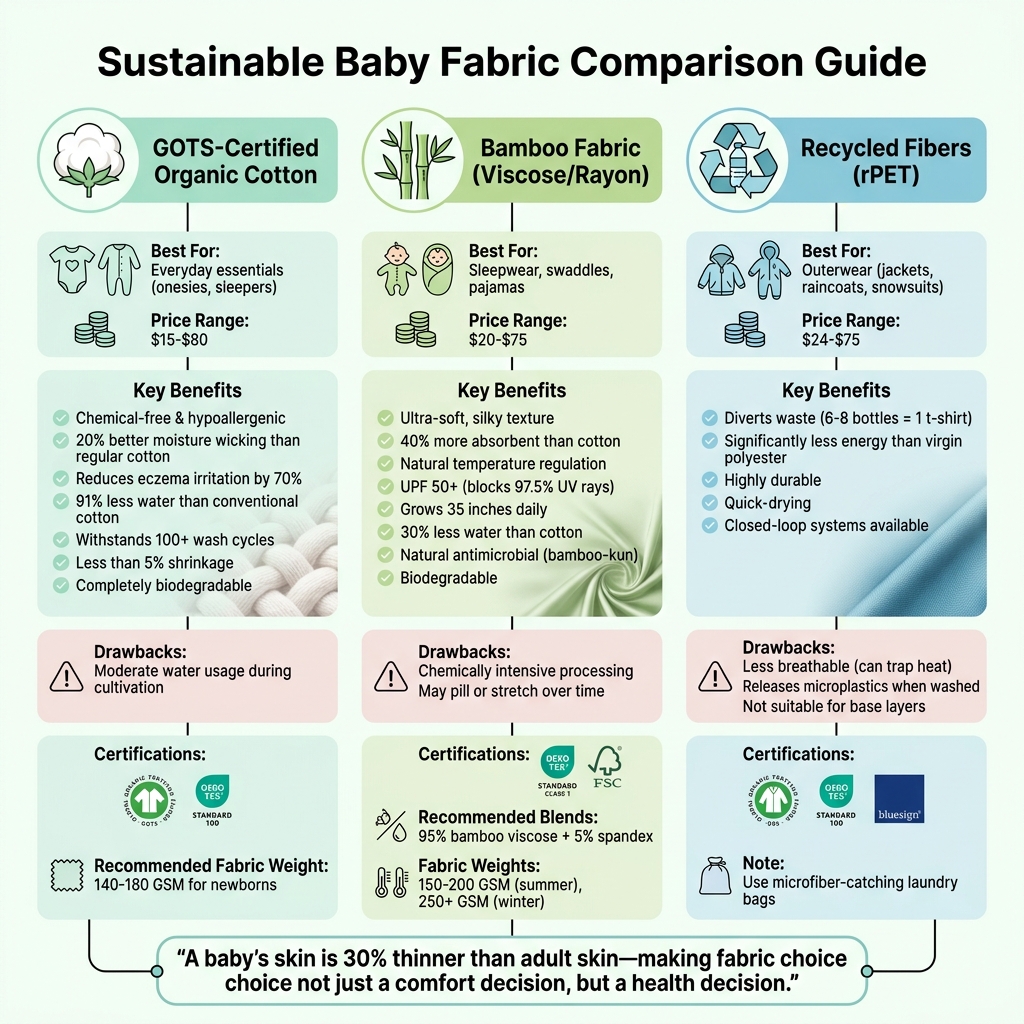
Here’s a straightforward look at the strengths and drawbacks of each fabric type to help you make an informed choice.
GOTS-certified organic cotton stands out for its baby-friendly qualities. It’s free from harsh chemicals, highly absorbent, and completely biodegradable. Plus, it’s grown without synthetic pesticides. However, it does require moderate water usage during cultivation. To ensure quality, look for certifications like GOTS and OEKO-TEX Standard 100.
Bamboo fabric (viscose/rayon) is prized for its ultra-soft, silky feel and natural ability to wick moisture and regulate temperature. While it offers a luxurious texture, the process of turning bamboo into fabric can be chemically intensive, involving solvents like carbon disulfide. The safety of bamboo fabric depends heavily on the quality of its processing, so certifications like OEKO-TEX and FSC are key. Over time, bamboo fabric may stretch or pill, and items made from it generally range in price from $20 to $75.
Recycled fibers (polyester) shine when it comes to waste reduction. For example, producing a single t-shirt can repurpose 6–8 plastic bottles. These fibers are durable, making them great for outerwear like jackets and raincoats. However, they lack breathability, which can trap heat and moisture against the skin, potentially leading to rashes or overheating. Additionally, washing recycled polyester can release microplastics into the environment. For these reasons, recycled fibers are best suited for outer layers rather than base layers. To ensure quality, look for GRS and OEKO-TEX certifications.
"A baby's skin is 30% thinner than adult skin - making fabric choice not just a comfort decision, but a health decision."
– Anamika Saxena, Parent Guide Author
This comparison highlights the key factors to consider when choosing the best sustainable fabric for your baby’s needs.
Conclusion
When selecting fabrics for your baby, prioritize safety, comfort, and environmental responsibility. GOTS-certified organic cotton is a standout choice for everyday essentials like onesies and sleepers. Its chemical-free nature and breathability make it perfect for delicate skin.
Another option is bamboo fabric, known for its silky texture and ability to regulate temperature and manage moisture. Just keep in mind that most bamboo fabrics undergo chemical processing, so look for OEKO-TEX certification to ensure safety. Be aware that bamboo items may pill or stretch with wear.
For outerwear, recycled polyester is a practical choice, offering a creative way to repurpose waste - turning 6–8 plastic bottles into a single t-shirt is no small feat. However, natural fibers are better suited for base layers due to their superior breathability.
"Choosing organic baby clothes isn't about perfection - it's about making small, thoughtful swaps that support your baby's health and the planet's future." – Danielle Alvarado, CEO, Sustainably Kind Living
A good starting point? Build a wardrobe with 6–8 organic cotton onesies and 4–6 sleepers. From there, mix in bamboo or recycled pieces as needed. Always check for GOTS and OEKO-TEX Standard 100 (Product Class I) certifications, and steer clear of garments labeled "wrinkle-resistant" or "stain-resistant", as these often involve chemical treatments.
FAQs
Which fabric is best for babies with eczema?
When it comes to dressing babies with eczema, GOTS-certified organic cotton is an excellent choice. This fabric is gentle on their delicate skin, helping to protect the skin barrier and reduce irritation.
To make clothing even more comfortable for little ones, consider options with smooth inner seams and tagless labels. These small details can go a long way in minimizing friction and preventing additional discomfort.
How can I tell if a fabric certification label is real?
To ensure a fabric certification label is legitimate, start by confirming it's from a well-known organization such as GOTS (Global Organic Textile Standard). Look for the certifier’s name and logo on the label and verify that it aligns with their official branding. Take a moment to research the certifier’s reputation and check if they perform independent audits. Purchasing from established brands with verified certifications is another way to steer clear of fake labels.
What’s the safest way to use recycled polyester in baby outfits?
The best approach to using recycled polyester in baby clothing is to opt for fabrics that have been tested and certified as free from harmful chemicals like PFAS. Look for materials that have gone through proper processing and finishing methods to limit chemical residues, ensuring they’re safe for infants. Always check for certifications that confirm both safety and environmentally conscious practices.