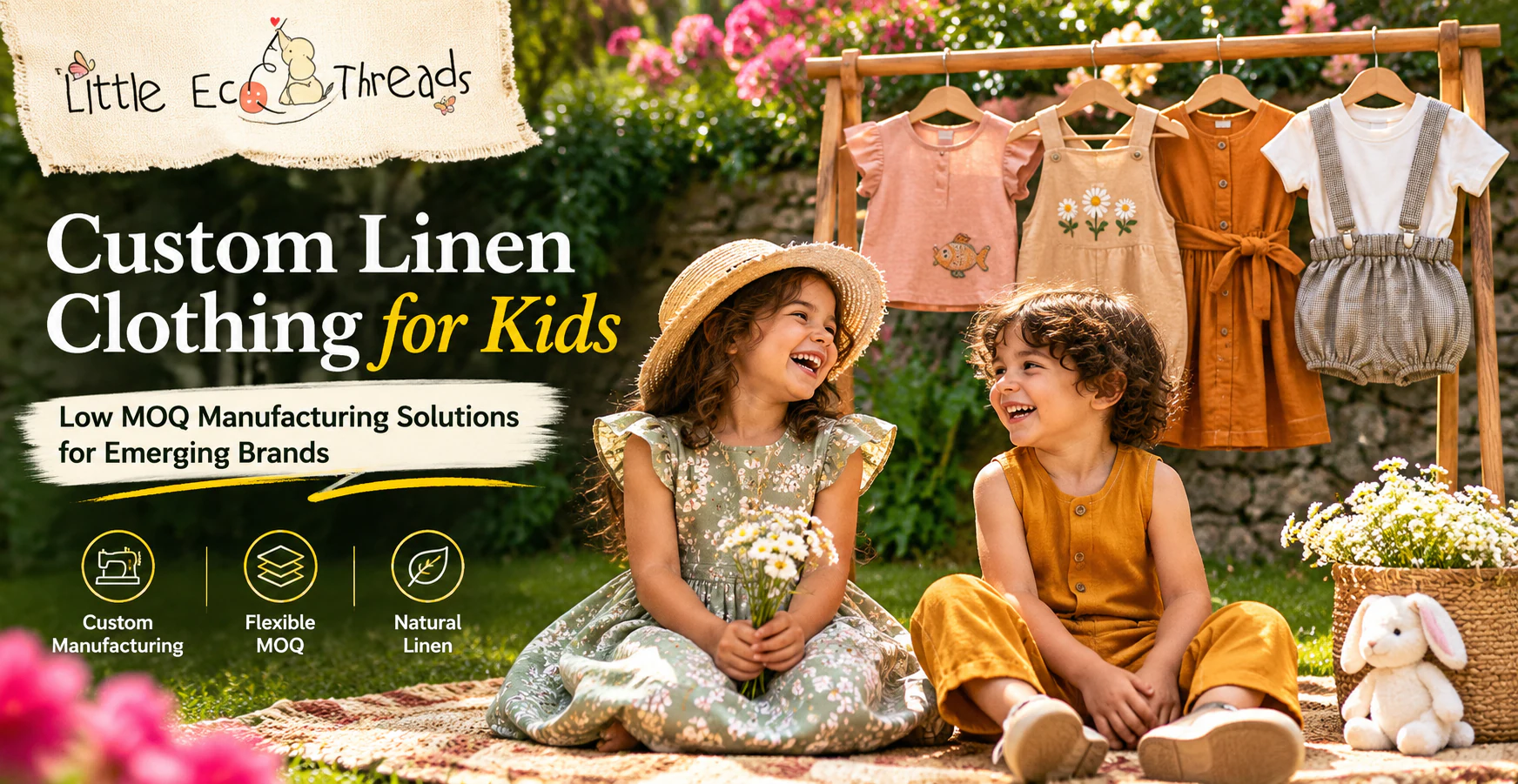
Custom Linen Clothing for Kids: Low MOQ Manufacturing Solutions for Emerging Brands
Linen has moved from a niche summer fabric to a considered option in boutique children’s clothing collections. For brands developing custom linen clothing for kids, however, the design is only one part of the decision. They also need a manufacturing partner that can develop the right styles, manage fabric and finishing requirements, and offer production quantities that make sense for a growing business.
This guide looks at linen from a B2B sourcing and manufacturing perspective. It covers the fabric’s strengths and limitations, the product categories brands can develop, the role of low minimum order quantities (MOQs), and the customisation and production services available through Little Eco Threads, a baby and children’s clothing manufacturer in India.
Why Linen Is an Important Fabric for Children’s Clothing
Linen is made from fibres of the flax plant. After harvesting, the flax stems are processed to separate the fibres, which are then prepared, spun into yarn and made into fabric. The resulting material can vary considerably in weight, texture and finish, so choosing the right linen is an important part of product development.
For warm-weather kidswear, linen is valued for its breathability and ability to absorb moisture. It has a naturally textured appearance that can support a relaxed, premium look, and it generally becomes softer with repeated washing. Little Eco Threads’ linen collection presents these qualities as part of the fabric’s appeal for children’s clothing.
Linen can also support a sustainability story, but brands should avoid treating the word “linen” as proof that a garment is sustainable. Flax cultivation may require fewer inputs than conventional cotton in some growing conditions, but the overall environmental impact also depends on farming practices, processing, dyeing, finishing, transport and garment lifespan. Linen is not automatically organic, chemical-free or hypoallergenic; those claims should only be made when supported by relevant documentation.
Linen’s Commercial Advantages—and What Brands Need to Plan For
| Fabric characteristic | Potential value for a collection | Manufacturing consideration |
|---|---|---|
| Breathability and moisture absorption | A practical option for summer, resort and warm-climate ranges. | Select fabric weight and construction according to the garment. |
| Natural texture and drape | Creates a distinctive look that can support premium positioning. | Agree acceptable texture and shade variation with the supplier. |
| Softening with washing | Can improve the hand-feel over time. | Consider pre-washing or other finishing and assess the approved sample. |
| Wrinkling | Contributes to linen’s relaxed, natural character. | Set realistic expectations in product descriptions and care information. |
| Shrinkage | Can be managed through appropriate preparation and testing. | Pre-shrink where required and conduct wash tests before finalising patterns. |
| Limited stretch | Can help garments retain a defined shape. | Build suitable ease into patterns and consider elasticated or gathered details. |
For children’s garments, fit and construction matter as much as fabric choice. Necklines and openings should allow comfortable dressing, while buttons, trims and drawstrings must meet the applicable requirements in the markets where the garments will be sold. Brands should confirm destination-market testing and product-safety requirements with their compliance partners before production.
The Commercial Potential of Linen Kidswear
Linen gives children’s apparel brands a material around which to build a recognisable seasonal collection. A spring–summer range might use a coordinated palette of sage, stone, terracotta and dusty rose. The same fabric family can also work across resortwear, boutique occasionwear and holiday collections.
Linen’s surface and structure can complement details such as embroidery, smocking and pintucks. A focused range can therefore offer variety through colour, silhouette and embellishment without requiring a large number of unrelated patterns. For buyers, this can make a collection easier to merchandise and give individual pieces a consistent design identity.
Market demand should still be validated against each brand’s own customer research, sales history and target geography. A fabric trend is an opportunity to investigate—not a substitute for understanding the customer.
Linen Clothing Categories Brands Can Develop
The styles shown in Little Eco Threads’ catalogue are design references rather than ready-stock products. The company manufactures on order, and buyers can discuss changes to designs, materials and details. The categories below can be used as starting points for a brand’s own development brief.
Linen Rompers and Playsuits
Rompers and playsuits can form the foundation of a linen kidswear range. Little Eco Threads’ portfolio includes examples such as bubble silhouettes with button shoulders, ruffle-strap styles, embroidered yokes and collared playsuits. A brand can explore variations through colour, print, trims and embroidery while retaining a shared base pattern. This can help create a coordinated range without developing every style from scratch.
Linen Dresses and Smocked Designs
Linen dresses can suit boutique, seasonal and occasionwear collections. The company’s portfolio includes pinafore and bow-detail designs, printed flutter-sleeve styles and smocked-bodice variations. Its Botanical Frog Linen Dress in the embroidery collection is an example of how a distinctive motif can give a garment a recognisable visual identity. A brand could develop its own motif or story and consider how that design language might extend across dresses, rompers and matching accessories.
Boys’ Linen Suits and Shorts
A linen collection does not need to focus only on dresses. Little Eco Threads also presents boys’ linen suits, shorts and suspender-short sets. These styles can be considered for holiday dressing, celebrations and other warm-weather occasions. Coordinated separates may also give retailers flexibility when merchandising outfits.
Coordinated Linen and Linen-Blend Sets
Two-piece sets can make a collection easier to style and merchandise. Examples in the company’s portfolio include a camp-collar shirt with elasticated shorts and a dungaree set paired with a T-shirt. Little Eco Threads’ linen offering refers to both pure and blended linen. The appropriate composition should be discussed for each order, based on the required appearance, performance, price point and available fabric options.
Why Emerging Brands Consider Custom Linen Clothing
For an emerging children’s clothing label, a clear product identity can be more valuable than launching a large number of styles. Custom development gives a brand greater control over silhouettes, colours, prints, embroidery, trims and finishing. These decisions help distinguish a collection from generic catalogue products.
Little Eco Threads describes custom colour development and finishing options for its manufacturing work, including pigment and reactive dyeing, colour matching, stone washing, enzyme washing and pre-shrinking. The suitability of each process depends on the selected fabric and garment. Brands should confirm the available options, testing requirements, colour consistency and costs during development.
Customisation can also extend to size ranges, private labels, hang tags and packaging. Little Eco Threads’ linen offering lists sizes from 0–3 months up to size 13. Buyers should confirm the size range and grading requirements for the specific style and intended market.
How Low MOQ Manufacturing Helps Emerging Kidswear Brands
Minimum order quantity (MOQ) is the smallest quantity a manufacturer will accept for a production order. MOQs help manufacturers cover the setup work involved in each style, such as pattern preparation, fabric cutting, machine setup, printing or embroidery preparation and quality inspection. In apparel manufacturing, minimums may be quoted per style, per colour or according to another agreed production unit.
For an emerging brand, a lower MOQ can reduce the amount of inventory and working capital committed to an initial launch. It can also make it possible to test a small group of designs or colourways, learn from sell-through data and reorder the styles that perform well. This approach does not remove commercial risk, but it can make the first production decision more manageable.
MOQ is not a single figure that applies to every garment. It can change according to several factors:
- Fabric sourcing: custom-dyed or custom-printed linen may be subject to a fabric mill’s own minimum order.
- Garment construction: a simple pair of shorts may have different production requirements from a smocked dress or an embroidered set.
- Customisation: special trims, labels, printing and embroidery can add setup requirements.
- Order quantity and unit cost: smaller runs generally have a higher cost per piece because setup costs are spread across fewer garments.
Little Eco Threads positions its linen range around boutique-friendly minimum orders. Its published linen catalogue lists designs at 100 pieces each, while the company’s MOQ guidance explains its approach to orders for emerging and established brands. The MOQ for a particular custom style may differ depending on fabric, colour and embellishment, so buyers should request a current, style-specific confirmation and quotation before planning a launch.
A practical first collection might focus on three to five core styles—for example, a romper, a dress and a coordinated set—rather than spreading the order across too many designs. The right assortment will depend on the brand’s customer, budget and sales channel.
Customisation Options for Linen Kidswear
Little Eco Threads lists a range of custom manufacturing services that brands can discuss when developing a linen collection. The table below connects those services to possible applications. Where a service is described as a general customisation capability rather than a linen-specific option, confirm its suitability for the selected fabric and garment during sampling.
| Customisation area | Possible application in a linen collection |
|---|---|
| Pattern making and grading | Developing silhouettes and size grading with suitable ease for linen’s limited stretch. |
| Fabric sourcing and development | Selecting an appropriate linen or linen blend for the garment’s weight, drape and intended use. |
| Colour matching and dyeing | Discussing brand colourways and available pigment or reactive dyeing options. |
| Printing | Developing printed dresses, rompers or coordinated pieces, subject to fabric and process suitability. |
| Hand or machine embroidery | Adding botanical, decorative or brand-specific motifs. |
| Smocking | Creating smocked-bodice variations for dresses and other suitable styles. |
| Appliqué and patchwork | Adding surface details where the chosen linen weight and construction allow. |
| Trims and closures | Selecting buttons, zippers, lace, elastic and other details for the design. |
| Private labels and hang tags | Applying brand identity during garment finishing. |
| Custom packaging | Preparing packaging for the brand’s retail or wholesale requirements. |
These options can be combined to create a collection with a consistent point of view. For example, a brand might develop a sage linen dress with a smocked bodice and custom label, alongside a matching embroidered romper. The final specification, cost and MOQ should be agreed for each style.
From Design to Delivery: The Custom Manufacturing Process
A clear development process helps brands review the product before committing to bulk production. Little Eco Threads describes its process in four broad stages:
- Design and development. The brand shares a design, tech pack or initial idea. The team works through specifications, fabric selection and pattern development. For linen, this stage should settle the fabric weight and composition, colour, finishing, fit, trims and any embroidery or smocking requirements.
- Sampling. Samples are developed for the buyer to review. Fit, hand-feel, shrinkage, finishing and construction can be assessed on the garment, and revisions can be discussed before bulk production. Sampling timelines should be confirmed for each project, particularly where custom dyeing or detailed embellishment is involved.
- Bulk production. Production begins after the approved sample and specifications are confirmed. Brands should agree the production schedule, quality checkpoints, packaging details and communication plan with the manufacturer.
- Finishing and delivery. Garments are inspected, finished and packed according to the agreed requirements, including brand labels and packaging where applicable. Shipping arrangements and delivery timelines should be confirmed for the destination market.
For linen garments, sampling is especially useful because it allows the brand and manufacturer to assess fabric behaviour in the actual design. Shrinkage, wrinkle appearance, fit and the effect of finishing can be reviewed before larger quantities are produced.
Why Work with Little Eco Threads for Custom Linen Kidswear?
Little Eco Threads is the baby and children’s clothing division of Home Fashions and is based in Noida, India. Its About page presents more than 25 years of manufacturing experience and work with over 100 brands across international markets. The company describes an end-to-end service that includes design development, fabric sourcing, sampling, bulk production, quality control and delivery.
The company works with materials including organic cotton, linen, denim and corduroy, and offers custom manufacturing and private-label production. For brands developing a linen capsule, this broader product experience may also make it possible to discuss coordinating pieces in other fabrics with the same manufacturing partner.
Little Eco Threads’ website highlights GOTS, GRS and Sedex-related credentials. These should be understood as company or facility-level credentials as described by the company, not as automatic certification of every linen fabric or finished garment. Brands requiring certification or testing documentation for a specific product should confirm which documents apply to the material, supply chain and order before placing production.
Frequently Asked Questions
What are the benefits of linen clothing for children?
Linen is breathable, absorbs moisture and has a natural texture that works well in warm-weather collections. It generally softens with washing. Brands should also plan for wrinkling, possible shrinkage and limited stretch when developing garments.
Is linen suitable for baby and kidswear manufacturing?
It can be suitable when the fabric weight, garment construction and finishing are selected for the intended age group and use. Fit, ease of dressing, trims and destination-market safety requirements should be considered during development.
What types of linen clothing can brands manufacture?
Possible categories include rompers, playsuits, dresses, shorts, overalls, jumpsuits, boys’ suits, shirt-and-shorts sets and linen-blend sets. Little Eco Threads presents examples of these categories in its linen portfolio; designs are made to order and can be discussed for customisation.
What does low MOQ mean in kidswear manufacturing?
Low MOQ means a manufacturer accepts a smaller production quantity than a high-volume order may require. The minimum may depend on the style, colour, fabric, embellishment and other production details.
Can emerging brands order custom linen clothing in smaller quantities?
Little Eco Threads promotes boutique-friendly minimums for its linen range, and its published catalogue lists designs at 100 pieces each. A custom style may have a different minimum, so brands should request confirmation for their specific design and specifications.
What customisation options are available for linen kidswear?
Depending on the design and fabric, brands can discuss pattern development, grading, colour matching, dyeing, printing, embroidery, smocking, trims, private labels, hang tags and packaging.
How can brands assess a linen kidswear manufacturer in India?
Review the manufacturer’s relevant product experience, sampling process, MOQ terms, quality-control approach and ability to provide documentation for the target market. Request fabric swatches and samples, and confirm product-specific testing and certification requirements.
Conclusion
Custom linen clothing for kids can help emerging brands build a distinctive warm-weather collection around a fabric valued for its breathability, texture and relaxed appearance. Successful development depends on more than choosing linen: brands need to account for shrinkage, wrinkling, fabric sourcing, construction, testing and the finishing required for the intended market.
A manufacturing partner that supports product development, sampling, customisation and suitable order quantities can make it easier to test a collection before scaling it. Brands considering Little Eco Threads can explore the company’s linen portfolio as a starting point, then share a design brief or tech pack through its custom manufacturing service to discuss fabric options, MOQ and pricing for specific styles.