What Makes a Good Baby Swaddle?
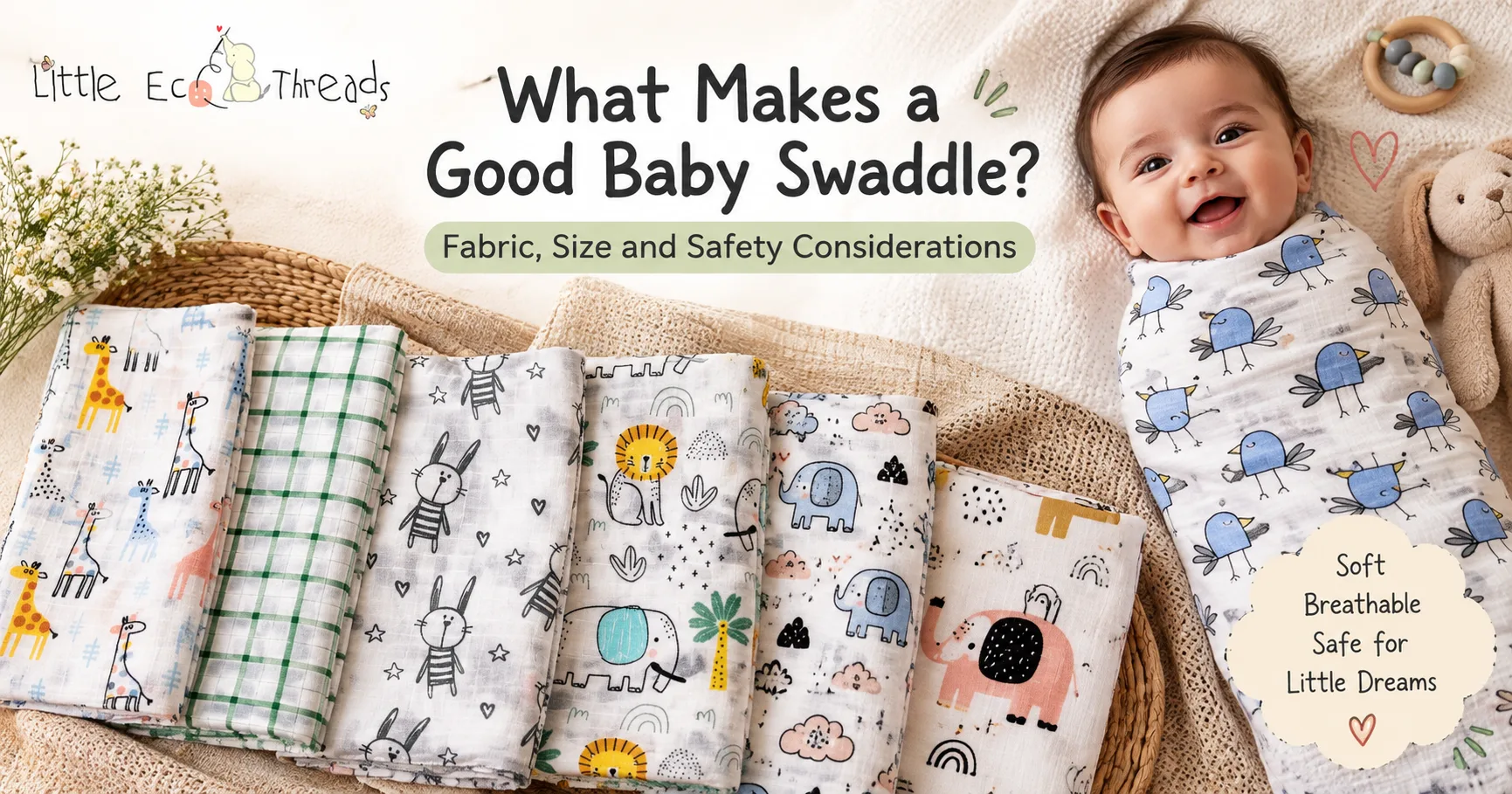
A baby swaddle looks simple at first. It is usually one square or rectangular piece of fabric, folded around a newborn to create a snug, contained feeling. But for parents and babywear brands, the difference between an average swaddle and a good one comes down to fabric, size consistency, stitching, wash performance, and safe-use guidance.
This guide explains what to look for in a baby swaddle blanket, how common fabrics behave, why sizing matters, and what brands should ask before producing swaddle blankets at scale.
What Is a Baby Swaddle?
A baby swaddle is a soft blanket used to wrap a newborn snugly, usually with the arms close to the body. Many parents use swaddling because it can help some babies feel settled in the early newborn stage.
Swaddling is not right for every baby, and it should always be used carefully. A good product starts with soft, breathable fabric, but safe use matters more than any fabric claim, print, or packaging detail.
For brands, a swaddle is also a high-trust product. It touches newborn skin, is washed frequently, and is often bought by parents, gift buyers, retailers, and baby boutiques that expect consistent quality.
What Fabric Is Best for a Baby Swaddle?
Fabric is the first major decision. Newborn skin is delicate, and a swaddle sits close to the body for long stretches, so the material needs to feel soft without becoming rough after repeated washing.
Breathability is just as important as softness. A swaddle adds a layer around the body, so dense or poorly finished fabrics can trap too much warmth. A good swaddle fabric should allow air movement, drape cleanly, and hold its shape without becoming stiff.
Common fabric choices include:
| Fabric | Why brands use it | What to check |
|---|---|---|
| Organic cotton | Soft, familiar, breathable, and suitable for newborn products | Certification documents, shrinkage, dyeing, and wash feel |
| Muslin | Lightweight, open-weave, breathable, and softens with washing | Weave density, print durability, and edge finishing |
| Bamboo blends | Silky hand feel and useful drape when blended well | Fibre processing, blend ratio, stretch, and wash recovery |
| Double gauze | More body than single muslin while staying breathable | Layer stability, softness, shrinkage, and seasonal suitability |
| Jersey | Stretch and comfort for some wrap styles | Recovery, curl, GSM, and edge construction |
At Little Eco Threads, swaddle development usually starts with product use case: warm-weather newborn swaddle, giftable swaddle blanket, coordinated newborn set, or wider babywear collection. The right fabric depends on that purpose.
Organic Cotton Swaddles and Certification Claims
Organic cotton is popular for baby products because it is familiar to parents, breathable, and widely understood in the market. Brands that want organic cotton options should still look beyond the fibre name and ask how the claim is documented.
If a product is marketed as organic, the supply chain matters. Certifications such as GOTS can help support organic textile claims when the certified scope, labelling rules, and product documentation are aligned. If recycled inputs are part of a broader baby product range, GRS may also be relevant for verifying recycled material claims.
For baby products, textile safety testing can matter alongside sustainability claims. OEKO TEX is commonly referenced by brands and buyers when discussing harmful-substance testing in finished textile products.
The key point is simple: do not rely on vague wording. Ask for certificates, check what they cover, and make sure the final product claim matches the documentation.
Muslin, Bamboo Blends, and Double Gauze
A muslin swaddle blanket is often chosen because muslin is lightweight, breathable, and practical for warm climates. The open weave helps air move through the fabric, and good muslin usually becomes softer with washing.
Some brands also explore bamboo blends because they can feel silky and smooth against the skin. A bamboo baby swaddle can be attractive for parents who like a fluid drape, but the final quality depends on the blend, finishing, and wash performance. If you are comparing bamboo blends, test real swatches and samples rather than judging from fibre language alone.
double gauze sits somewhere between muslin and a more structured woven fabric. It has two lightweight layers joined together, which gives the swaddle more body while keeping it soft and breathable. That can make it useful for cooler seasons or brands that want a slightly more substantial feel.
None of these fabrics is universally best. Climate, season, retail price point, care expectations, and brand positioning all affect the decision.
Why Baby Swaddle Blanket Size Matters
A baby swaddle blanket that is too small can be difficult to wrap securely. A swaddle that is too large can feel bulky, especially for tired parents trying to use it during late-night changes.
Brands should decide size based on the intended use, not only on what competitors are selling. A newborn swaddle, oversized multipurpose muslin cloth, and gift-set blanket can each need different dimensions.
Consistency matters as much as the measurement itself. If a brand sells swaddle blankets in a stated size, every production batch should match that expectation. Even small size variation can affect wrapping, packaging, perceived quality, and customer reviews.
For manufacturers, size control starts before stitching. Fabric shrinkage, cutting accuracy, seam allowance, edge finishing, and final pressing all affect the finished measurement.
Safety Considerations for Swaddling
Swaddle safety should be explained clearly and conservatively. The American Academy of Pediatrics advises that babies should be placed on their backs for sleep, and its safety guidance says swaddling should stop as soon as a baby starts trying to roll. The AAP also advises against weighted swaddles.
For parents and brands, the practical points are:
- The baby's face and head should stay uncovered.
- The swaddle should be snug, not restrictive.
- The hips and legs should have room to move naturally.
- Babies should always be placed on their backs for sleep.
- Swaddling should stop when the baby shows signs of trying to roll.
- Weighted swaddles, weighted blankets, and weighted sleepers should be avoided for babies.
- Swaddling should not be described as reducing the risk of SIDS.
Brands should avoid making medical or safety claims beyond official guidance. Product copy can explain fabric, construction, and intended use, but safe sleep claims need to be handled carefully.
Construction Details That Separate a Good Swaddle From an Average One
The best fabric can still become a poor product if the construction is weak. Swaddles go through frequent washing, folding, pulling, and packing, so the details matter.
Useful quality checks include:
- Straight, even cutting across the full fabric width
- Neat edge stitching or hemming
- Secure corners that do not fray
- Consistent print placement when the artwork requires alignment
- Shrinkage testing before bulk production
- Colourfastness checks for printed and dyed styles
- Soft labels or printed care information placed away from irritation points
- Final measurement checks after washing or finishing
For a swaddle manufacturer, these checks should be standard, not optional. The product is simple in shape, so buyers notice every inconsistency quickly.
What Babywear Brands Should Ask Before Production
If you are building a babywear range, do not treat swaddles as an accessory added at the end. A swaddle often sits beside bodysuits, bibs, burp cloths, quilts, sleepwear, and gift packaging, so it should feel like part of the same product system.
Before placing an order, ask:
- Which fabric options are suitable for the climate and target customer?
- Can the same print or colour story work across swaddles and clothing?
- How will the fabric be tested before bulk production?
- What shrinkage should we expect after washing?
- Can we review physical swatches and pre-production samples?
- What certificates support organic, recycled, or safety-related claims?
- What are the minimum order quantities by fabric, print, and colour?
- Can labels, packaging, and gift presentation be customized?
Little Eco Threads supports private label products, OEM manufacturing, and ODM manufacturing for baby and children's brands that want more than a generic stock swaddle. That can include fabric selection, artwork adaptation, sampling, sizing, packaging, and production planning.
Building a Broader Baby Product Line
A swaddle can be a strong starting point, but many brands use it as part of a broader baby product line. A coordinated range might include bib sets, burp cloths, rompers, sleeping bags, baby quilts, newborn gift sets, and soft toys.
This is where organic cotton products, muslin products, and matched prints can create a clearer brand story. A swaddle, bib, and romper do not need the exact same fabric, but they should feel consistent in colour, hand feel, quality, and packaging.
For retailers and gift buyers, that consistency matters. It makes the collection easier to merchandise and easier for parents to understand.
FAQ
What size should a baby swaddle blanket be?
There is no single universal size. The right size depends on whether the product is a newborn swaddle, multipurpose muslin cloth, or gift-set blanket. Brands should test the finished measurement after washing, not just before cutting.
Is organic cotton always the best fabric for a baby swaddle?
Organic cotton is a strong option because it is soft, breathable, and familiar to parents. It is not automatically best for every use case. Muslin, double gauze, jersey, or selected blends may work better depending on season, climate, and product design.
Are weighted baby swaddles safe?
The American Academy of Pediatrics advises against weighted swaddles, weighted blankets, and weighted sleepers for babies. Brands should avoid developing or marketing weighted infant sleep products unless they have qualified product safety advice for their specific market.
What should a babywear brand ask a swaddle manufacturer?
Ask about fabric source, certification documents, shrinkage, GSM, weave or knit construction, print method, edge finishing, sampling, production tolerances, packaging, minimum order quantities, and quality control.
Choosing a Baby Swaddle Manufacturing Partner
A good baby swaddle comes down to several decisions working together: soft and breathable fabric, consistent sizing, careful construction, responsible claims, and clear safe-use guidance.
For brands, the right partner should help you compare fabrics, test samples, document claims, and produce consistently across future batches. Little Eco Threads works with baby and children's brands on swaddles, babywear, organic cotton products, gift sets, and custom newborn ranges. To develop a swaddle blanket or wider baby product collection, contact Little Eco Threads.