GOTS vs GRS: Which Certification?
When deciding between GOTS and GRS for kids' clothing, here's what you need to know:
- GOTS (Global Organic Textile Standard) is best for natural fibers like cotton and linen. It ensures organic farming, bans harmful chemicals, and enforces fair labor practices. Ideal for baby clothing where skin sensitivity is a concern.
- GRS (Global Recycled Standard) focuses on recycled materials like polyester (rPET). It tracks recycled content and enforces responsible processing. Great for activewear and outerwear, combining durability with reduced waste.
Key Differences:
- Material: GOTS covers organic fibers; GRS certifies recycled materials.
- Focus: GOTS ensures safety from farming to the final product; GRS tracks recycled content across the supply chain.
- Use Case: GOTS suits baby apparel; GRS works for durable, eco-conscious options like jackets and sportswear.
Tip: Always request a Transaction Certificate (TC) to verify certification for specific shipments. This ensures transparency and avoids misleading claims.
Global Organic Textile Standard (GOTS) explained - english
What is GOTS (Global Organic Textile Standard)?
GOTS is the leading global standard for organic textile processing, addressing both environmental and social criteria through third-party certification at every production stage. Unlike certifications that focus solely on how cotton is grown, GOTS ensures compliance across the entire process - from sourcing raw fibers to producing the final product.
"GOTS Certified means a textile meets strict standards for organic materials, safer chemical processing, and responsible manufacturing across its supply chain." - Brooke Lewis, Certified Wellness & Nutrition Coach, The Goodness Well
GOTS certification applies to a wide range of products, including yarns, fabrics, and apparel. By 2025, there were 17,800 certified facilities worldwide, marking a 15% increase that year. In March 2026, GOTS introduced Version 8.0, which added mandatory due diligence, stricter climate guidelines, and circularity requirements. This comprehensive approach makes GOTS particularly relevant for ensuring the safety and quality of children's clothing.
GOTS Requirements
For a product to carry GOTS certification, it must use at least 70% certified organic fibers. There are two label grades under GOTS:
- "Organic": Requires at least 95% certified organic fibers.
- "Made with Organic": Requires 70% to 95% certified organic fibers.
The standard prohibits the use of harmful materials, including genetically modified organisms (GMOs), nano-particles, toxic heavy metals, formaldehyde, and aromatic solvents. It also bans hazardous substances like AZO dyes (which can release carcinogens), chlorine bleaching, and certain flame retardants. Even the packaging for GOTS-certified products must be free of PVC.
To achieve certification, every stage of production - from spinning and weaving to dyeing and final assembly - is audited. Annual on-site inspections ensure compliance, covering areas like wastewater treatment, energy use, and water management. Social criteria, based on International Labour Organization (ILO) conventions, ensure safe working conditions, fair treatment, and the prohibition of child labor. Certification costs typically range from $1,300 to $3,300 per facility annually, with additional fees for inspections and logo licensing.
These rigorous requirements make GOTS an excellent choice for ensuring the safety and quality of fabrics, particularly in products designed for children.
Why GOTS Works Well for Kids' Clothing
The strict chemical restrictions under GOTS are especially beneficial for children, as they help protect sensitive skin from harmful substances often found in conventional textiles, such as heavy metal dyes, formaldehyde, and endocrine-disrupting finishes.
"Choosing natural, breathable fabrics is crucial for your baby's comfort and health. A baby's skin is much more sensitive than adult skin." - Dr. Jennifer Shu, Spokesperson, American Academy of Pediatrics
GOTS specifically caters to children's needs by defining "textiles for babies" as items intended for infants and small children up to 36 months old. It enforces strict limits on the pH levels of finished textiles, reducing the risk of skin irritation - a critical feature for infants and children prone to eczema. Unlike conventional standards, GOTS also restricts the use of chemicals commonly added to prevent wrinkling, shrinking, or to make fabrics stain- and odor-resistant, as these can trigger allergic reactions.
Parents should look for the official GOTS logo on products, which will include the label grade, certification body, and license number for verification. Be cautious of labels that only claim "GOTS certified cotton", as this may refer only to the raw fiber and not the finished garment, which could still contain harmful substances.
What is GRS (Global Recycled Standard)?
The Global Recycled Standard (GRS) is a certification that ensures textiles are made with verified recycled materials while also enforcing strict guidelines for social responsibility, environmental management, and chemical safety throughout the supply chain. Unlike certifications focused on organic materials, GRS tracks both pre-consumer waste, like factory scraps, and post-consumer waste, such as discarded plastic bottles, from their origin to the final product.
"GRS fabrics are textiles made from recycled materials that are certified under the Global Recycled Standard (GRS). This means the recycled content... has been independently verified, not just claimed." - Thygesen Apparel
This certification aims to lessen the environmental toll of production while promoting responsible practices. Materials like recycled polyester (rPET), commonly used in performance apparel, fleece, and outerwear, are GRS-certified and deliver similar durability and moisture-wicking properties as virgin polyester. Notably, Textile Exchange plans to integrate GRS into its "Materials Matter Standard", with a full transition by December 31, 2027.
GRS Requirements
To qualify for GRS certification, products must meet specific recycled content thresholds: at least 20% for business-to-business certification and 50% to display the GRS logo on consumer labels.
Every step in the supply chain - from recycling facilities to garment factories - undergoes third-party audits to maintain a documented chain of custody. This process includes Scope Certificates (SC) to verify facility eligibility and Transaction Certificates (TC) to confirm compliance for each shipment. GRS also prohibits the use of harmful chemicals during processing and enforces rigorous environmental standards for water usage, energy efficiency, emissions, and waste management. Additionally, certified facilities must adhere to fair labor practices and uphold safe working conditions in line with international guidelines.
A practical example of GRS implementation comes from Thygesen Textile Vietnam in March 2026. They used GRS certification to verify their recycled polyester, sourced from post-consumer PET bottles. By maintaining complete chain-of-custody documentation and providing Transaction Certificates, they enabled partner brands to legally use GRS branding on their products while meeting EU sustainability regulations. However, sourcing GRS-certified materials can increase production costs by 5% to 10%.
Why GRS Works Well for Kids' Clothing
GRS offers distinct advantages for children's clothing, combining environmental responsibility with practical benefits. By reducing reliance on virgin materials and cutting landfill waste, GRS supports a circular economy, which appeals to eco-conscious parents. Its strict chemical limits also protect sensitive skin, making it a safer choice for kids. Additionally, recycled polyester blends provide the durability needed for active children, with modern recycling technology producing fibers that match virgin polyester in strength and color vibrancy. This makes them perfect for kids' fleece jackets, athletic wear, and outerwear.
"GRS certification helps develop a circular economy that greatly mitigates environmental harm while deepening global sustainability efforts." - GSCS International Ltd
Parents can rely on GRS-certified kids' clothing for its combination of sustainability and practicality. Features like moisture-wicking properties and easy care make these garments ideal for active lifestyles, while transparency tools like Scope and Transaction Certificates ensure the authenticity of recycled content claims. This allows families to make informed, sustainable choices with confidence.
GOTS vs. GRS: Main Differences
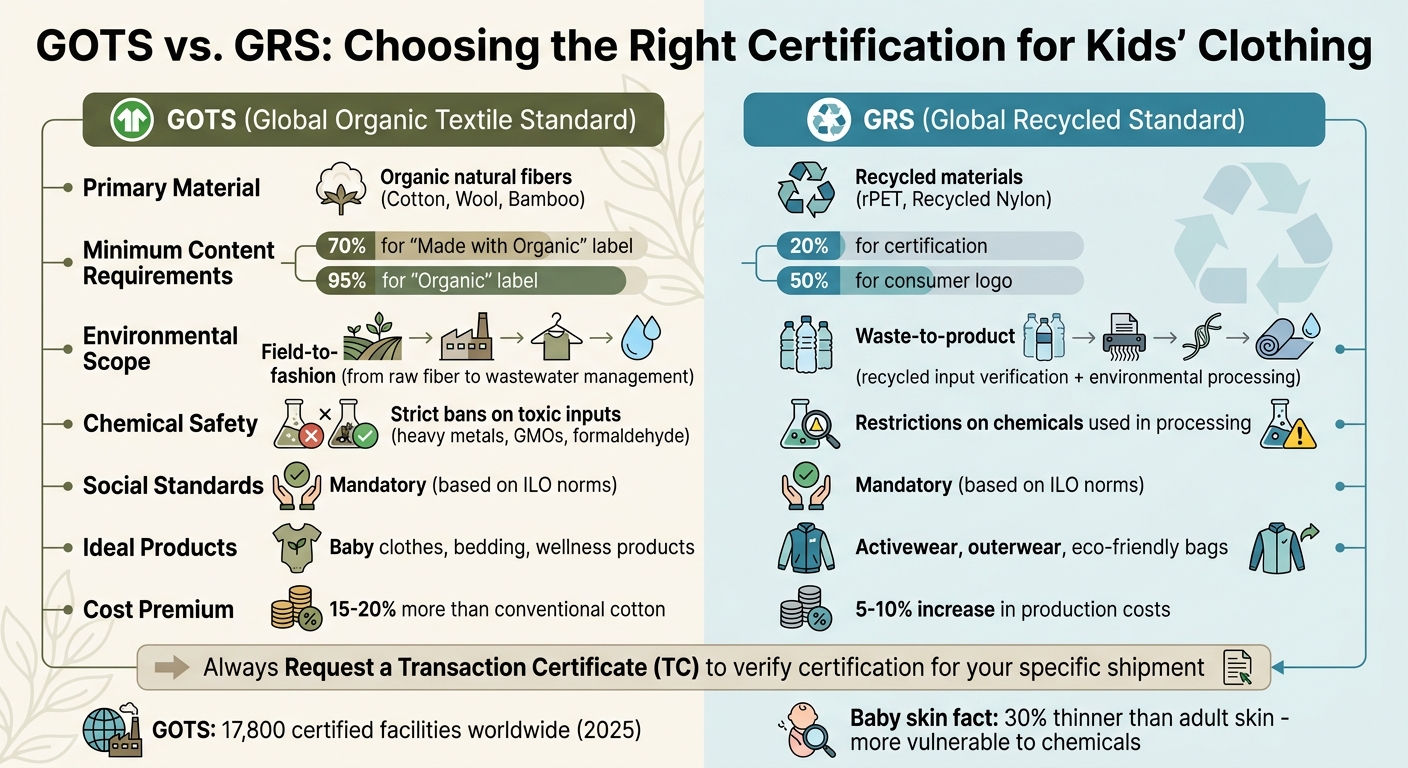
Both GOTS and GRS certifications uphold strict environmental and social standards based on International Labor Organization (ILO) norms, but they focus on different aspects of sustainability. GOTS certifies the organic status of natural fibers like cotton, wool, and linen, ensuring compliance from raw material to the finished product. In contrast, GRS verifies recycled fiber content in materials such as rPET (recycled polyester), recycled nylon, and recycled cotton, tracking the recycled material's journey through the supply chain.
The scope of each certification highlights their distinct priorities. GOTS operates as a "field-to-fashion" standard, covering every step from farming to the final product. Meanwhile, GRS is a "full product standard" focused on tracing recycled materials while also auditing environmental and social practices at processing facilities.
"GOTS is the rigorous 'field-to-fashion' standard. It verifies organic fiber content, bans toxic inputs like formaldehyde during dyeing, and mandates fair labor practices." - David Wu, Senior Apparel Production & Quality Assurance Consultant
Chemical safety is another key difference. GOTS bans or strictly limits harmful chemicals like formaldehyde, heavy metals, and GMOs during manufacturing. GRS, on the other hand, sets chemical safety requirements to ensure recycled materials are processed responsibly. These distinctions help define each certification's role in sustainable kids' clothing.
Comparison Table: GOTS vs. GRS
| Feature | GOTS (Global Organic Textile Standard) | GRS (Global Recycled Standard) |
|---|---|---|
| Primary Material | Organic natural fibers (Cotton, Wool, Bamboo) | Recycled materials (rPET, Recycled Nylon) |
| Minimum Content | 70% (for "Made with Organic") / 95% (for "Organic") | 20% for certification / 50% for consumer logo |
| Environmental Scope | From raw fiber to wastewater management | Recycled input verification; environmental processing |
| Social Standards | Mandatory (based on ILO norms) | Mandatory (based on ILO norms) |
| Chemical Safety | Strict bans on toxic inputs (heavy metals, GMOs) | Restrictions on chemicals used in processing |
| Ideal For | Baby clothes, bedding, wellness products | Activewear, outerwear, eco-friendly bags |
This comparison helps clarify which certification aligns best with your product's goals.
How to Choose Between GOTS and GRS
When deciding between GOTS and GRS for sustainable kids' clothing, consider factors like fiber type, brand messaging, and product function. GOTS is the better choice if your products revolve around organic fibers like cotton, especially for baby apparel or items where skin sensitivity and purity are key concerns. Keep in mind, GOTS-certified cotton typically costs 15–20% more than conventional cotton.
GRS, on the other hand, is better suited for performance-oriented clothing, outerwear, or brands that focus on circular economy principles. It allows you to highlight a "waste-to-product" narrative, which resonates with tech-savvy and eco-conscious consumers. This certification also meets the durability needs of kids' activewear and outdoor gear.
"Choose GOTS if your brand values a 'farm-to-product' story... Choose GRS if your brand values a 'waste-to-product' story." - Ruixing Gifts Team
Regardless of the certification, always verify documentation carefully. A Scope Certificate (SC) only proves that a factory is certified to produce compliant goods, but a Transaction Certificate (TC) is essential to confirm that the specific shipment you receive meets certification standards. Additionally, be mindful of the "trim trap" - GOTS and GRS mainly cover textile fibers, so non-textile components like zippers and buttons should meet separate safety standards like OEKO-TEX.
How Little Eco Threads Supports Certified Manufacturing
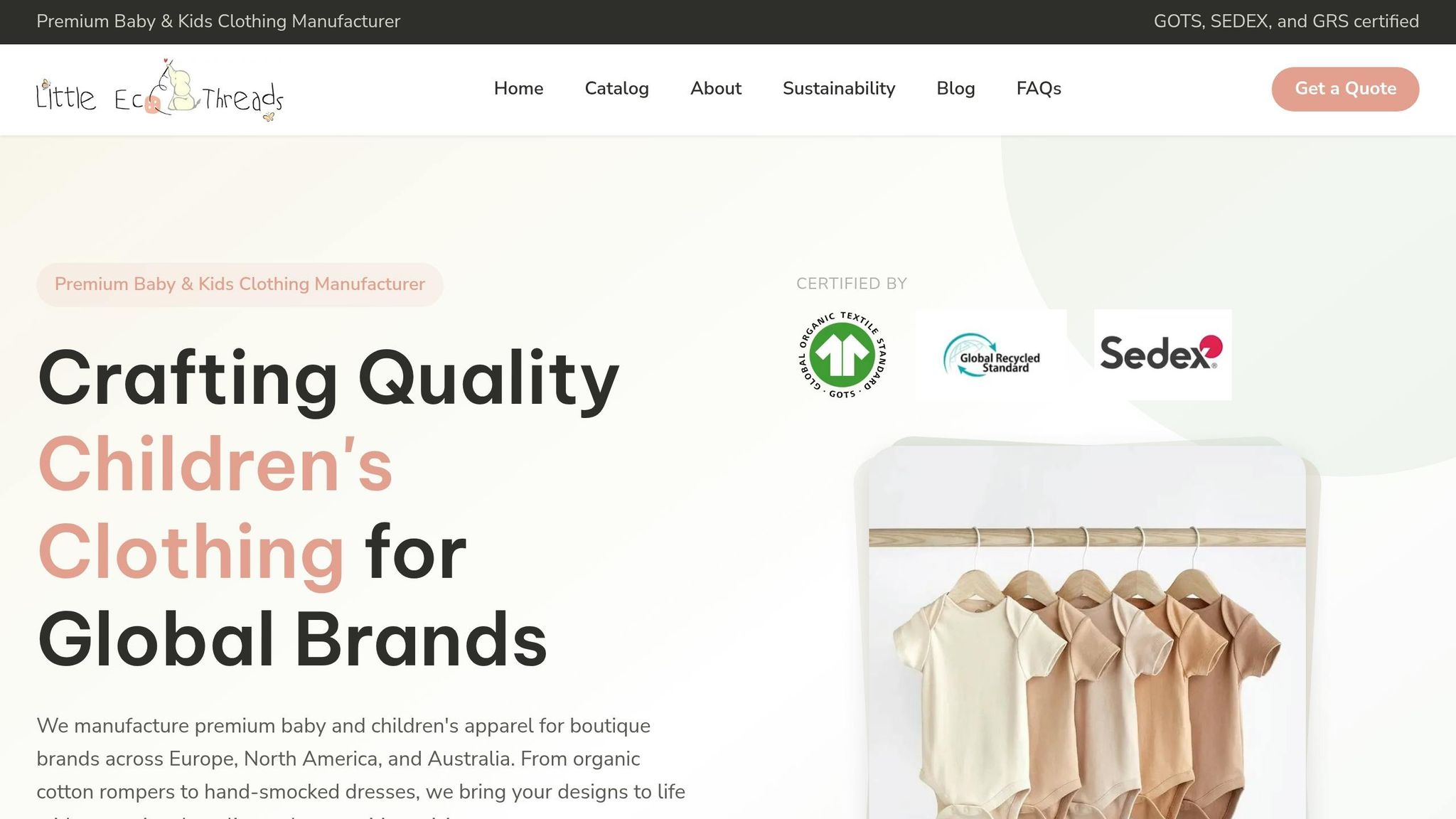
Little Eco Threads takes certification seriously, ensuring their entire supply chain complies with both GOTS and GRS standards. Every stage - spinning, weaving, wet processing, and garment manufacturing - is certified, with a clear chain of custody to back it up. They provide Transaction Certificates (TCs) for every order, which link shipments directly to certified organic or recycled fiber lots. This third-party verification helps boutique brands steer clear of greenwashing and guarantees that their products align with strict certification standards. This meticulous process lays the foundation for the specialized services they offer.
Little Eco Threads caters to boutique brands with custom manufacturing solutions, including low minimum order quantities, custom dyeing, and digital printing options. Their end-to-end services - covering design, development, production, and delivery - make certified manufacturing accessible to smaller brands that might otherwise struggle to meet the high volume requirements of larger factories.
GOTS-Certified Organic Baby and Kids' Apparel
Little Eco Threads produces GOTS-certified baby and kids' clothing using organic materials like cotton, linen, hemp, and wool. From smocked dresses to hand-embroidered pieces, all items are made in certified facilities that uphold strict chemical safety standards. This is especially important for baby clothing, as a baby's skin is 30% thinner than an adult's, making it more vulnerable to harmful chemicals.
Their expertise spans every step of the "field-to-fashion" process, from ginning and spinning to dyeing and garment construction. This ensures that all materials meet the necessary standards for GOTS certification. Boutique brands can confidently use organic materials that comply with the 95% organic fiber requirement for the "Organic" label or the 70% threshold for "Made with Organic" labeling. This process highlights the importance of GOTS certification in ensuring both organic integrity and chemical safety for kids' clothing.
GRS-Certified Recycled Kids' Clothing
Little Eco Threads also excels in creating kids' clothing using recycled materials like polyester (rPET), nylon, and denim. These materials are transformed into printed garments, activewear, and outerwear, supporting a "waste-to-product" approach. The durability of these recycled fibers makes them ideal for children's clothing. By meeting GRS thresholds for recycled content, the company provides boutique brands with high-quality, performance-oriented options. This approach underscores the value of GRS certification in promoting recycled materials and circular economy principles in children's apparel.
Conclusion
Choose GOTS for sensitive, first-layer garments and GRS for durable outerwear, depending on how your brand aligns with sustainability goals. GOTS is ideal for items like onesies, pajamas, and underwear, where chemical safety is paramount - especially since children’s skin is 30% thinner than adult skin, making it more prone to absorbing harmful substances. On the other hand, GRS is better suited for outerwear such as jackets, backpacks, and activewear, where recycled materials contribute to reducing plastic waste and promoting a circular economy.
The two certifications have distinct focuses: GOTS ensures organic natural fibers are certified throughout the production process, while GRS tracks recycled content across the supply chain. Both maintain rigorous social and environmental standards but highlight different aspects of sustainability, offering unique narratives for your brand.
"The best certification is the one that tells the most authentic story about your brand." - Ruixing Gifts Team
To avoid greenwashing and ensure transparency, always request a Transaction Certificate (TC) for your order. This third-party documentation verifies that your shipment contains certified materials, providing credibility and accountability.
FAQs
Can one garment be both GOTS and GRS certified?
Yes, a garment can carry both GOTS (Global Organic Textile Standard) and GRS (Global Recycled Standard) certifications if it meets the requirements for each. GOTS certification applies to organic natural fibers, like cotton or wool, while GRS certification focuses on recycled materials, such as recycled cotton or polyester. If a garment combines organic and recycled materials, it can qualify for both certifications, as long as the manufacturing process adheres to the specific standards set by each.
How do I verify a product’s certification with a Transaction Certificate (TC)?
To confirm a product's certification, ask the supplier for the official Transaction Certificate (TC). This document verifies that the product meets standards like GOTS or GRS and includes essential details such as the scope, certification date, and material composition.
Once you have the TC, compare it to the product to ensure it aligns. Then, use the certifying organization’s verification system or database to validate the certificate's authenticity and confirm it matches the product information.
Do zippers, snaps, and trims need to be certified too?
Zippers, snaps, and trims themselves don’t require individual certification under GOTS or GRS. However, the materials and components they’re made from must align with the standards if used in a certified textile product. Ensuring this compliance is essential to uphold the certification's credibility.