
India EU FTA: Bringing New Opportunities for Sustainable Apparel Sourcing and Manufacturing
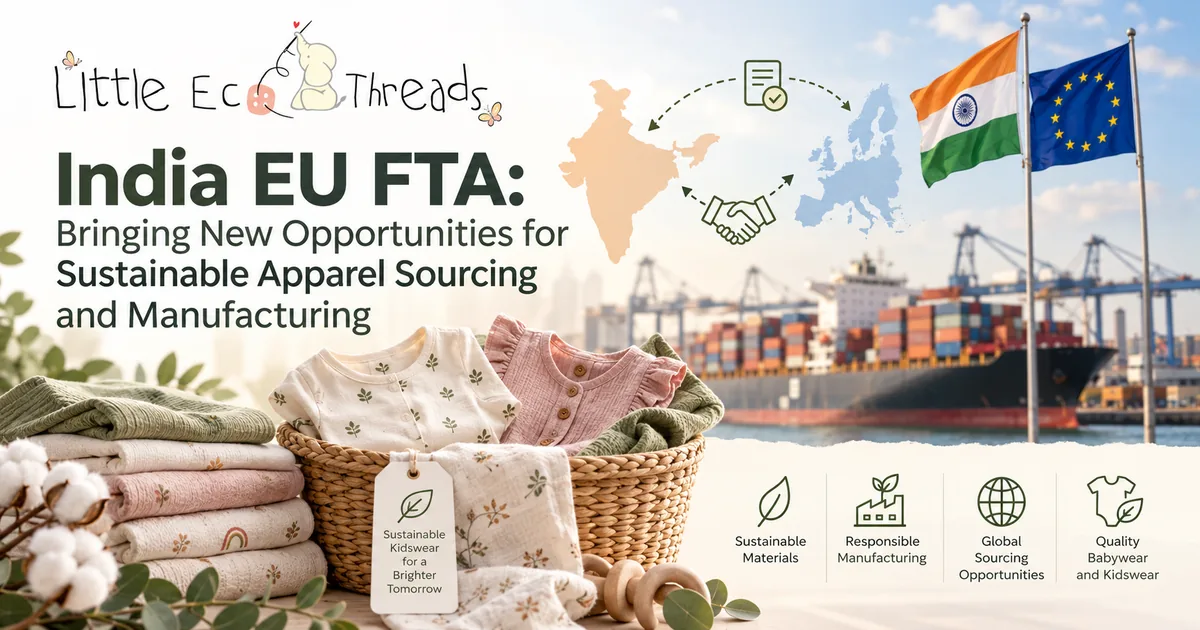
European buyers are asking a practical question: where should the next collection be made, and what will it cost to land? The India EU Free Trade Agreement (FTA) could change part of that answer. Negotiations concluded on 27 January 2026, and India’s Ministry of Textiles says the agreement provides for zero-duty access across textile and clothing tariff lines once it enters into force.
That final phrase matters. As of the latest European Commission update reviewed for this article, the agreement had not yet entered into force. The Commission submitted proposals to the Council of the European Union for signature and conclusion in September 2026, with further approval steps still required. Businesses cannot claim the agreement’s preferential tariffs before they become applicable. Yet apparel sourcing is planned well ahead of selling seasons, so brands and manufacturers have good reason to understand what may change.
This article looks at the commercial implications: how proposed tariff changes could affect apparel sourcing from India, why rules of origin and EU product compliance will still matter, and what sustainable babywear and kidswear businesses can do to prepare.
Why the India EU FTA Matters for Apparel Trade
The European Union is a major global market for textiles and apparel. A September 2026 release from India’s Ministry of Textiles put the EU’s global textile and apparel imports at approximately US$292.8 billion in 2025 and India’s textile and apparel exports to the EU at around US$10.4 billion. These figures cover the wider textile and apparel sector, not sustainable clothing or babywear alone, but they show the scale of the market Indian suppliers are seeking to serve.
India already exports a broad range of textile products to Europe, including ready-made garments, cotton textiles and man-made fibre products. Ready-made garments are particularly relevant to businesses that design and manufacture finished clothing for brands. For companies sourcing baby bodysuits, rompers, sleepwear and other children’s apparel, the FTA is worth watching because the cost of importing a finished product can influence supplier comparisons and collection planning.
The agreement does not guarantee that European buyers will change suppliers. It may, however, change one element of the sourcing calculation: the customs duty payable on eligible products.
What Could Change with Tariffs?
According to the Government of India’s FTA FAQ, the negotiated package provides for duty-free treatment upon entry into force across the textile and apparel tariff lines identified in its summary. The same summary notes that existing EU duties can reach up to 12% for textiles and apparel, depending on the product. That is an upper range, not a rate that applies to every garment.
If an eligible product currently attracts customs duty and qualifies for the preferential rate once the agreement is operational, the duty component of its landed cost could fall. This may improve the price competitiveness of an Indian supplier, create room for an importer to protect its margin, or give a brand more flexibility when planning a product range. The commercial outcome will depend on the actual tariff classification, the applicable schedule, origin eligibility, freight, manufacturing costs and the way the buyer and supplier negotiate prices.
For example, imagine a European brand imports a shipment with a customs value of €10,000. If the product’s applicable duty were 8%, the duty would be €800. If a future preferential rate reduced that duty to zero, the customs-duty component could fall by €800. This is an illustration only: the 8% rate is hypothetical, not a stated rate for a specific babywear product under the FTA. Import VAT, freight, clearance, testing, warehousing and other costs would still need to be considered.
For buyers, the sensible next step is not to assume a saving in advance, but to identify the tariff codes for their products and check the final schedule and implementation rules when the agreement becomes applicable.
Could This Create Opportunities for Sustainable Apparel Sourcing?
A potential tariff advantage can encourage a buyer to revisit sourcing options, but it is rarely the only factor in a purchasing decision. Brands also assess product quality, consistency, delivery times, production capacity, minimum order quantities, material availability, communication and the supplier’s ability to meet product and regulatory requirements.
For sustainable apparel businesses, the opportunity may lie in combining competitive manufacturing with a clear offer: suitable materials, dependable production, product-development support and transparent documentation. European brands looking for organic cotton babywear or private-label children’s clothing may compare suppliers on the overall value they provide, rather than on unit price alone.
Potentially relevant product categories include organic cotton bodysuits and rompers, baby sleepwear, knitted essentials, swaddles, bibs and other newborn products. However, not every product will necessarily fall under the same customs classification. A garment, blanket and textile accessory may be treated differently for tariff purposes, so the applicable classification and tariff line must be checked product by product.
The FTA should therefore be understood as a possible change in the trade environment, not as a guarantee of demand for sustainable products. Brands will still need to offer products that suit their customers, and manufacturers will need to compete on quality, service and reliability as well as cost.
What the Agreement Could Mean for Babywear and Kidswear Brands
Babywear and kidswear businesses often manage a broad product mix, from clothing to textile accessories and coordinated gift sets. When evaluating a manufacturing partner, a brand may need to consider fabric choices, fit and finish, colour consistency, labelling, packaging, production quantities and the ability to repeat an order to the same standard.
If eligible Indian-made apparel receives preferential tariff treatment once the FTA enters into force, European buyers may have a reason to reassess the total landed cost of some products sourced from India. For manufacturers, that could create an opportunity to start conversations with brands that are reviewing their supply chains. But the tariff benefit would depend on the product and the agreement’s rules, and it would not remove other sourcing considerations.
Little Eco Threads operates in the sustainable babywear and kidswear manufacturing space, where product development and material selection are important parts of the sourcing conversation. For brands exploring manufacturing options, the relevant question is how a supplier’s product capabilities, quality processes, materials and commercial terms fit the brand’s needs. The FTA is one factor to monitor alongside those practical considerations.
Brands should also be careful not to assume that every baby product receives the same tariff treatment. Before relying on any expected saving, importers and exporters should confirm the relevant product code and the applicable provisions in the final agreement.
Rules of Origin: Why Shipping from India Is Not Enough
Preferential tariffs under an FTA generally apply only to goods that meet the agreement’s rules of origin. These rules determine whether a product qualifies as originating in a party to the agreement. The European Commission’s summary says the India EU rules are designed to ensure that products have undergone the required processing rather than simply being shipped through one of the parties.
Consider an Indian manufacturer producing babywear for a European customer using fabric sourced internationally. The finished garments would not automatically qualify for preferential treatment simply because they were stitched or shipped from India. The manufacturer and exporter would need to check the specific origin rule for the product, how the materials were sourced and processed, and what supporting documentation is required.
The Commission’s published agreement materials include product-specific rules of origin and origin procedures. These texts were published for information and may undergo legal revision; the final requirements should be checked before a business makes an origin claim. Clear records of materials, production steps and supplier documentation can help businesses prepare, but the precise requirements depend on the applicable rule.
For brands and manufacturers, this means that sourcing and compliance teams should work together early. Product costing alone will not establish whether a product qualifies for a preferential tariff.
Sustainability and EU Compliance Still Matter
The FTA’s trade and sustainable development provisions address issues including environmental protection, climate action and workers’ rights. These commitments are relevant to the wider trade relationship, but they should not be confused with a special tariff discount for certified sustainable products. A garment does not automatically receive a lower tariff simply because it is described as organic, recycled or sustainable.
Certifications and standards can still be important to a brand’s sourcing decisions. Depending on the product and the claim being made, buyers may ask for evidence related to organic fibre content, recycled materials, chemical testing, supply-chain practices or facility audits. Certifications address different questions, so businesses should be precise about what a particular certificate covers and which products or facilities it applies to.
European product requirements remain a separate consideration. Relevant REACH restrictions may apply to hazardous substances in clothing and textiles. EU textile labelling rules govern fibre-composition information for products within their scope, while the General Product Safety Regulation provides a wider consumer-product safety framework. The exact obligations depend on the product, the role of each business in the supply chain and the applicable legislation.
A lower customs duty, if available, does not replace product safety, chemical, labelling or other applicable requirements. For children’s products in particular, brands and suppliers should establish the compliance requirements early in product development rather than treating them as a final step before shipment.
How Apparel Brands and Manufacturers Can Prepare
The agreement’s proposed benefits are not yet something businesses can claim, but there are practical steps they can take now:
- Review the products you import or manufacture and confirm their customs classifications with a qualified customs adviser where necessary.
- Monitor official updates on signature, approval procedures and entry into force rather than relying on assumed timelines.
- When the final rules are applicable, check the product-specific tariff schedule and rules of origin before pricing a shipment on the assumption of preferential treatment.
- Build reliable records for materials, production processes and suppliers so origin requirements can be assessed accurately.
- Evaluate total landed cost, not just the customs duty. Freight, insurance, import VAT, testing, packaging, warehousing and delivery timelines may still affect the commercial decision.
- Review the EU requirements relevant to each product, including chemical restrictions, textile labelling and product safety.
- For sustainable claims, keep clear evidence of material composition, certification scope and supply-chain practices. Avoid broad claims that cannot be substantiated.
- For brands seeking a new manufacturing partner, assess product development, quality, minimum order quantities, communication and repeat-order consistency alongside price.
What This Could Mean for the Future of Sustainable Apparel Trade
The India EU FTA could make eligible Indian textile and apparel exports more competitive by reducing applicable customs duties. For European brands, this may be a reason to reassess sourcing options; for Indian manufacturers, it may create an additional opportunity to demonstrate their capabilities to international buyers.
But tariff access is only one part of the picture. Businesses will still need to understand product-specific rules of origin, meet relevant EU requirements and deliver the quality, consistency and transparency buyers expect. For sustainable babywear and kidswear, material choices and credible product information can be important parts of that value proposition.
For businesses such as Little Eco Threads, the development is worth monitoring as part of a broader approach to international sourcing and manufacturing. The most useful preparation is practical: understand the products, verify the applicable rules, keep documentation organised and build supplier relationships around quality and reliability.
The opportunity is not simply to source at a lower cost. It is to make informed sourcing decisions as the trade framework evolves, and to be ready to evaluate the agreement’s actual benefits once it enters into force.
Sources and Further Reading
- European Commission: EU-India Trade Agreement — status and next steps
- European Commission: Text of the EU-India Agreements — tariff schedules and rules of origin
- European Commission: Chapter-by-chapter summary of the EU-India FTA
- Government of India: India-EU FTA Frequently Asked Questions
- Ministry of Textiles: India-EU FTA and the textile and apparel sector
- European Commission: EU Strategy for Sustainable and Circular Textiles
- European Commission: REACH restrictions
- Your Europe: Textile labelling rules
- EUR-Lex: General Product Safety Regulation overview