Kidswear Manufacturer: Fabric Choices for Brands
A founder building a children's line can feel overwhelmed before the first sample is even approved. Prints, size charts, trims, packaging, certification, pricing, and minimums all matter, but one decision shapes almost everything that follows: fabric. Working with the right kidswear manufacturer helps a brand choose materials that make sense for comfort, durability, compliance, and the sustainability promise customers will see on the label.
This is especially important for a new kidswear brand in the USA. Parents expect clothing to feel soft, survive frequent washing, and be responsibly made. A better fabric choice will not solve every supply chain question, but it gives the product a stronger foundation from the start.
Why A Kidswear Manufacturer Starts With Fabric
Fabric is often treated as a design choice, but it affects production long before the garment reaches a customer. The fiber influences dyeing, shrinkage, pilling, cutting, sewing, hand feel, and how the garment behaves after repeated washes.
For a simple children's T-shirt, fabric quality can decide whether the neck keeps its shape, whether the color stays consistent, and whether the surface starts to pill after a few wears. For babywear, it can affect softness against the skin and how easily the garment moves with the child.
That is why an experienced children's clothing manufacturer should talk about fabric before talking only about style. A good manufacturing conversation connects fabric choice to:
- Season and market
- Age group and fit
- Wash performance
- Dyeing and finishing
- Certification requirements
- Bulk production consistency
- Finished garment cost
When these decisions are made early, the brand avoids expensive corrections later in sampling or production.
Fabric Choices Shape A Sustainable Kidswear Brand
For brands trying to build sustainable kidswear, fabric is one of the most practical starting points. It is visible to customers, measurable during sourcing, and directly tied to how long the finished garment remains useful.
But sustainable fabric choices are not only about choosing the material that sounds best in marketing. A responsible sourcing process should ask where the fiber comes from, how it is processed, whether claims can be documented, and whether the fabric performs well enough for children's everyday use.
For example, organic cotton can be a strong option for baby and kidswear when it is sourced carefully and paired with the right construction. It is familiar to parents, comfortable for children, and widely used across everyday essentials. Still, the words "organic cotton" should be backed by documentation, not treated as a loose claim.
Why Fabric Matters More In Children's Clothing
Kidswear has a harder job than many adult garments. A toddler's leggings might be worn to daycare, crawled in, spilled on, washed, dried, and worn again in the same week. A favorite sweatshirt might be washed every few days for months.
This repeated use changes the sustainability conversation. If a garment loses shape quickly, pills heavily, or becomes uncomfortable after a few washes, it may be replaced sooner. That creates a worse experience for parents and weakens the environmental value of the original material choice.
This is also why safety and performance belong in the same conversation. In the USA, children's clothing is covered by apparel safety requirements, including flammability rules for many garments and specific rules for sleepwear. A brand should not make broad claims based only on fiber content. It should understand the intended product category and confirm what testing, labeling, and compliance steps apply.
Organic Cotton And Certification
Organic cotton is one of the clearest entry points for brands improving their fabric sourcing. It is grown under organic farming rules and can help a brand move away from some conventional chemical inputs at the fiber stage.
However, organic cotton is not automatically a complete sustainability claim. It still requires farming, spinning, knitting or weaving, dyeing, finishing, cutting, sewing, packaging, and transport. Each stage affects the finished product.
That is where certification helps. GOTS certified organic cotton gives a brand a more specific standard to reference than a supplier simply saying "organic." The Global Organic Textile Standard covers organic textile processing and includes environmental and social criteria across certified stages of the supply chain.
Textile Exchange's Organic Content Standard is another useful point of reference. It focuses on chain of custody and verifies organic material content through third-party certification. For founders, the practical lesson is simple: ask what the certification verifies, what it does not verify, and whether the supplier can provide current documentation for the material being offered.
Better Fabric Does Not Automatically Mean Sustainable Children's Clothing
A fabric can be a strong starting point without being the whole story. For sustainable children's clothing, brands need to look beyond fiber content.
A credible brand should also consider:
- Dyeing and finishing practices
- Chemical management
- Worker conditions
- Sampling accuracy
- Quality control between sample and bulk
- Packaging choices
- Deadstock and fabric waste
- Transport and inventory planning
This is where many young brands unintentionally overstate their claims. A sustainable material inside an opaque or poorly controlled process is still only one responsible input. The stronger approach is to be specific: explain what has been improved, what has been verified, and what the brand is still working on.
Durability Is Part Of Ethical Kidswear
Durability is often less visible than certification, but it matters. Two garments can both use organic cotton and still perform very differently after washing. Yarn quality, knit structure, seam construction, dyeing, finishing, trims, and quality control all influence how long the product stays wearable.
For ethical kidswear, durability is part of the responsibility. A garment that lasts long enough to be passed down, donated, or resold has more practical value than one that looks good only at launch.
This is especially important for baby and children's essentials. Parents notice whether a bodysuit twists after washing, whether snaps hold, whether prints fade, and whether seams stay comfortable. A manufacturer should be able to explain how these details are checked before bulk production.
Common Myths About Sustainable Kidswear
Myth 1: Sustainable Kidswear Has To Be Expensive
Better materials and responsible manufacturing can increase unit cost, but pricing depends on fabric selection, order volume, production complexity, and planning. Sustainability is not the only reason a product becomes expensive. Poor forecasting, excessive trims, too many colorways, and inefficient sampling can raise costs too.
Myth 2: Organic Cotton Automatically Makes A Garment Sustainable
Organic cotton is a useful improvement, but it does not cover every stage of production. Dyeing, finishing, labor practices, packaging, transport, and durability still matter.
Myth 3: Certification Is Only A Marketing Label
Certification is not a substitute for due diligence, but it is much stronger than an unsupported supplier claim. The key is understanding what each standard verifies and asking for documentation tied to the actual fabric or finished product.
Myth 4: New Brands Need A Perfect Supply Chain From Day One
Most new brands need a sequence of better decisions, not a claim of perfection. Fabric sourcing, manufacturer selection, quality control, and honest communication are practical places to begin.
Questions To Ask A Children's Clothing Manufacturer
Before committing to production, founders should ask clear questions about material sourcing and performance:
- What fabrics do you recommend for this product and age group?
- Where are those fabrics sourced from?
- Can you provide certification documents for the material?
- What does the certification actually cover?
- How are dyeing and finishing handled?
- What quality checks are done before bulk production?
- How do you test shrinkage, pilling, colorfastness, and seam strength?
- How do you keep bulk production consistent with the approved sample?
- What happens to fabric scraps, rejects, or excess material?
- Can you support smaller launches before the brand scales?
The best answers are specific. A manufacturer should not only say that a fabric is sustainable; it should explain why that fabric is appropriate for the product and how the claim can be verified.
Where Little Eco Threads Fits
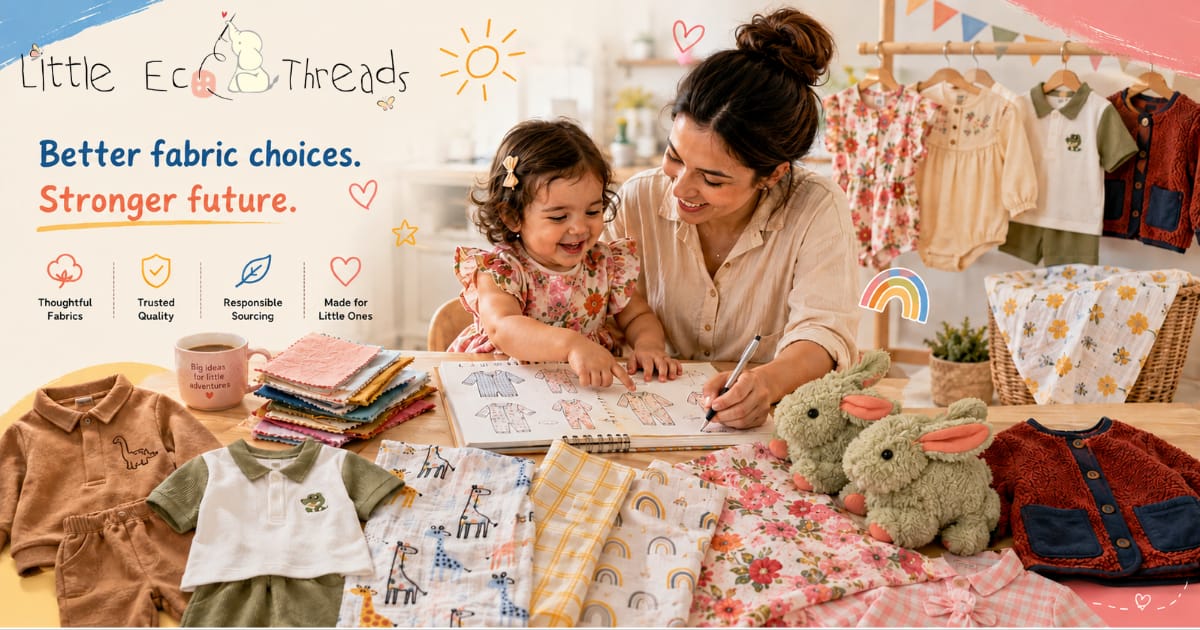
Little Eco Threads works with brands developing baby and children's clothing with a focus on responsible materials, practical production planning, and lower-risk launch decisions.
For a founder, the value of a manufacturing partner is not just access to fabric. It is help making the many smaller choices that shape the final product: selecting the right base fabric, building samples correctly, checking quality, planning a realistic MOQ, and keeping the product aligned with the brand's sustainability story.
That matters most when a brand is still young. A better fabric choice can support the first collection, but a transparent manufacturing process helps the brand keep improving collection after collection.
FAQ
What should a kidswear brand look for in a manufacturer?
A kidswear brand should look for clear communication, fabric knowledge, sample development support, quality control, realistic minimums, and documentation for any sustainability or certification claims.
Is organic cotton always the best fabric for kidswear?
Organic cotton is often a strong choice for baby and children's clothing, but it is not automatically the best option for every garment. The right fabric depends on season, product type, durability needs, care instructions, price point, and certification goals.
Why does certification matter for sustainable kidswear?
Certification helps brands move from general claims to documented proof. It can show whether a material is certified organic, whether chain of custody has been verified, or whether a specific processing standard applies.
Can a small brand start with sustainable fabric choices?
Yes. A small brand does not need to solve every sustainability challenge before launch. It can start by choosing better fabrics, asking for documentation, limiting overproduction, and working with a manufacturer that supports responsible development.
Start With One Better Fabric Decision
Building sustainable children's clothing is a process, not a single material choice. Fabric is simply one of the strongest places to begin because it affects comfort, durability, sourcing, cost, and the story a brand can honestly share with customers.
If you are developing a baby or kidswear collection and want support choosing materials, sampling responsibly, and planning production, contact Little Eco Threads to discuss your next range.