Is Muslin Good for Baby Clothes?
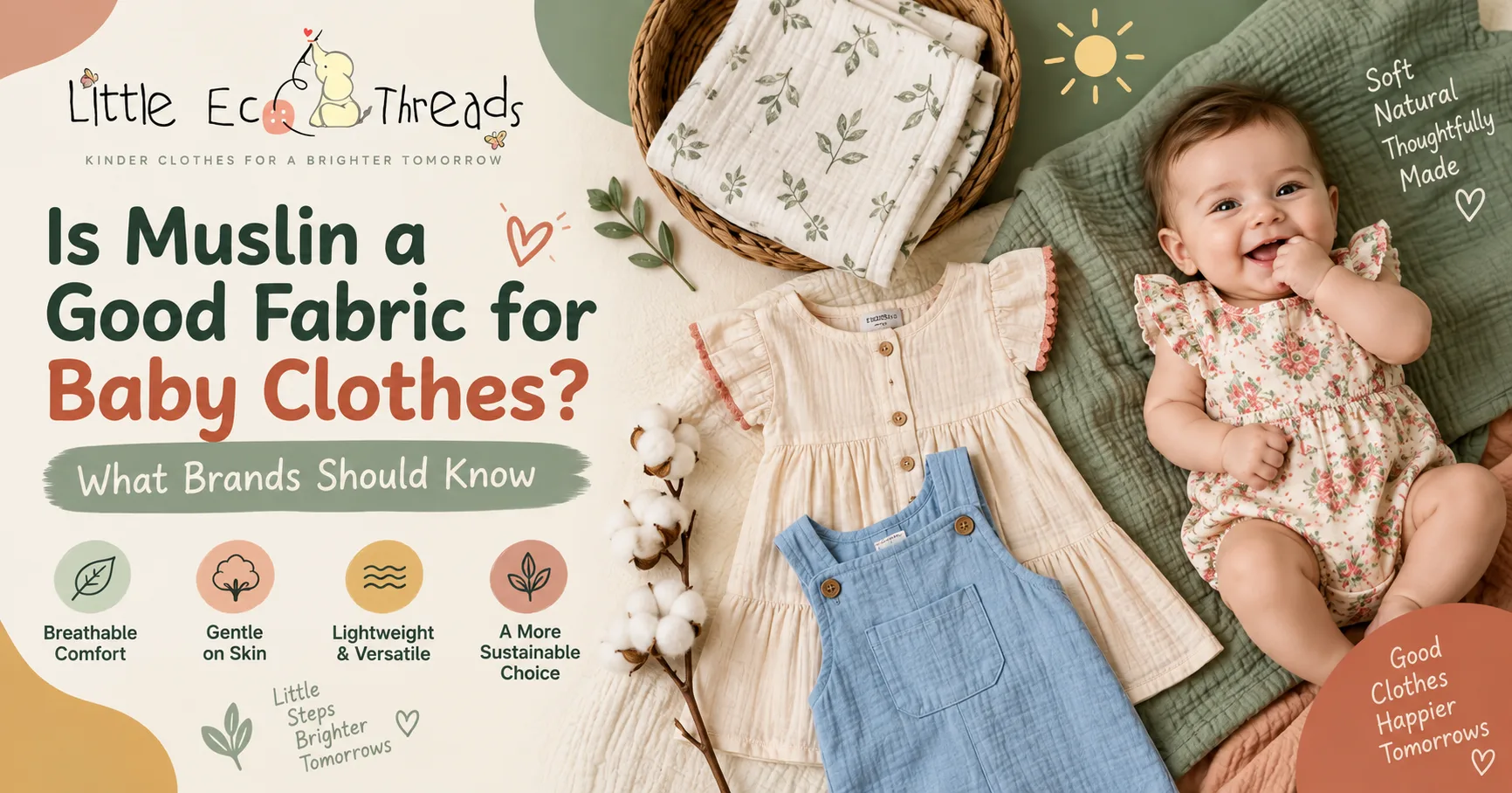
For many babywear brands, muslin baby clothes feel like an obvious choice for summer ranges, newborn essentials, and lightweight everyday pieces. Muslin is familiar to parents, easy to explain in product copy, and closely associated with soft baby products.
But muslin baby clothing is not automatically good simply because the fabric name sounds gentle. The finished garment depends on the fibre, weave, GSM, finishing, shrinkage, stitching, and the way the fabric is matched to the product. A muslin romper, muslin dress, and muslin swaddle all need slightly different decisions.
This guide explains when muslin fabric for baby clothes works well, when it needs more caution, and what brands should check before putting it into production.
What Is Muslin Fabric?
muslin fabric is a woven fabric structure, not a fibre by itself. Most babywear muslin is made from cotton, but cotton describes the fibre and muslin describes the way the yarns are woven into cloth.
In simple terms, muslin is usually a plain-weave fabric with a lighter, more open structure than many tighter cotton fabrics. That is why muslin often feels airy, soft, and relaxed rather than crisp or structured.
This distinction matters for brands. A supplier saying "cotton" does not automatically mean muslin, and a supplier saying "muslin" does not tell you enough about weight, weave density, softness, shrinkage, or durability. Two muslin fabrics can feel very different after washing.
Why Muslin Baby Clothing Is Popular
muslin baby clothing is popular because the fabric usually suits warm-weather baby products. It can feel light on the skin, layer without too much bulk, and drape softly around a baby's body.
For a brand building a warm-season collection, baby clothes made from muslin can work across:
- Loose newborn tops
- Summer rompers
- Lightweight dresses
- Swaddle blankets
- Burp cloths
- Bibs and small accessories
- Gift-set pieces
The main advantage is comfort, but comfort is not only about fabric. A breathable material can still become uncomfortable if the neckline is tight, the seams are scratchy, the label placement is poor, or the garment shrinks after washing.
Is Muslin Good for Baby Clothes?
Yes, muslin can be good for baby clothes when the product is designed around the fabric's strengths. It is especially useful for relaxed garments, warm climates, newborn layering, and products where softness and breathability matter more than structure.
Muslin is less ideal when a garment needs strong shape retention, high abrasion resistance, or a very structured silhouette. A toddler play bottom, lined jacket, or fitted garment may need a tighter woven cotton, jersey, twill, or a heavier muslin construction.
The practical answer is this: muslin is not a universal fabric solution. It is a strong choice when the garment, climate, and customer expectation match the fabric.
Muslin Swaddles, Rompers, and Dresses
A muslin swaddle blanket is one of the most familiar uses for this fabric because swaddles benefit from softness, drape, and airflow. If a brand is planning swaddle manufacturing, it should test shrinkage, edge finishing, print durability, and finished size after washing.
muslin rompers can also work well when the fit is relaxed and the construction allows movement. A very lightweight muslin romper may need lining, layering, or a double-gauze construction depending on opacity and durability.
muslin dresses are often a good summer product because the fabric gives a soft, easy silhouette. The main checks are transparency, seam strength, neckline comfort, and whether the fabric can hold gathers, buttons, embroidery, or trims without distortion.
Muslin vs Regular Cotton
Comparing muslin with cotton can be misleading because muslin is often made from cotton. The more useful comparison is muslin versus other cotton fabric structures.
| Fabric type | Typical feel | Common babywear use |
|---|---|---|
| Muslin | Light, airy, relaxed | Swaddles, summer clothing, loose newborn garments |
| Cotton jersey | Soft, stretchy, flexible | Bodysuits, rompers, sleepwear, tees |
| Poplin | Smoother, tighter, crisper | Shirts, dresses, structured woven pieces |
| Twill or denim | Stronger, more structured | Bottoms, jackets, durable toddler styles |
| Interlock | Soft, thicker knit | Premium basics and cooler-weather clothing |
Muslin is usually chosen for softness and airflow. Other cotton fabrics may perform better where stretch, structure, abrasion resistance, or opacity are more important.
Single-Layer, Double-Layer, and Organic Cotton Muslin
Single-layer muslin is lighter and often more transparent. It can be useful for swaddles, scarves, light blankets, and loose summer garments. Double-layer muslin has more body and opacity, which can suit garments that need a little more structure.
organic cotton muslin adds another sourcing decision. "Organic cotton" refers to the fibre, while "muslin" refers to the weave. If a brand wants to market a product as organic, the claim should be supported with documents, not assumed from a supplier description.
For the US market, USDA organic textile guidance explains how organic textile claims can be made and notes that textiles meeting the Global Organic Textile Standard may be sold as organic in the US. For broader textile certification claims, brands should check the current requirements directly with GOTS or their certification body.
What Brands Should Check Before Buying Muslin
Before committing to muslin for babywear, brands should move beyond the swatch and check how the fabric behaves in real production.
Important checks include:
- Fibre composition
- Weave density
- GSM and finished hand feel
- Shrinkage after washing
- Colour consistency
- Print quality and colourfastness
- Seam strength
- Transparency and lining needs
- Label and trim placement
- Batch repeatability
- Certification documents where claims are made
fabric testing should include wash testing, shrinkage review, and a finished sample, not only a small unwashed swatch. This is especially important for muslin because the fabric can change noticeably after laundering.
Shrinkage and Size Consistency
Shrinkage is one of the biggest practical issues with muslin babywear. A sample can measure correctly before washing and still become too small after the first laundry cycle if shrinkage has not been tested and allowed for.
For production, this affects pattern development, grading, cutting, and final inspection. If a brand sells a size 0-3 month romper or dress, customers expect that size to hold after ordinary washing.
This is why a responsible manufacturer should test fabric before cutting, adjust patterns where needed, and keep measurement tolerances clear across the production run.
Muslin and Baby Clothing Safety
Fabric choice supports comfort, but it does not make a product safe on its own. Baby clothing still needs appropriate fit, secure trims, soft seams, and construction suited to the product's use.
For sleep and swaddling, brands should be especially careful. The American Academy of Pediatrics advises families to keep loose blankets and soft items out of an infant's sleep space, avoid overheating, and dress babies appropriately for their environment. Muslin may feel light and breathable, but product design and safe use still matter more than the fabric name.
Textile safety testing can also be relevant for baby products. OEKO-TEX STANDARD 100 includes a product class for babies and young children, with stricter requirements for items used against sensitive skin.
What to Ask a Muslin Baby Clothing Manufacturer
A strong muslin baby clothing manufacturer should help a brand choose fabric based on product use, not simply sell one standard muslin for every garment.
Ask questions such as:
- Which muslin weights do you recommend for swaddles, rompers, and dresses?
- Can you support single-layer and double-layer muslin?
- How do you test shrinkage before bulk cutting?
- Can you provide washed samples before production approval?
- What certifications support any organic or textile safety claims?
- How do you control colour consistency across repeat orders?
- Can you support labels, trims, packaging, and size grading?
- What MOQ applies by fabric, print, and colour?
Little Eco Threads works as a baby clothing manufacturer for brands that need muslin babywear, organic cotton options, sampling, quality control, and export-ready production.
Private Label, OEM, ODM, and Custom Muslin Products
For brands developing muslin babywear, the manufacturing model matters. A small brand may want private label production using its own labels, hangtags, packaging, and colour story. A more developed brand may need OEM and ODM manufacturing for custom prints, pattern development, size grading, and coordinated product sets.
customization options can include:
- Custom prints and colourways
- Branded labels and packaging
- Swaddle, romper, and dress development
- Coordinated gift-set pieces
- Embroidery, trims, and finishing choices
- Size and fit adjustments
- Fabric sourcing and testing
This is where a clear catalog helps. A brand can compare swaddles, summer babywear, bibs, quilts, gift sets, and other categories before deciding how muslin fits into the full range.
FAQ
Is muslin good for baby clothes?
Muslin can be good for baby clothes when the garment is relaxed, breathable, and suited to warm weather or newborn layering. It is less suitable when a product needs heavy structure, high abrasion resistance, or strong shape retention.
What is muslin fabric for baby clothes?
Muslin fabric for baby clothes is usually a lightweight plain-weave cotton fabric. It is commonly used for swaddles, summer clothing, loose newborn garments, bibs, burp cloths, and soft baby accessories.
Is muslin better than cotton for babywear?
Muslin is often made from cotton, so the better comparison is muslin versus other cotton fabric constructions. Muslin is usually lighter and airier, while jersey, poplin, twill, or interlock may be better for stretch, structure, or durability.
Can muslin baby clothes be organic?
Yes, muslin baby clothes can be made from organic cotton. The organic claim should be supported with proper sourcing and certification documentation, especially if the product will be marketed as organic.
What should brands ask before producing muslin baby clothing?
Brands should ask about GSM, weave density, shrinkage, wash testing, softness after laundering, seam strength, transparency, certifications, production tolerance, MOQ, and whether the manufacturer has direct babywear experience.
Final Verdict
Muslin can be an excellent fabric for baby clothes, especially swaddles, summer garments, loose newborn pieces, rompers, dresses, and soft accessories. But the fabric name alone does not guarantee quality.
The best results come from matching the muslin construction to the product, testing it after washing, checking shrinkage, and working with a manufacturer that understands babywear fit and finishing. If you are planning muslin baby clothes or a broader babywear collection, contact Little Eco Threads to discuss fabric options, sampling, and production planning.