Natural vs. Synthetic Fabrics: What Every Children's Fashion Brand Needs to Know
Every garment tells a story, and that story begins long before the sewing machine starts. It begins with fabric. The material a designer chooses dictates how a piece looks fresh off the rack, how it feels against skin on a hot afternoon, how it holds up after dozens of washes, and what it leaves behind once it's finally discarded.
In children's fashion, these decisions carry even greater weight. Infant and toddler skin is thinner and more permeable than adult skin, making fabric choice a matter not just of comfort but of safety. Parents and the brands that sell to them increasingly demand materials that are gentle, certified, and free from harmful chemical finishes. That demand shapes everything from sourcing to storytelling.
Today's fashion landscape offers an overwhelming variety of textile options, but they largely fall into two broad families: natural fabrics and synthetic fabrics. Each has a distinct origin, a different set of qualities, and a unique role to play in modern apparel.
As awareness around ethical production and environmental responsibility grows, fashion brands increasingly find themselves making choices that go beyond aesthetics. The fabric decision is now a values decision. This guide breaks down the key distinctions between natural and synthetic textiles and explores how Little Eco Threads helps brands navigate these choices thoughtfully.
Natural vs. Synthetic Fabrics: A Deep Dive
1. What Are Natural Fabrics?
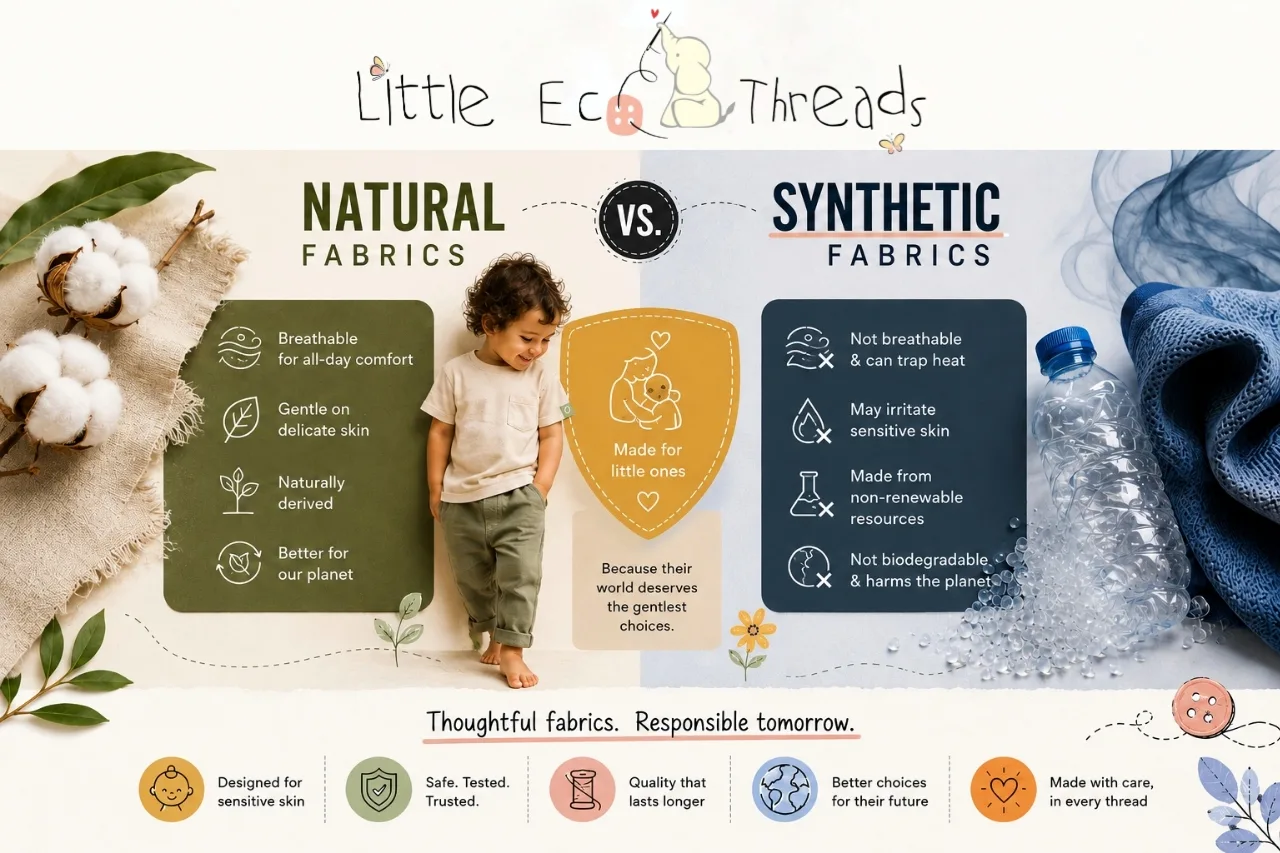
Natural fabrics come directly from living organisms, whether plants or animals. Common examples include cotton, linen, hemp, wool, silk, and cashmere. They are grown or raised, harvested, and processed into fibres without synthetic chemical engineering.
Pros:
- Breathable and comfortable against the skin, especially important for babies and young children who cannot regulate temperature as efficiently as adults
- Biodegradable and better for end-of-life disposal
- Strong consumer appeal for sustainability and luxury storytelling
- GOTS certified organic cotton, for example, also meets strict chemical restrictions: no AZO dyes and formaldehyde-free finishes, which is increasingly a purchasing requirement for kidswear buyers
Cons:
- Can shrink, wrinkle, or require delicate care
- Premium fibres like silk and cashmere carry higher production costs
- Conventional cotton can be water-intensive to grow
2. What Are Synthetic Fabrics?
Synthetic fabrics are manufactured through chemical and polymerisation processes, typically derived from petroleum. Common types include polyester, nylon, acrylic, and elastane. Semi-synthetics like viscose and modal sit in the middle: cellulose based but chemically transformed.
Pros:
- Engineered for performance: stretch, moisture wicking, UV protection
- Cost-efficient and scalable for high-volume production
- Wrinkle resistant, quick drying, and easy to launder
Cons:
- Not biodegradable. Persists in landfill and releases microplastics when washed
- Can trap heat and feel less natural against the skin, a meaningful concern for children's garments worn all day
- Faces growing consumer scrutiny over environmental impact
Key Difference at a Glance
Natural fabrics prioritise comfort, breathability, and biodegradability. Synthetics prioritise performance, durability, and cost efficiency. Neither is universally superior. The right choice depends on the garment's purpose, your brand's values, and, especially in kidswear, the safety standards your buyers expect.
3. Texture, Tactile Experience, and Child Safety
The way a fabric feels directly affects consumer satisfaction and repeat purchasing. Natural fabrics are generally prized for their authentic, organic texture. Cotton's softness, linen's crispness, wool's warmth, and silk's lustrous smoothness each create a sensory experience that consumers actively seek.
Synthetic fabrics have dramatically improved in texture over recent decades. Microfibre polyester and high end nylon blends can feel genuinely smooth and lightweight. However, they often lack the natural warmth and dimensional richness that plant and animal fibres provide.
For children's clothing, this is not merely a preference. It is a safety consideration. Infant and toddler skin is thinner and more permeable than adult skin, making it more susceptible to irritation from synthetic fibres, residual chemical finishes, and heat build up. This is the single strongest argument for certified organic cotton in the kidswear category, and it is the emotional hook that parents and the brands selling to them respond to most strongly.
4. Performance Under Heat and Humidity
Climate conditions play a significant role in fabric selection. Natural fibres like cotton and linen excel in warm, humid environments. Their open fibre structure allows air to circulate, drawing heat away from the body and helping maintain a comfortable temperature.
Synthetic fabrics can trap heat due to their tighter, engineered structure, though athletic synthetics are specifically designed to counteract this by wicking sweat to the surface where it evaporates quickly. This distinction matters greatly depending on end use.
A lightweight cotton garment is ideal for a child playing outdoors on a humid summer day. A moisture wicking polyester layer might be better suited to active performance wear. Understanding the end-use environment is essential for choosing the right material.
5. Colour Retention and Dyeing Characteristics
Natural fabrics and synthetic fabrics respond very differently to dyes. Natural fibres often absorb dyes deeply, producing rich, vibrant colours with a slightly varied, "lived in" quality that many consumers associate with premium goods. However, they can be more susceptible to fading over time without proper care.
Synthetic fabrics tend to hold colour exceptionally well. Polyester in particular is resistant to fading from washing and UV exposure, which makes it popular for products that require colour consistency over time, such as branded uniforms or sportswear.
For kidswear brands, dye safety is as important as colour performance. Little Eco Threads sources fabrics with OEKO-TEX and GOTS certification, ensuring that dyes and finishing chemicals meet strict restrictions for skin safety, a standard that responsible buyers now treat as a baseline requirement.
6. Environmental Footprint
The environmental impact of fabrics is complex and cannot be reduced to a single comparison. Natural does not always mean sustainable, and synthetic does not always mean harmful. The full picture requires examining water use, land use, chemical inputs, manufacturing emissions, and end-of-life decomposition.
Conventional cotton, for instance, is water intensive and often relies on pesticides. Organic cotton significantly reduces these harms but requires certification and often costs more. Linen and hemp are generally low-impact crops, requiring fewer inputs and producing strong, durable fibres.
Synthetic fabrics avoid agricultural land use but generate microplastic pollution during washing, tiny plastic particles that enter waterways and the broader ecosystem. Recycled synthetics, such as polyester made from reclaimed plastic bottles, represent an important innovation in reducing virgin plastic consumption. At Little Eco Threads, these recycled inputs are certified to the Global Recycled Standard (GRS), the certification that makes "recycled" claims credible rather than greenwash.
We help brands navigate these trade-offs carefully. We source GOTS certified organic cotton, responsibly produced linen, and GRS certified recycled synthetic inputs, providing transparency at every stage of the supply chain so our brand partners can make decisions that align with their sustainability commitments.
7. Durability, Care Requirements, and the Hand-Me-Down Factor
How a garment is cared for affects both the consumer's experience and its environmental footprint. Washing accounts for a significant share of a garment's lifetime energy and water use, so care requirements matter at scale.
Natural fabrics can be more demanding: wool may require hand-washing or dry cleaning, linen wrinkles readily and may need pressing, and cotton can shrink in hot water. These are characteristics some consumers accept as part of owning quality natural garments, but they can also become pain points if not communicated well.
For kidswear specifically, durability is a core value proposition. Children's clothes are washed constantly and worn hard. A well-constructed organic cotton garment that survives two or three children is a genuine sustainability story and a powerful commercial one. The hand-me-down longevity of quality natural-fibre kidswear is an angle that resonates strongly with today's parents.
Clear care labelling and consumer education are important for both fabric types, not just to extend garment life but to reduce the environmental impact of garment care over time.
8. Regulatory Considerations in Kidswear
Children's clothing is subject to regulatory requirements that do not apply to adult apparel. These include flame-resistance rules on sleepwear, snug-fit requirements for certain categories, restrictions on loose embellishments that present choking hazards, and chemical safety standards that govern dyes and finishing agents.
Understanding these requirements is essential for any serious manufacturing partner in the children's category. At Little Eco Threads, compliance with kidswear regulations is built into our development process, not treated as an afterthought. This expertise is what distinguishes a specialist children's manufacturer from a general-purpose fabric supplier.
9. Price, Positioning, and Brand Identity
Fabric choice is deeply intertwined with how a brand positions itself. Premium natural fibres such as organic cotton, silk, cashmere, and fine merino wool signal quality, craft, and often sustainability. They come at a cost, but that cost can support a higher retail price point and build brand equity over time.
Synthetic fabrics offer cost efficiency and scalability, making them the default for fast fashion and high volume production. However, as consumer expectations shift, brands using only conventional synthetics face increasing scrutiny over environmental impact.
The most progressive children's fashion brands are finding that the either/or framing is outdated. Thoughtful blending, certified natural fibres, and responsibly sourced recycled synthetics open up a middle path: products that perform well, feel premium, and stand behind clear sustainability credentials. In the kidswear category, the natural and organic side of that equation should always lead.
Why Forward-Thinking Children's Brands Choose Little Eco Threads
Choosing the right fabric is only half the challenge. Finding a manufacturing partner who can source it responsibly, produce it ethically, and scale it reliably is just as important.
Little Eco Threads was built for children's fashion brands that take sustainability seriously without sacrificing quality or commercial viability. As a certified sustainable apparel manufacturer, we hold GOTS certification for organic cotton, GRS certification for recycled synthetic inputs, and SEDEX membership, the internationally recognised framework that verifies our ethical production practices across the supply chain.
We specialise in children's apparel from infant through to older kids. We understand the regulatory landscape, the chemical safety requirements, the durability expectations, and the storytelling that today's kidswear buyers and their customers care about. We work across natural and blended fabric categories, from GOTS certified organic cotton to responsibly produced linen, hemp blends, and GRS certified recycled synthetic activewear fabrics.
We offer full supply chain transparency, flexible minimum order quantities suited to growing brands, and a dedicated development team that helps you select the right materials for each product in your range. Whether you're launching a premium organic cotton collection or developing performance activewear with a lower environmental footprint, Little Eco Threads provides the expertise and infrastructure to bring your vision to life.
Our approach is straightforward: we believe that good fabric choices and great garments are not in conflict with responsible production. They are the same thing.
Conclusion
Understanding the differences between natural and synthetic fabrics is foundational knowledge for anyone in the apparel industry. But knowledge alone isn't enough. The choices that matter are made when brands translate that understanding into sourcing decisions, production partnerships, and product stories.
In children's fashion, those choices carry additional responsibility. Natural fabrics bring breathability, comfort, biodegradability, and a deep connection to craft and nature. In the kidswear category, their gentleness on young skin and compatibility with rigorous chemical safety standards make them the foundation of any responsible range. Synthetic fabrics bring engineered performance and scalability. Both have a role to play, and increasingly the most innovative children's products draw on both intelligently.
The fabric you choose is not just a material decision. It is a statement about your brand's values, your customer's experience, and your relationship to the world your garments will eventually return to.
Little Eco Threads is here to help you make that statement with confidence.