Organic Cotton Baby Rompers for Sensitive Skin
Organic cotton baby rompers are popular because parents want baby clothing that feels soft, breathable, and gentle against delicate skin. For brands, though, the real question is not only whether the fabric is organic. It is whether the whole romper is designed and manufactured in a way that stays comfortable through naps, movement, feeding, diaper changes, and repeated washing.
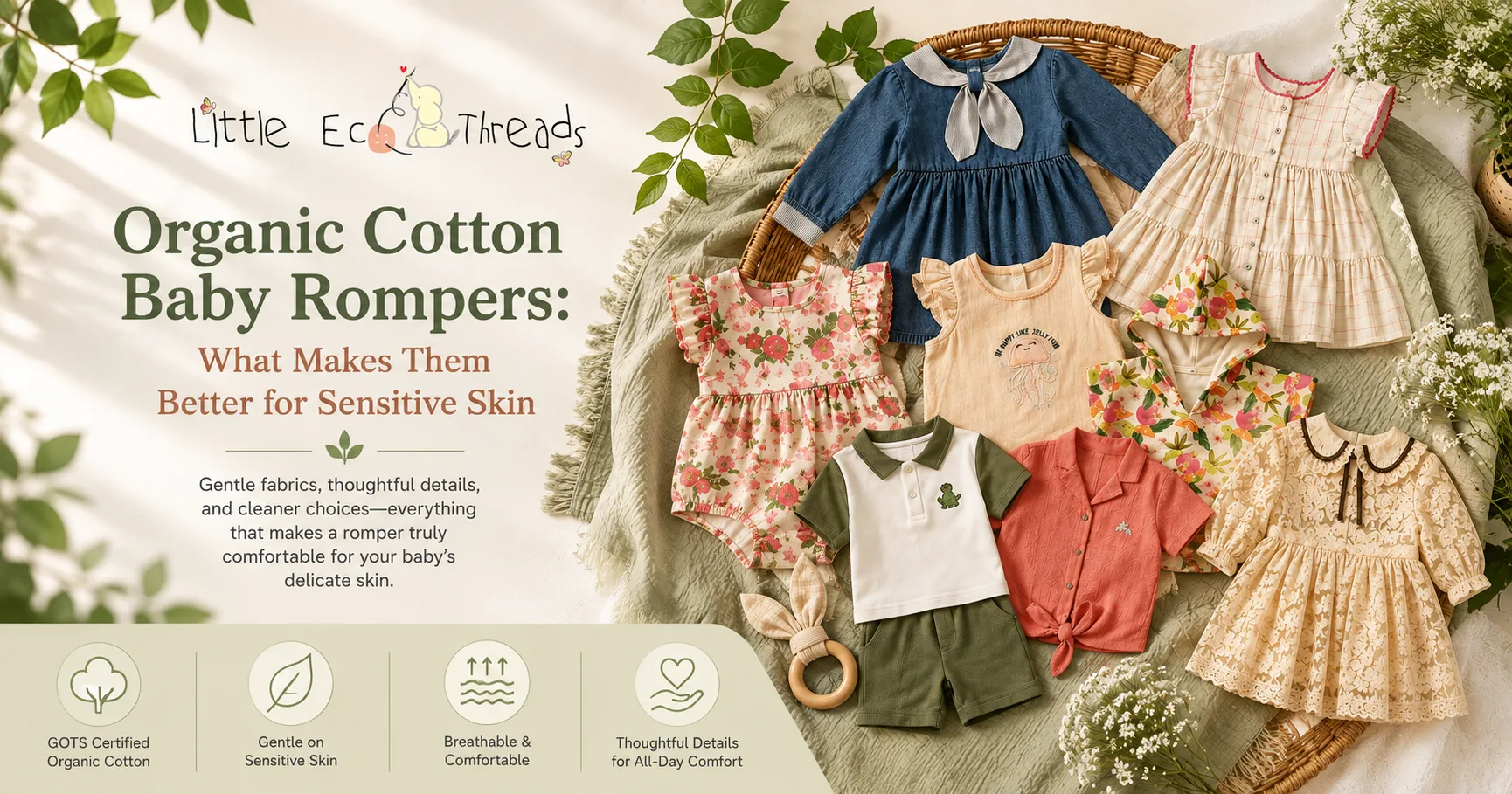
Most parents know the small moment when a baby garment looks perfect at first, then leaves a red mark around a leg opening or irritation near a seam after a few hours. The fabric may have felt soft in the hand, but softness at first touch is not the same as all-day comfort on a baby's skin.
That is why organic cotton baby clothing needs to be evaluated as a finished product. Fibre, fabric construction, dyeing, finishing, stitching, seams, labels, snaps, and fit all shape how a romper feels in real use.
Why Organic Cotton Baby Rompers Need More Than Soft Fabric
A baby romper is an everyday garment. It is worn for naps, tummy time, stroller walks, feeding, crawling, and several outfit changes in a single day. Because it sits close to the skin for long periods, small construction details become important.
For baby rompers for sensitive skin, brands should look beyond surface softness and ask:
- Does the fabric breathe well?
- Does it stay soft after repeated washing?
- Are seams smooth around the neck, underarms, and leg openings?
- Are labels printed or placed away from irritation points?
- Do snaps, zippers, or buttons sit comfortably during movement?
- Is the fit roomy enough for natural movement without bunching?
A good romper is not simply cute on a hanger. It should feel comfortable from morning until bedtime.
Why Baby Skin Changes The Clothing Equation
Baby skin can be more easily affected by friction, heat, moisture, and rough finishing. That does not mean every non-organic garment causes irritation, and it does not mean organic cotton is a medical solution. It means baby clothing for sensitive skin needs a smaller margin for discomfort.
Think about how a baby moves. They lie down, roll, stretch, kick, crawl, and rub against mattresses, blankets, car seats, and play mats. If a seam scratches or a tag sits in the wrong place, a baby cannot adjust it or explain the problem.
Heat and moisture can add to the issue. A fabric that traps warmth or stays damp against the skin can become uncomfortable during naps, travel, feeding, or warm weather. Breathable baby clothing helps because it lets air move through the fabric and reduces the clammy feeling that can come from heavier or less breathable materials.
This is where fabric, construction, and fit have to work together.
What Organic Cotton Actually Changes
Organic cotton is still cotton, but it is grown and processed under a different set of rules from conventional cotton. For babywear brands, the benefit is less about a vague "natural" claim and more about traceability, fibre choice, and the ability to support material claims with documentation.
When organic cotton is certified through GOTS certification, the claim becomes easier for a brand to explain. Global Standards says GOTS sets published requirements for materials, processing, environmental criteria, social criteria, traceability, and labelling within the certified scope.
For brands sourcing organic cotton clothing for babies, that scope matters. A fabric can start with organically grown cotton but still go through later processing steps that need separate review. Asking for documentation helps separate a serious organic cotton baby clothing manufacturer from a supplier using the word "organic" loosely.
At Little Eco Threads, GOTS certified organic cotton is part of the fabric conversation because babywear brands need material claims they can stand behind, especially for newborn organic cotton clothing and products worn directly against the skin.
Why Ribbed Rompers And Ribbed Jersey Work Well
Organic cotton baby rompers are not one uniform product. The same fibre can behave very differently depending on whether it is made into jersey, interlock, waffle knit, ribbed jersey, muslin, fleece, or another construction.
Ribbed rompers are useful for everyday babywear because rib structures can add gentle stretch and recovery without making the garment feel restrictive. Ribbed jersey can also give a romper a soft, close fit while still allowing movement around the arms, hips, and legs.
That combination matters for babies. A romper that is too tight can pull during movement. One that is too loose can bunch under the body and create friction. The right fabric weight, stretch, and pattern shape help the garment feel easy rather than fussy.
For brands developing organic baby rompers, sampling should test:
- Stretch and recovery after wear
- Shrinkage after washing
- Seam comfort inside the garment
- Snap or zipper placement
- Neckline and leg-opening comfort
- Fabric hand feel after repeated laundering
Organic cotton for sensitive skin works best when the fabric structure and garment construction are selected together.
The Fabric Is Only Half The Story
A soft, breathable, GOTS certified baby clothing fabric can still become an uncomfortable romper if the construction is wrong.
Seam placement matters most around the neck, underarms, crotch, and leg openings. A bulky seam can rub during crawling or while a baby lies on their back. A smoother seam finish can make the garment feel much better during long wear.
Labels also deserve attention. A stitched-in neck label may look harmless, but it can irritate skin when pressed against a mattress or car seat strap. Printed labels or softer label placement can reduce that friction.
Closures need the same level of review. Snaps should be secure without creating hard pressure points. Zippers may need guards. Buttons should be chosen carefully for age, safety, and comfort. Elastic needs to hold shape without digging into the skin.
This is where the experience of a baby clothing manufacturer becomes visible. A supplier that understands organic cotton babywear will usually discuss fabric weight, pattern shape, seam finishing, label placement, and closures before bulk production, not after problems appear.
From Rompers To The Rest Of A Newborn Collection
Once a brand thinks carefully about rompers, the same logic applies to the rest of the newborn range. Muslin swaddles, bibs, burp cloths, bodysuits, sleepwear, hats, and gift sets all touch delicate skin and go through frequent washing.
A coordinated organic cotton babywear range can help keep fabric hand feel, trims, colours, and comfort standards consistent across the collection. This is useful for parents and for retailers, because the range feels intentionally developed rather than assembled from unrelated suppliers.
For brands building a newborn catalogue, it can also reduce development complexity. Rompers, swaddles, bibs, and bodysuits can share compatible fabrics, colourways, trims, and packaging decisions when planning starts early.
That kind of coordination supports both product quality and brand presentation.
Design Does Not Have To Compromise Comfort
Sensitive-skin-friendly babywear does not have to look plain. Comfort and design can work together if the details are handled thoughtfully.
Gingham, checks, botanical prints, animal motifs, embroidery, smocking, and seersucker can all work in organic cotton baby clothing when they are chosen with fabric hand feel and skin contact in mind. A print that feels soft after washing is very different from a heavy surface print that stiffens the fabric. Embroidery placed away from irritation points is different from embroidery that rubs inside a seam.
For sustainable baby clothing, the useful question is not whether a garment has design detail. It is whether the detail has been applied in a way that keeps the romper comfortable, washable, and durable.
What Parents Should Check Before Buying
Parents choosing organic cotton baby rompers can look for a few practical signs:
- Clear fabric composition.
- Credible certification information, especially for organic claims.
- Soft seams around the inside of the garment.
- No scratchy neck labels.
- Gentle leg openings and cuffs.
- Snaps or zippers that do not press into the skin.
- Fabric that stays soft after washing.
- A fit that allows natural movement.
No garment can guarantee that a baby will never experience irritation. Every baby's skin is different. But these checks make it easier to choose baby clothing that is more likely to feel comfortable in daily use.
What Babywear Brands Should Ask A Manufacturer
For brands, the sourcing checklist should go deeper than the product label. Before ordering organic cotton baby rompers, ask:
- Can you provide certification documentation for the fabric?
- Is the fabric suitable for newborns or sensitive-skin babywear?
- What knit structure do you recommend for this romper?
- How much shrinkage should we expect after washing?
- What seam finishes are available?
- Can labels be printed or moved away from irritation points?
- How are snaps, zippers, or buttons tested for comfort and durability?
- Can you make samples before bulk production?
- What quality-control checks happen before shipment?
A serious organic cotton baby clothing manufacturer should be able to discuss these questions in practical detail. A sustainable baby clothing manufacturer should also help the brand think about fabric sourcing, production planning, packaging, and realistic order quantities.
FAQ
Are organic cotton baby rompers better for sensitive skin?
Organic cotton baby rompers can be a good option for sensitive skin because cotton is soft, breathable, and familiar for babywear. Certification and construction still matter, so parents and brands should also check seams, labels, dyes, finishes, and fit.
Is GOTS certified organic cotton important for baby clothing?
GOTS certified organic cotton gives brands stronger documentation for organic textile claims within the certified scope. It helps show that material and processing requirements have been independently reviewed, rather than relying only on a broad organic claim.
What fabric construction is best for baby rompers?
Cotton jersey, interlock, and ribbed jersey are common choices for baby rompers because they can offer softness, stretch, and breathability. The right choice depends on season, fit, garment weight, and how the romper will be worn.
Can organic cotton babywear include prints and embroidery?
Yes. Organic cotton babywear can include prints, embroidery, smocking, and design details when they are placed carefully and tested for comfort. The key is to avoid stiff finishes or raised details that rub against sensitive areas.
What should brands ask before manufacturing organic baby rompers?
Brands should ask about fabric certification, fabric weight, shrinkage, seam finishing, label placement, closure comfort, sampling, quality control, and whether the manufacturer has direct babywear experience.
Build Organic Cotton Babywear With The Right Details
Organic cotton baby rompers are not better because of one label alone. They become better when the fabric, knit structure, seams, closures, fit, and finishing all work together.
For brands developing organic cotton baby clothing, Little Eco Threads can support fabric selection, sampling, ribbed knit essentials, muslin newborn products, and custom babywear production. To discuss a romper or newborn collection, contact Little Eco Threads.