Your Brand, Your Designs, Our Manufacturing: Building Babywear Through Private Label Production
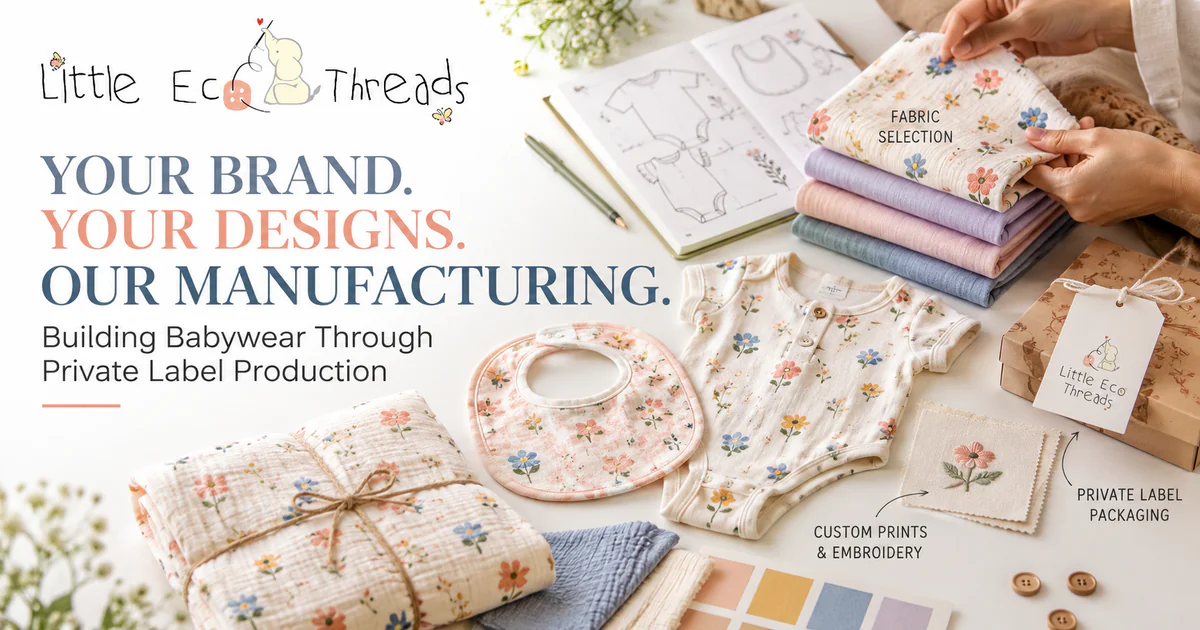
Most babywear brands begin with a simple picture: a small range of soft, well made pieces that carry your name, your colours and your point of view. The harder question is how that picture becomes a carton of finished garments. Few new brands have their own cutting tables and sewing lines, and plenty of established labels would rather not run them.
That is where private label production fits. A manufacturer makes the garments, and you sell them under your own brand, with your own labels, packaging and design direction. It lets you spend your energy on the brand and the customer while a production partner handles fabric sourcing, sewing and finishing.
This guide explains how private label baby clothing works, what you will need to decide at each stage, and how to judge whether a manufacturer suits your plans.
What Is Private Label Babywear Manufacturing?
Private label babywear manufacturing means a factory produces baby clothing that you sell under your own brand. The manufacturer handles production. You handle the brand, the range and the relationship with your customers.
It helps to compare three routes:
- Reselling. You buy finished products carrying someone else's branding and sell them on. It is quick, but you have little say over design or identity.
- Fully bespoke. You develop everything from a blank page, including patterns and technical drawings. You get maximum control, but development takes longer and usually costs more.
- Private label. You start from existing styles or patterns and make them yours through fabric, colour, prints, embroidery, labels and packaging. Some manufacturers also work from your own designs, so ask what is offered.
The difference matters because it shapes your timeline and budget. A brand that wants a signature bodysuit shape will have a different conversation from one that wants a classic romper in its own print. Terms also vary between manufacturers, so ask each one to explain exactly what "private label" covers.
Building a Babywear Collection That Reflects Your Brand
Start small and keep it coherent. Five or six pieces that clearly belong together will do more for your brand than twenty unrelated styles.
Choose your products. Newborn essentials such as swaddles, bibs, burp cloths, bodysuits, rompers and sleepwear are common starting points because they work well as sets and as gifts. Cotton newborn onesies and bodysuits, for example, can anchor a range, with a swaddle and bibs added around them.
Build a visual identity. A few simple rules go a long way:
- Pick three to five colours and stay with them across products.
- Choose one or two print themes, or a signature embroidery motif.
- Keep labels, trims and packaging consistent from product to product.
Think about prints and embroidery. Prints suit larger surfaces such as swaddles and rompers. Embroidery works well for small details, like a motif on a chest or a name on a bib. Because baby skin is delicate, ask how embroidery is finished on the inside of the garment and whether it sits away from areas that rub. A personalised baby romper is lovely, but only if it is comfortable to wear.
Plan your packaging early. Woven labels, hang tags, care labels and boxes all form part of the product, especially if you sell gift sets. Private label packaging usually has its own lead time, so decide on it before production, not after.
Here is a hypothetical example. Imagine a startup called Willow and Moss planning a newborn gift range: one muslin swaddle, one bib and one bodysuit, all in the same soft palette with a small embroidered leaf. The range is only three products, but the repeated colours and motif make it look like a brand rather than a random selection.
Choosing the Right Fabrics for Your Babywear Collection
Fabric decides how a garment feels, washes, looks and costs. There is no single best choice. The right fabric depends on the product, how it is constructed, how it will be cared for, what your customers expect and what your budget allows.
- Organic cotton. Popular for newborn ranges, including organic newborn outfit sets. "Organic" describes how the fibre was grown. It does not, on its own, make a finished garment sustainable or safe, because dyes, finishing and processing also matter.
- Muslin. A loosely woven, lightweight cotton fabric that softens with washing. It suits swaddles, burp cloths and bibs, and muslin swaddle blankets are a staple of many newborn collections.
- Cotton jersey. A soft knit with natural stretch, widely used for bodysuits, rompers and sleepwear.
- Linen. Breathable and textured, and a good fit for warm climates and occasion pieces. It creases more easily and can feel firmer before it has been washed several times.
Care matters as much as feel. Baby clothing is washed often, so ask about shrinkage, colour fastness and how the fabric holds up after repeated washes.
A word on certifications. If you plan to offer organic cotton baby clothes or organic cotton newborn clothes, learn what the common labels mean. GOTS is a standard for organic textiles that covers processing and manufacturing stages after the fibre is grown. OEKO-TEX Standard 100 tests textiles for harmful substances. They look at different things, and neither is a general promise that a product is sustainable.
Certificates also have a defined scope and validity period. If you want to market GOTS certified baby clothes, ask for the certificate, check that it covers the specific product and the facilities involved, and confirm it is current with the certifying body. A manufacturer's membership of an audit programme is not the same as a certified product.
From Design to Finished Product: How Private Label Manufacturing Works
The stages below describe common industry practice. Individual manufacturers differ, so confirm how each step works before you commit.
- Define your specifications. List the products, size range, fabrics, colours, trims, labels and a target cost per unit.
- Select fabrics and materials. Review swatches, fabric weight and composition, and ask what is available for each product type.
- Develop samples. A sample lets you check fit, stitching, print or embroidery placement and the feel of the fabric. Expect more than one round for new designs.
- Review and approve. Measure the sample against your specification, wash it, and give approval in writing so everyone is working from the same reference.
- Plan production. Confirm quantities by style, colour and size, material availability, timelines and shipping.
- Carry out quality checks. Inspections typically cover stitching, measurements, colour, labels and finishing. For baby products, check trims and fastenings carefully and ask about testing for your markets.
- Prepare packaging and finished goods. This includes folding, labelling, bagging, hang tags and cartons.
Children's clothing rules differ between countries. Labelling, sleepwear flammability, drawstrings and small components are examples of areas that may be regulated. Check the requirements for each market where you plan to sell, and ask your manufacturer what documentation it can provide.
Why Low MOQ Manufacturing Can Matter for Growing Brands
MOQ stands for minimum order quantity: the smallest run a manufacturer will accept. It is often set per style, colour or fabric, not for the whole order.
For a new or growing brand, a lower MOQ can help in a few practical ways:
- You can test customer demand before committing to large volumes.
- Less cash is tied up in stock.
- You can spread a small budget across more styles or colours.
- You can adjust the next order based on what actually sells.
There are limits to keep in mind. Smaller runs usually cost more per unit, which can squeeze margins. Custom prints and embroidery may have their own minimums. And a low MOQ does not guarantee demand, profit or good cash flow. You still need to market the range and sell through the stock.
When you compare manufacturers, ask exactly how the MOQ is counted: per style, per colour, per size or per fabric, and whether it changes when you add customisation. Minimums vary by product, so ask any manufacturer, including Little Eco Threads, for current figures in writing.
A hypothetical startup might compare one large run of a single style with small runs of three styles in two colours. The second option costs more per piece but teaches the brand far more about what customers want.
Choosing the Right Private Label Manufacturing Partner
Price matters, but it should not be the only measure. These are the areas worth comparing:
- Product capabilities. Does the manufacturer regularly make the categories you want, such as knit bodysuits, woven items or sleepwear?
- Fabric specifications. Ask for composition, weight and shrinkage details, plus certificates where you plan to make fabric claims.
- Sampling. Find out the cost, the timing, the number of rounds and whether samples are made in the real production fabric.
- Order quantities. Check the MOQ and what reorders look like.
- Communication. Look for a clear point of contact, prompt replies and written confirmation of decisions.
- Quality requirements. Ask how inspections work, what tolerances are used and how defects are handled.
- Lead times. Get timelines for both sampling and production, and ask what typically causes delays.
- Compliance documentation. Ask which test reports and certificates can be supplied for your target markets, and what they cover.
Two habits save a lot of trouble. First, ask to see a sample of an existing product before you develop your own, so you can judge construction and finish. Second, send the same written brief to two or three manufacturers. Comparing their answers will quickly show who understands babywear and who is giving general replies.
Building Your Babywear Collection with Little Eco Threads
Little Eco Threads operates in sustainable babywear and children's apparel manufacturing. Brands exploring private label can look at its offering across private label babywear, custom prints and embroidery, fabric options such as organic cotton, muslin, cotton jersey and linen, and private label packaging. Product areas include newborn essentials such as swaddles, bibs, burp cloths, rompers, bodysuits and sleepwear.
That range lines up with the decisions in this guide: choosing products, applying your own prints or embroidery, selecting a fabric that suits each item and finishing the range with your own packaging.
As with any manufacturer, the details matter. Before you commit, ask which fabrics are available for which products, what the current minimums are, how sampling works and which certification documents apply to the exact items you want to sell.
Conclusion
Building a babywear brand through private label production comes down to a handful of clear decisions: which products to start with, how to make them look like yours, which fabrics suit each item, how many pieces to order first and which manufacturer you trust to deliver consistently. None of these needs to be perfect on day one, but each is easier with a clear brief and honest questions.
If you are planning a range, explore the private label options at Little Eco Threads or get in touch to discuss your product list, fabric preferences and target quantities. A short, specific brief is the best way to start a useful conversation.