
5 Ways to Reduce Lead Times in Garment Production
In garment production, reducing lead times is crucial for staying competitive while maintaining quality and safety standards. For children's clothing, which must meet strict safety regulations, this balance becomes even more important. Here are five practical methods to cut production time without compromising ethics or quality:
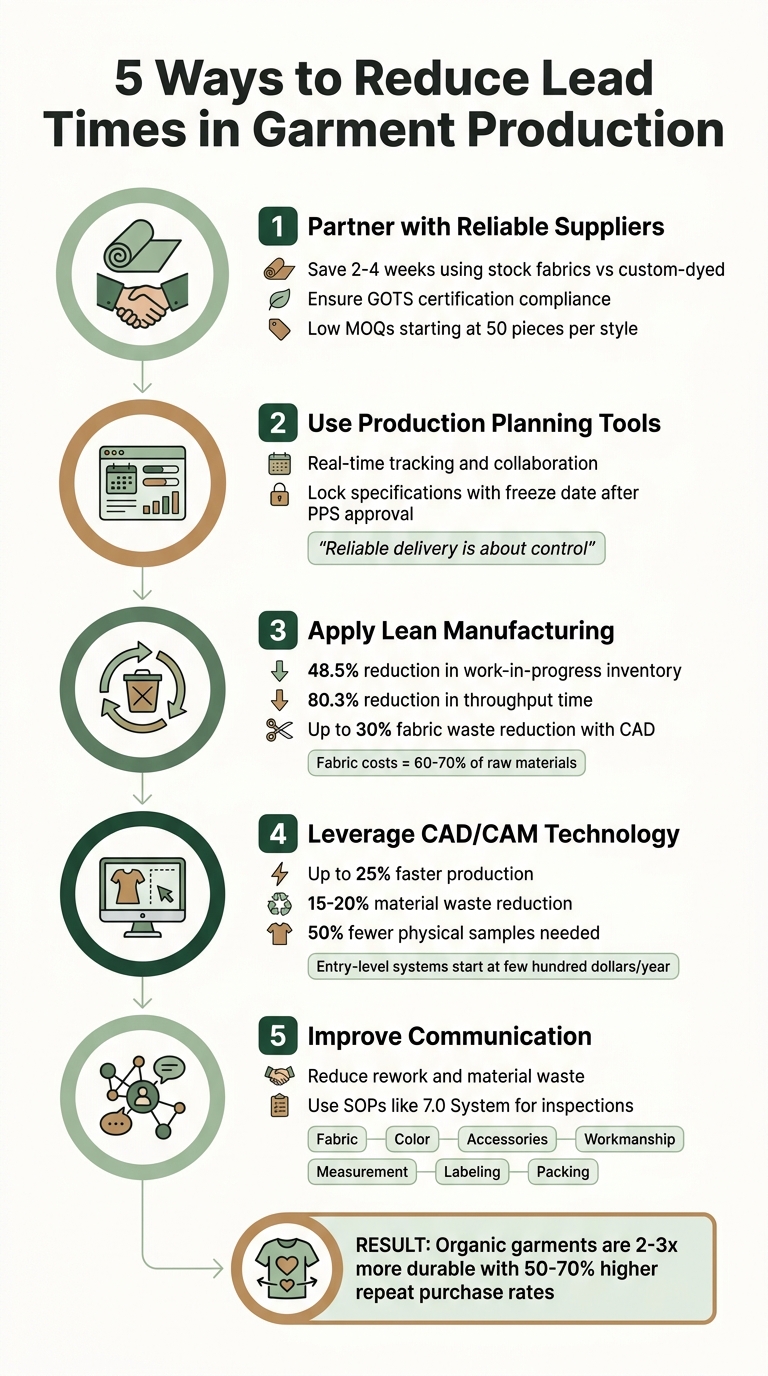
- Partner with Reliable Suppliers: Work with trusted sources for GOTS-certified fabrics to ensure compliance and avoid delays. Opt for stock fabrics over custom-dyed materials to save 2–4 weeks.
- Use Production Planning Tools: Digital tools streamline scheduling and provide real-time updates, helping to avoid bottlenecks and last-minute changes.
- Apply Lean Manufacturing: Techniques like zero-waste cutting and Just-in-Time production reduce waste and improve efficiency.
- Leverage CAD/CAM Technology: Automate pattern-making and cutting to minimize errors and speed up production by up to 25%.
- Improve Communication: Clear communication with partners and standardized processes prevent missteps and delays.
These strategies not only shorten timelines but also help manage costs and reduce waste in the production process.
How to Reduce Lead Times in Your Supply Chain?
1. Work with Reliable Partners for GOTS-Certified Fabric Sourcing
Partnering with dependable suppliers for GOTS-certified fabrics is a smart move to keep production timelines on track.
Ensuring Compliance with Organic Standards
Every batch of GOTS-certified fabric should be accompanied by a Transaction Certificate (TC) to confirm its organic compliance. Reputable suppliers will provide this documentation automatically, helping you avoid certification-related headaches. For children’s clothing, it’s also essential to ensure your suppliers have CPSIA and OEKO-TEX Standard 100 certifications. These verify that the fabrics are free from harmful substances, meeting both safety and regulatory standards. This level of compliance not only ensures safety but also simplifies your production workflow.
Cutting Down on Production Delays
Choosing stock organic fabrics instead of custom-dyed options can save you 2–4 weeks in production time. By skipping steps like lab dips and bulk approvals, you can avoid high minimum order quantities (MOQs) and speed up the process. Another helpful strategy is standardizing fabrics and trims across multiple styles, which makes it easier to meet fabric MOQs.
Scaling for Small or Large Production Runs
Many suppliers now offer low MOQs, starting at just 50 pieces per style. This flexibility allows boutique brands to experiment with new collections without the worry of overproduction. Before committing to a larger order, request organic fabric swatch kits to evaluate the texture and quality. It’s also worth asking suppliers for specific lead times for various order sizes and checking if they can handle rush orders during busy seasons. This ensures they can scale production to match your needs. Managing order volumes is important, but keeping costs under control is just as critical.
Managing Costs in Sustainable Children's Clothing
Producing organic clothing can cost 15–30% more per unit, but the benefits often outweigh the expense. Higher repeat purchase rates (50–70%) and the enhanced durability of organic fabrics can lower long-term costs. Reliable suppliers will provide clear, detailed quotes that break down labor, materials, compliance, and delivery fees, making it easier to stick to your budget.
2. Use Production Planning Tools for Better Scheduling
Once you’ve secured reliable fabric sourcing, production planning tools can take your manufacturing process to the next level. These digital tools offer real-time tracking and seamless collaboration, ensuring everyone stays on the same page when it comes to schedules and expectations. This level of organization helps keep production running smoothly, avoiding unnecessary delays.
Tackling Production Delays
Pinpointing the critical path in your production process is key to avoiding bottlenecks. Issues like fabric availability, decoration capacity, or certification audits can often slow things down. Material sourcing, especially for GOTS-certified fabrics and custom trims, is one of the most common culprits behind delays. To mitigate this, it’s crucial to monitor procurement closely. Locking in specifications with a "freeze date" after Pre-Production Sample (PPS) approval is another way to avoid last-minute changes that could disrupt the timeline. Regular updates through digital tools allow you to address problems before they escalate.
Flexibility for Small or Large-Scale Production
Whether you’re a boutique brand experimenting with small batches or a larger operation preparing for seasonal releases, planning tools can adapt to your needs. For smaller runs, these tools help track stock fabric availability. For larger, recurring orders, production forecasts can secure factory space and materials ahead of busy seasons. This flexibility supports smooth scaling, whether you’re producing 50 pieces or thousands. Better scheduling doesn’t just make scaling easier - it also reduces unnecessary expenses.
Cutting Costs in Sustainable Children’s Clothing
Good planning minimizes costly mistakes during the cutting phase. Scheduling quality control checks during sewing helps catch issues early, reducing the need for major fixes later. Ninghow highlights the importance of this approach:
"Reliable delivery is not only about speed. It is about control."
Additionally, documenting certifications like GOTS and OEKO-TEX in your planning tools before production begins ensures you’re not held up by missing paperwork, which can delay shipments.
3. Apply Lean Manufacturing to Cut Waste
Lean manufacturing focuses on eliminating waste at every stage of production. When it comes to sustainable children's clothing, this means minimizing fabric scraps, preventing overproduction, and making the most of GOTS-certified materials. The goal is to remove unnecessary steps that add cost without improving the final product.
Efficiency in Reducing Production Delays
A great example of lean manufacturing in action is the use of Value Stream Mapping (VSM) alongside cellular manufacturing. One facility reported cutting work-in-progress inventory by 48.5% and reducing throughput time by an impressive 80.3%. These changes can significantly reduce delays between production stations, ensuring quicker turnaround times - especially for small-batch orders.
Techniques like zero-waste pattern cutting and consolidating designs that share the same fabrics and trims also simplify the cutting process. This not only helps meet minimum order quantities but also boosts overall efficiency, leading to noticeable cost savings.
Cost-Effectiveness for Sustainable Children's Clothing
Fabric costs typically make up 60% to 70% of total raw material expenses. Lean manufacturing tackles this by incorporating tools like CAD, which can reduce fabric waste by up to 30%. Additionally, cutting production defects by 50% can lead to substantial savings without increasing operating costs. For instance, one Lean Six Sigma project helped a textile company save around $577,000 annually through such improvements.
Small-batch production, with runs as low as 50 to 100 units, is another advantage of lean methods. This approach allows boutique brands to test collections without the risk of overstocking and waste. By adopting a Just-in-Time production model, manufacturing aligns closely with consumer demand, reducing storage costs and preventing deadstock. Plus, organic garments tend to be 2 to 3 times more durable and see 50% to 70% higher repeat purchase rates, offering long-term value for both brands and customers.
4. Use CAD and CAM Technology for Pattern Making and Cutting
CAD (Computer-Aided Design) and CAM (Computer-Aided Manufacturing) systems have revolutionized how patterns are created and cut, minimizing manual errors and repetitive tasks. CAD focuses on design and visualization, while CAM takes those digital patterns and prepares them for automated cutting. Together, they simplify and speed up the entire manufacturing process.
Efficiency in Reducing Production Delays
With digital pattern-making, adjustments can be made instantly, and automatic grading ensures all children's sizes are covered. This can reduce production lead times by up to 25%. For boutique brands, this means tweaking a dress design in minutes instead of days.
3D digital prototyping also makes a big difference by cutting the need for physical samples in half. Fewer samples mean faster approvals and smoother collaboration, especially when working with international partners.
Cost Advantages for Sustainable Children's Clothing
Automated marker-making systems are another game-changer. By optimizing how pattern pieces are laid out, these systems can reduce material waste by 15–20%. AI-powered nesting tools ensure every inch of sustainable fabric is used effectively.
While organic fabrics cost 15–30% more per unit, cutting down on fabric waste helps offset these expenses, improving overall profitability.
On top of that, entry-level CAD/CAM systems are more affordable than you might think. Basic plans start at just a few hundred dollars per year. Cloud-based platforms make it even easier, allowing teams and manufacturers to collaborate in real time. This reduces the need for physical prototypes and lowers shipping costs.
These tools not only save time and money but also make working with global boutique brand partners much more efficient.
5. Improve Communication with Global Boutique Brand Partners
Once you've streamlined processes and adopted advanced tools, the next step is ensuring clear communication with global boutique partners. Strong communication helps set expectations, identify potential issues early, and ultimately reduce lead times.
Efficiency in Reducing Production Delays
Standard Operating Procedures (SOPs) are key to keeping production on track. For instance, the 7.0 System divides inspections into seven focus areas: fabric, color, accessories, workmanship, measurement, labeling, and packing. Pairing these SOPs with digital tools, like mobile apps for real-time data sharing, allows teams to catch problems early. When combined with advanced production planning tools, this approach ensures all stakeholders are updated promptly.
"By systematically assessing each element, inspectors can efficiently identify and address any discrepancies, ensuring faster and more accurate inspections." – Orient Apparel
Sustainability Compliance (e.g., GOTS-Certified Fabrics)
For brands prioritizing organic materials, verifying Global Organic Textile Standard (GOTS) certification at the material booking stage is essential. Include these certification requirements in tech packs to align expectations from the start. Adding buffer weeks for GOTS audits and clearly outlining production timelines for organic fabrics ensures smoother planning.
Cost-Effectiveness for Sustainable Children's Clothing
Proactive communication plays a big role in cutting costs. By catching issues early and holding regular feedback sessions, you can reduce rework and minimize material waste. This approach not only saves money but also ensures production stages flow seamlessly.
"Promote a culture of quality and accountability by encouraging open communication and collaboration between the inspection team and other departments involved in garment production." – Orient Apparel
To avoid disruptions, pre-book materials and secure production slots well in advance. For boutique brands aiming to scale, using the same fabrics and trims across multiple designs can help meet minimum order quantities more efficiently.
Strong communication ties the entire manufacturing process together, connecting advanced planning with real-time quality checks to keep production running smoothly.
Conclusion
The strategies outlined here directly address common challenges in producing sustainable children's apparel, proving that efficient production and environmentally conscious practices can go hand in hand.
The five approaches discussed - working with trusted GOTS-certified fabric suppliers, leveraging production planning tools, applying lean manufacturing techniques, utilizing CAD and CAM technology, and fostering better communication with boutique brand partners - collectively streamline the production process. These methods not only improve efficiency but also ensure the high-quality standards that children's clothing demands.
One major hurdle lies in the pre-production phase, particularly material sourcing and approvals. By pre-booking materials and finalizing specifications after Pre-Production Sample approval, manufacturers can avoid unnecessary delays. Incorporating quality checkpoints throughout the process also minimizes rework and waste, aligning with sustainability efforts. As Orient Apparel aptly puts it:
"If you lose the quality of your product, you are sure to lose your customers".
To see immediate improvements, consider starting small. Implement one or two strategies right away, such as using in-stock fabrics and limited color options for new boutique partners. This approach allows you to demonstrate dependable lead times and clear communication before scaling operations. Additionally, building buffer weeks into your timeline can help account for potential delays in fabric approvals, revisions, and seasonal shipping challenges.
FAQs
How can I verify a fabric supplier’s GOTS certification quickly?
To confirm a fabric supplier's GOTS certification, request their official Scope Certificate (SC) and Traceability Certificate (TC). These documents verify the organic content and compliance with GOTS standards. For added assurance, cross-check the certification's validity by visiting the official GOTS database or reaching out to the appropriate certification body to confirm it’s up-to-date and genuine.
What’s the fastest way to cut lead time without changing the design?
The fastest way to cut down lead time without changing the design is by simplifying how materials are sourced and approved - these steps are often major roadblocks. Beyond that, improving pre-production planning and staying in constant, clear communication with suppliers can help avoid setbacks and ensure production kicks off as scheduled.
Which production step usually causes the biggest delays in kids’ apparel?
Logistics often stands out as the primary cause of delays in producing kids' apparel. Shipping setbacks and freight complications are frequent culprits, especially within global supply chains. Elements like customs procedures and unexpected transportation disruptions can throw timelines off track, creating significant challenges for manufacturers.