How to Choose a Sustainable Clothing Manufacturer for Kidswear
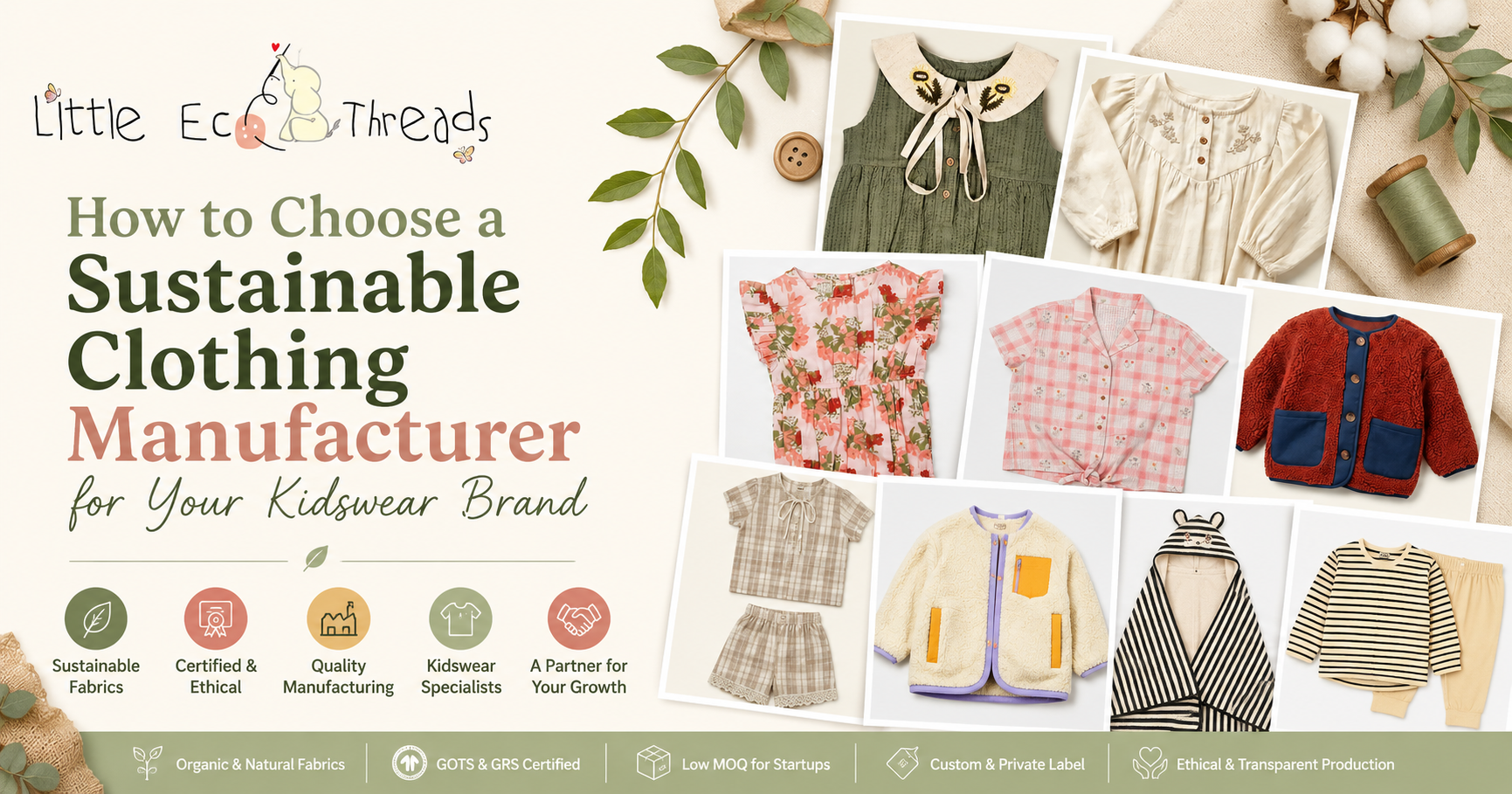
Choosing a sustainable clothing manufacturer for a kidswear brand is not only about finding a factory that can sew garments. The right partner affects fabric quality, certification claims, minimum order quantities, sampling speed, production consistency, and whether parents trust your brand enough to buy again.
Many founders start with the product. They want children's clothing that feels soft, looks beautiful, and supports a more responsible way of making clothes. Once they begin sourcing, they realize the harder question is not "Who can make this?" It is "Who can make this well, responsibly, at the stage my brand is in now?"
This guide explains how to evaluate sustainable clothing manufacturers for kidswear, what questions to ask, and how to compare partners before committing to production.
What Makes A Sustainable Clothing Manufacturer Truly Sustainable?
"Sustainable" is used loosely in apparel manufacturing. Sometimes it refers to one fabric. Sometimes it refers to packaging. Sometimes it is only marketing language.
A real sustainable kidswear manufacturer should be judged across several areas:
- Materials: organic, recycled, natural, or otherwise responsibly sourced fibers, plus the dyes and finishes used on them.
- Certifications: independent verification of claims such as GOTS certification or GRS certification.
- Production practices: how waste, water, chemicals, cutting loss, and finishing processes are managed.
- Labour standards: whether the factory can show credible systems for worker safety and ethical trade, such as Sedex or similar audit frameworks.
- Supply-chain transparency: whether the manufacturer can explain where fabrics come from and what documentation is available.
- Quality and product longevity: whether the clothing lasts through repeated wear and washing.
A factory that uses organic cotton but cannot explain its dyeing process, quality control, or certification scope is not necessarily a sustainable clothing manufacturer. It may simply be using one better material inside an unclear process.
Why Kidswear Needs A Specialist Sustainable Manufacturer
Kidswear is not just adult apparel made smaller. Children's clothing has its own requirements for fit, comfort, trims, washing, construction, and durability.
A good children's clothing manufacturer should understand:
- Sensitive skin and fabric hand feel
- Secure closures, snaps, buttons, and trims
- Age-specific sizing and grading
- Wash durability
- Seam comfort
- Fabric shrinkage
- Safe construction for babywear and toddler garments
- Practical wear-and-tear from active children
This is why brands should be careful when comparing general apparel factories with specialist kids apparel manufacturers. A factory may be strong in adult fashion but less experienced in babywear, organic kidswear, or children's clothing manufacturing.
For kidswear, sustainability and quality are connected. A garment that falls apart quickly is not sustainable, even if the fabric started with a better sourcing story.
7 Things To Look For In A Sustainable Kidswear Manufacturer
1. Certified And Responsible Materials
Fabric is the first place to look. Organic cotton is often a strong choice for babywear and kidswear because it is soft, breathable, and familiar to parents. But the claim should be supported by documentation, not assumed from a supplier description.
Ask:
- What fibers are available?
- Are the fabrics certified or non-certified?
- Which fabrics are suitable for babywear and kidswear?
- Can the manufacturer share fabric specification sheets?
- Are recycled or blended fabrics available where appropriate?
- How do fabrics perform after washing?
For kidswear, sustainable fabrics must also perform well. Organic cotton clothing that shrinks, twists, or pills too quickly can damage the brand even if the material choice looks good on paper.
2. Clear Certification Documentation
Certifications help brands separate verified claims from general sustainability language. They do not guarantee a perfect supply chain, but they give founders something more reliable than a factory's self-description.
Useful certifications and frameworks include:
- GOTS: commonly used for organic textile standards and certified organic processing.
- GRS: used for recycled material content and chain-of-custody claims.
- Sedex/SMETA: used for social audit and ethical trade visibility.
When a supplier says it works with GOTS and GRS certifications, ask what is actually covered. The certification may apply to a facility, fabric, process, or transaction. The scope matters.
Questions to ask:
- Can you provide current certificates?
- What does each certificate cover?
- Is this fabric certified or only the facility?
- Will documentation be available for this specific order?
- Who is the certifying body?
This is especially important for private-label children's clothing brands that want to make sustainability claims publicly.
3. Experience With Children's Clothing
A sustainable clothing manufacturer still needs category expertise. Kidswear brands should ask whether the manufacturer regularly produces babywear, toddler clothing, sleepwear, rompers, dresses, pajamas, swaddles, or other children's products.
A specialist kidswear manufacturer should be able to explain:
- Which seams work best for comfort
- Which fabrics are suitable for each age group
- How size grading is handled
- How trims are selected
- How repeated washing affects fit
- How quality is checked before shipment
This category knowledge is what separates a useful kids clothing manufacturer from a general garment factory.
4. Practical MOQ Support
MOQ is one of the biggest challenges for new and growing brands. Large factories may have strong sustainability credentials but still be a poor fit if their minimum order quantities are too high.
A good clothing manufacturer for startups should be able to discuss:
- MOQ by style
- MOQ by fabric
- MOQ by colorway
- Sample cost
- Reorder options
- How unit cost changes at higher volume
Lower MOQ is not always better. Very low runs can increase costs or limit fabric choices. The goal is to find a manufacturer that can support a realistic first launch and scale as the brand grows.
5. Sampling And Product Development Support
Sampling is where a design becomes a real garment. It is also where many problems should be caught before bulk production.
A strong sampling process should include:
- Design or tech pack review
- Fabric selection
- Prototype development
- Fit review
- Construction feedback
- Revision rounds
- Final approved sample before bulk production
This matters for custom development because the manufacturer is not simply producing a blank or stock item. It is translating a brand's design direction into a repeatable production process.
6. Quality Control Throughout Production
Quality control should not happen only at the end. By final inspection, defects are already expensive.
Ask how the manufacturer checks:
- Fabric before cutting
- Shrinkage and hand feel
- Measurements against the size spec
- Stitching and seam strength
- Trims, buttons, snaps, and labels
- Print, embroidery, and wash performance
- Final packing and shipment consistency
For sustainable kidswear, durability is part of the sustainability claim. Clothing that lasts longer creates better value for parents and reduces the need for frequent replacement.
7. Scalability And Long-Term Fit
The right manufacturer should fit your brand now and later. A startup may need lower MOQs and more sampling support. A growing brand may need faster repeat orders, more colorways, stronger documentation, and better production planning.
Ask whether the manufacturer can support:
- First small collections
- Reorders
- Seasonal ranges
- Larger production runs
- New fabric categories
- Custom labels and packaging
- Export documentation
If the manufacturer cannot scale with the brand, you may need to switch partners just as demand starts growing.
Why Fabric Choice Matters In Sustainable Kidswear Manufacturing
Fabric is where sustainability and product quality overlap most directly. The material affects comfort, washing, durability, pricing, brand positioning, and how credible your sustainability story feels to customers.
For sustainable kidswear manufacturing, common fabric decisions include:
| Fabric Direction | Why Brands Use It |
|---|---|
| Organic cotton | Soft, breathable, familiar to parents, and useful for everyday kidswear |
| Muslin | Lightweight and breathable for baby products, swaddles, and accessories |
| Linen blends | Durable, natural-looking, and suitable for warm-weather pieces |
| Recycled fabrics | Useful where performance or recycled content is part of the product story |
| Certified fabrics | Helpful when the brand needs verified claims and documentation |
The right fabric depends on the product. Pajamas, rompers, dresses, swaddles, and outerwear do not all need the same construction. A good sustainable kidswear manufacturer will explain those tradeoffs before sampling begins.
Questions To Ask Before You Partner With A Manufacturer
Use this checklist before committing to a sustainable clothing manufacturer:
- What children's clothing categories do you specialize in?
- Do you work with organic cotton clothing and certified fabrics?
- Can you provide current certification documentation?
- What are your MOQs by style, fabric, and colorway?
- Can you produce samples before bulk production?
- What is the typical sampling turnaround?
- How do you manage quality control during production?
- Can you support private label production?
- Do you help with custom labels, packaging, and trims?
- Can you scale from small runs to larger repeat orders?
- What happens if fabric lead times or production timelines change?
The best answers are specific. Vague replies such as "we can do everything" or "all fabrics are sustainable" should lead to more questions.
A Simple Scorecard For Comparing Manufacturers
Once you have spoken to several suppliers, compare them using the same criteria.
| Factor | What To Check | Score 1-5 |
|---|---|---|
| Materials | Organic, recycled, certified, and suitable fabrics | |
| Certifications | GOTS, GRS, Sedex, or other relevant documentation | |
| Kidswear expertise | Experience with babywear and children's clothing | |
| MOQ | Startup-friendly and scalable order quantities | |
| Sampling | Clear sample process and revision support | |
| Quality control | Checks before, during, and after production | |
| Communication | Timely, specific, and transparent replies | |
| Lead time | Realistic sampling and production timelines | |
| Scalability | Ability to support growth and repeat orders |
Price matters, but it should not be the only deciding factor. A slightly higher unit cost may be worth it if the manufacturer offers better quality, fewer delays, stronger documentation, and clearer communication.
Why The Right Manufacturer Becomes More Than A Supplier
The best sustainable clothing manufacturers become production partners. Over time, they understand your fit standards, preferred fabrics, packaging needs, quality expectations, and brand positioning.
That relationship can help with:
- Faster sampling
- Better fabric recommendations
- More accurate production planning
- Easier reorders
- Stronger consistency across seasons
- Earlier warnings when a fabric or timeline may create problems
For a growing kidswear brand, this matters. Switching factories after a few seasons can disrupt sizing, quality, lead times, and customer trust.
Where Little Eco Threads Fits
Little Eco Threads works with babywear and kidswear brands that need a sustainable kidswear manufacturer, practical MOQ support, custom development, and certified material options.
The company supports private label kidswear, custom children's clothing, organic cotton clothing, kidswear sampling, and production planning for brands that want to start responsibly and scale with more control.
If you are comparing sustainable clothing manufacturers for your next collection, get in touch with Little Eco Threads to discuss materials, certifications, sampling, and production options for your brand.
FAQ
What is a sustainable clothing manufacturer?
A sustainable clothing manufacturer is a production partner that considers materials, certifications, worker conditions, waste, transparency, quality, and product longevity. It should be able to support its claims with documentation, not only marketing language.
What should a kidswear brand ask before choosing a manufacturer?
A kidswear brand should ask about fabric sourcing, certifications, MOQ, sampling timelines, quality control, private label support, custom development, and scalability.
Is organic cotton enough to make kidswear sustainable?
No. Organic cotton can be a strong material choice, but sustainability also depends on dyeing, finishing, worker conditions, quality control, durability, packaging, and supply-chain transparency.
What certifications matter for sustainable kidswear?
GOTS certification is commonly used for organic textiles, while GRS certification is used for recycled content. Brands should ask what the certification covers and whether documentation is available for the specific order.
Can startups work with sustainable clothing manufacturers?
Yes. A clothing manufacturer for startups should offer realistic MOQs, sampling support, clear communication, and room to scale as the brand grows.
Choose A Manufacturer That Can Grow With Your Brand
Choosing a sustainable clothing manufacturer for kidswear comes down to a few practical questions: Are the materials genuinely responsible? Are the certifications verifiable? Does the factory understand children's clothing? Can it support your current order size and future growth?
The right partner helps your brand avoid unnecessary production risk while building products parents can trust. For kidswear brands, that is the real value of sustainable manufacturing.