Baby Quilts Manufacturer for Baby and Kids Brands
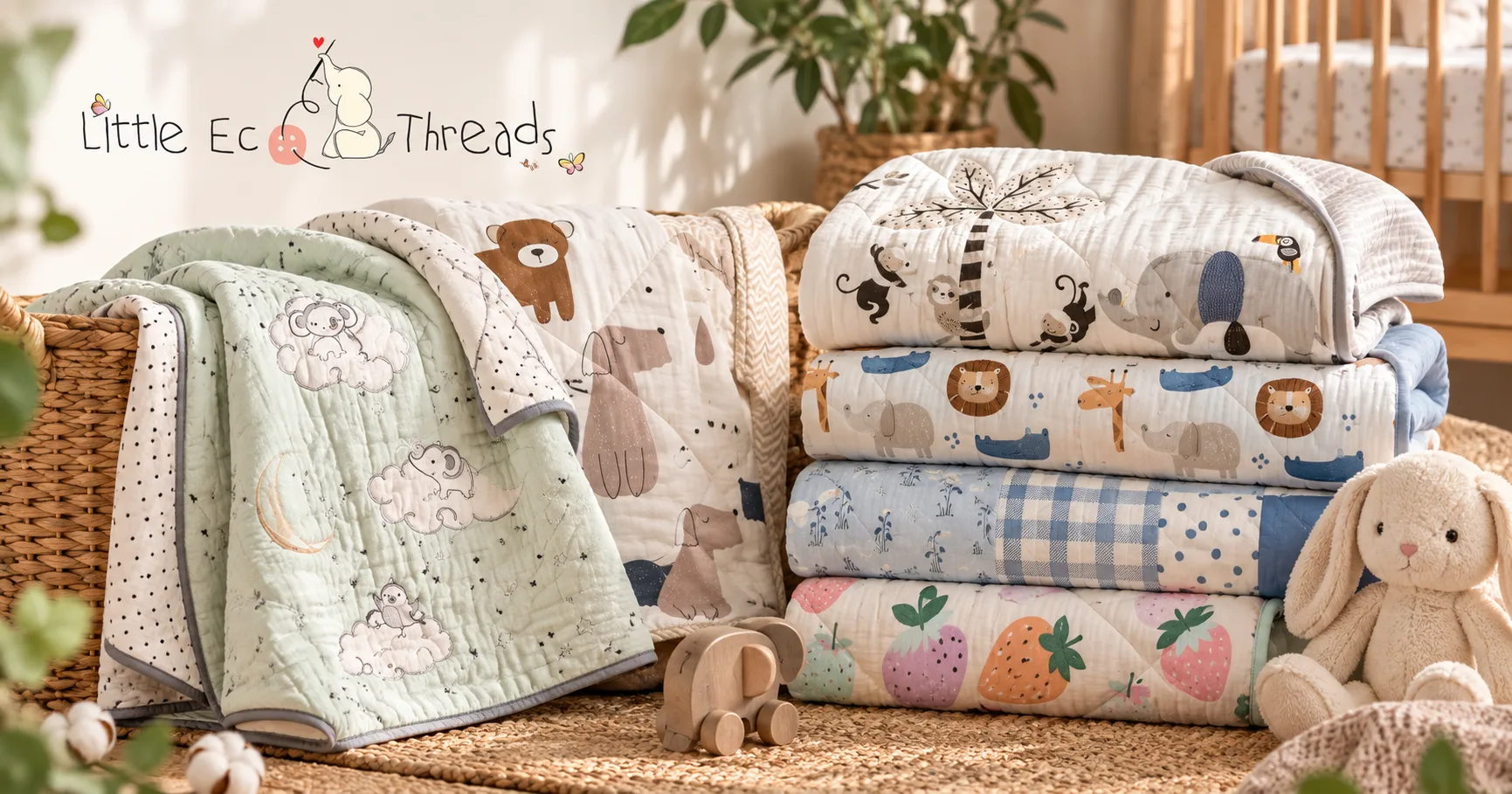
Baby quilts sit at the centre of most nursery and baby bedding collections. They are used on cots and cribs, in prams, on play mats and as gifts. For a baby or kids brand, a quilt is also a product where design, feel and stitching quality are easy for a parent to judge the moment they pick it up.
More brands are now looking closely at textile products that are soft, well finished and attractive enough for a nursery. Parents read labels, compare fabrics and expect a quilt to hold up through many washes. That puts real weight on the choice of baby quilts manufacturer, because the supplier shapes how the final product looks, feels and lasts.
This guide is written for baby brands, children's brands, retailers, wholesalers, startups and private-label businesses. It covers what a baby quilt is, which fabrics and designs to consider, how custom and private-label manufacturing works, and what to check before you place an order.
What Are Baby Quilts?
A baby quilt is a layered textile made of three parts: a top fabric, a filling (often called wadding or batting) and a backing fabric. Stitching holds the layers together. This is the quilting, and it can be straight lines, squares, diamonds or a simple repeat pattern. The edges are usually closed with a binding or a stitched finish.
Baby quilts are used in several ways:
- As a cot quilt or crib quilt in a nursery
- As a cover for prams and strollers
- As a floor or tummy-time layer
- As a decorative piece in nursery styling
- As a gift item
The terms change by market. What a US buyer calls a crib quilt is usually a cot quilt in the UK and Australia. It helps to use the right term for each market when you plan product names and listings.
A baby quilt is not the same as a baby blanket. A blanket is usually a single layer or a simple double layer, such as muslin or knit. A quilt has a filling and stitched structure, so it is warmer, holds its shape better and feels more substantial. Blankets suit swaddling and light cover. Quilts suit nursery bedding and cooler weather. If you already sell baby blankets, quilts are a natural next step.
Why Baby Quilts Are Important for Baby Brands
For a B2B buyer, a baby quilt is more than one more SKU. It can support several parts of a collection at once.
- Nursery collections: A quilt can anchor a coordinated set with matching sheets, bumpers or soft furnishings.
- Baby bedding: Quilts add a higher-value product to a bedding range that may otherwise rely on lighter items.
- Gifting: Quilts are a common choice for baby showers and newborn gifts, which also supports interest in customized baby gifts.
- Seasonal products: Lighter quilts suit warmer months, while thicker ones suit winter. This gives you a reason to refresh the range each season.
- Comfort and warmth: The filling gives a warmth that single-layer products do not offer.
- Range expansion: Brands that already sell clothing, swaddles or soft toys can use quilts to widen their offer.
- Custom designs: Quilts have a large surface, which gives plenty of room for prints, colour stories and brand artwork.
Fabrics Used for Baby Quilts
Fabric choice affects softness, breathability, durability, appearance and comfort. It also affects how the quilt looks after repeated washing, which is where many baby quilts show their weak points. When you review infant quilt fabric options, these are the common choices.
Organic cotton
Organic cotton is soft, breathable and popular with brands that focus on natural or sustainable ranges. If you want to describe a product as GOTS-certified organic cotton, ask the supplier for valid certification that covers the fabric and the stage of production in question. Do not use the claim without that proof.
Cotton
Standard cotton is a practical choice. It is breathable, easy to print and wash, and generally durable. Weave and weight make a big difference, so compare fabric samples rather than relying on a description alone.
Muslin
Muslin is a loosely woven cotton that is light and breathable, and it softens with each wash. It is well known from muslin baby blankets and swaddles. In quilts, it works well as a top or backing layer for lighter, warm-weather products.
Cotton jersey
Cotton jersey is stretchy and very soft. It feels pleasant against the skin, but it can move during stitching, so it needs careful handling to keep the quilting even. It suits some designs and not others.
Other options
Double gauze and cotton flannel are also used, and each gives a different handle. The filling matters too. Cotton and polyester wadding behave differently in warmth, weight and washing, so ask for the exact composition.
Baby Quilt Designs and Styles
The design options are wide, and this is where a brand can set itself apart. Common directions include:
- Printed quilts: Digital or screen prints that carry a brand's artwork across the surface.
- Minimal nursery designs: Soft solid colours with simple stitching, often chosen for neutral nurseries.
- Animal and nature themes: Woodland animals, florals, leaves and similar motifs remain steady favourites.
- Patchwork-inspired designs: The look of traditional patchwork, produced in a more controlled and repeatable way.
- Reversible quilts: Two different fabrics on either side, which gives the buyer two looks in one product.
- Seasonal designs: Colour stories and prints tied to holidays or seasons.
- Custom patterns: Quilting lines and layouts developed to suit your range, rather than standard quilt patterns.
- Brand-specific designs: Exclusive prints, embroidered details or motifs that reflect your identity.
Traditional techniques such as block print quilt styles are also worth discussing with a manufacturer if your brand leans towards a handcrafted look. Browsing baby quilt ideas is a good starting point, but your final choice should come from your customer, your price point and what can be produced consistently.
Custom Baby Quilt Manufacturing
With custom manufacturing, you bring a concept, a tech pack or a reference sample, and the manufacturer develops it to your specification. A good partner will talk through each decision with you rather than simply quote a price.
These are the areas where customization usually applies:
- Size: Quilt sizes differ by market and by use, so confirm the dimensions you need for a cot, crib, pram or play use.
- Fabric: Choice of fibre, weave, weight and finish.
- Colours: Custom colour matching to your palette.
- Prints: Your own artwork, repeats and scale.
- Patterns: Quilting layout, stitch spacing and direction.
- Filling: Type and weight of wadding.
- Stitching: Stitch length, edge finish and binding style.
- Labels: Brand labels, care labels and size labels.
- Packaging: Bags, boxes, hang tags and carton markings.
Customization lets a brand build a product that fits its identity instead of selling the same quilt as everyone else. It also supports coordinated products. If you plan a cot quilt set or a matching range with swaddles and soft toys, the same colours and prints can run across the full collection.
Private Label Baby Quilts
In private-label manufacturing, a factory produces the product and you sell it under your own brand name. The factory handles sourcing, cutting, stitching, finishing and packing. You handle the brand, the design direction, the marketing and the sales.
This lets a brand launch its own baby quilt collection without buying machinery, hiring a production team or running a factory. You can focus on your customer while the manufacturer manages production. Private label can range from choosing from an existing base design to developing a fully custom quilt, so it helps to be clear about how much of the design is yours.
Low MOQ Baby Quilt Manufacturing
MOQ stands for minimum order quantity, the smallest amount a factory will produce per design or order. A lower MOQ is useful for startups and smaller brands because it limits the money and storage space tied up in stock.
Smaller production runs also let you test. You can launch a few prints, see which ones sell and then place larger orders for the winners. This lowers the risk of holding unsold stock in a design that did not work.
MOQs depend on the fabric, print method, filling and level of customization, so always ask for the figure for your exact product. Treat any number you hear as specific to that quote.
What to Look for in a Baby Quilt Manufacturer
Practical checks matter more than polished presentations. When you review a supplier, look at the following.
- Fabric quality: Look for even weave, a soft handle and no rough patches.
- Stitching: Check for straight lines, secure start and end points, and no skipped stitches.
- Filling consistency: The wadding should be evenly spread with no lumps, thin patches or shifting after washing.
- Finishing: Edges, binding and corners should be neat, and loose threads should be trimmed.
- Colourfastness: Colours should not bleed or fade badly after washing.
- Size consistency: Finished sizes should match across the whole order, not only the sample.
- Quality control: Ask when checks happen, at fabric, in-line and final stages.
- Sampling: A clear sampling process with room for changes before bulk production.
- Packaging: Packing that protects the quilt and suits your retail or warehouse needs.
- Production consistency: The bulk order should match the approved sample.
Safety and Quality Considerations
Baby textile products need extra care because babies have delicate skin and may touch, chew or pull at what is near them. Materials, construction and finishing all matter. Stitching should be secure, there should be no loose trims or small parts that can detach, and the product should be washed and checked for shrinkage and colour change.
Safety requirements and testing standards differ between countries. A product sold in the US, the UK or Australia may face different rules. Brands should confirm what applies in each target market and ask the manufacturer what testing it can arrange or support. Avoid making any compliance or certification claim unless you hold the documents to back it up.
Safe sleep guidance in many markets also advises against loose bedding in a cot for young babies. Describe how a quilt is meant to be used with care, and follow the guidance in your market.
Why Consider an Indian Baby Quilt Manufacturer?
India has a long-established textile industry that covers the full chain, from cotton growing and spinning to weaving, printing, dyeing, stitching and finishing. For a quilt, this means fabrics, prints, fillings and trims can often be sourced within the same country.
Other points worth noting:
- A wide range of cotton, muslin and organic cotton fabrics
- Experience in block printing, screen printing and embroidery
- Capability for custom development, including small and mid-size runs
- Many manufacturers have experience exporting to the US, UK, Europe and Australia
This does not mean every manufacturer is suitable. Capabilities, quality systems and communication vary, so review each supplier on its own merits.
Little Eco Threads and Baby Product Manufacturing
Little Eco Threads is a B2B manufacturer of sustainable baby and kids products based in India. The company works with brands, retailers and startups that want to develop their own ranges.
Its work includes organic cotton and other textile options, custom product development and private-label manufacturing. Where applicable, it can also support custom prints, embroidery and custom packaging. The aim is to support growing brands as they move from first samples to repeat orders. You can see related categories such as baby products, swaddles, soft toys and customized products to get a sense of the range.
If you are planning a baby quilt collection, it helps to share your target market, fabric preferences and design direction early. That makes sampling quicker and clearer.
How to Choose the Right Baby Quilt Manufacturer
Use this checklist when you compare suppliers:
- Review fabric options: Ask for swatches and fibre details.
- Ask about customization: Confirm what can be changed in size, print, filling, labels and packaging.
- Understand MOQ: Get the figure for your exact design and ask how it changes with colours or prints.
- Request samples: Check them after washing, not just on arrival.
- Check quality control: Ask what is inspected and when.
- Discuss production timelines: Get lead times for sampling and bulk production in writing.
- Confirm packaging and labelling: Agree on label content, placement and carton details.
- Check certifications where relevant: Ask for valid documents, such as GOTS certification, if you plan to make that claim.
- Discuss shipping and export requirements: Clarify incoterms, documentation and packing for your destination market.
Conclusion
Baby quilts can strengthen a nursery or bedding collection, support gifting and give a brand a product with real design potential. The results depend on fabric choice, construction, finishing and the consistency of production. Choosing the right baby quilts manufacturer helps you avoid costly surprises and build products customers come back to.
Start with a clear brief, review samples carefully and ask direct questions about quality, MOQ and timelines. For brands that want to develop custom or private-label baby quilts, Little Eco Threads is available to discuss your ideas and requirements.