Soft Toys & Plush Toys Manufacturer for Baby and Kids Brands
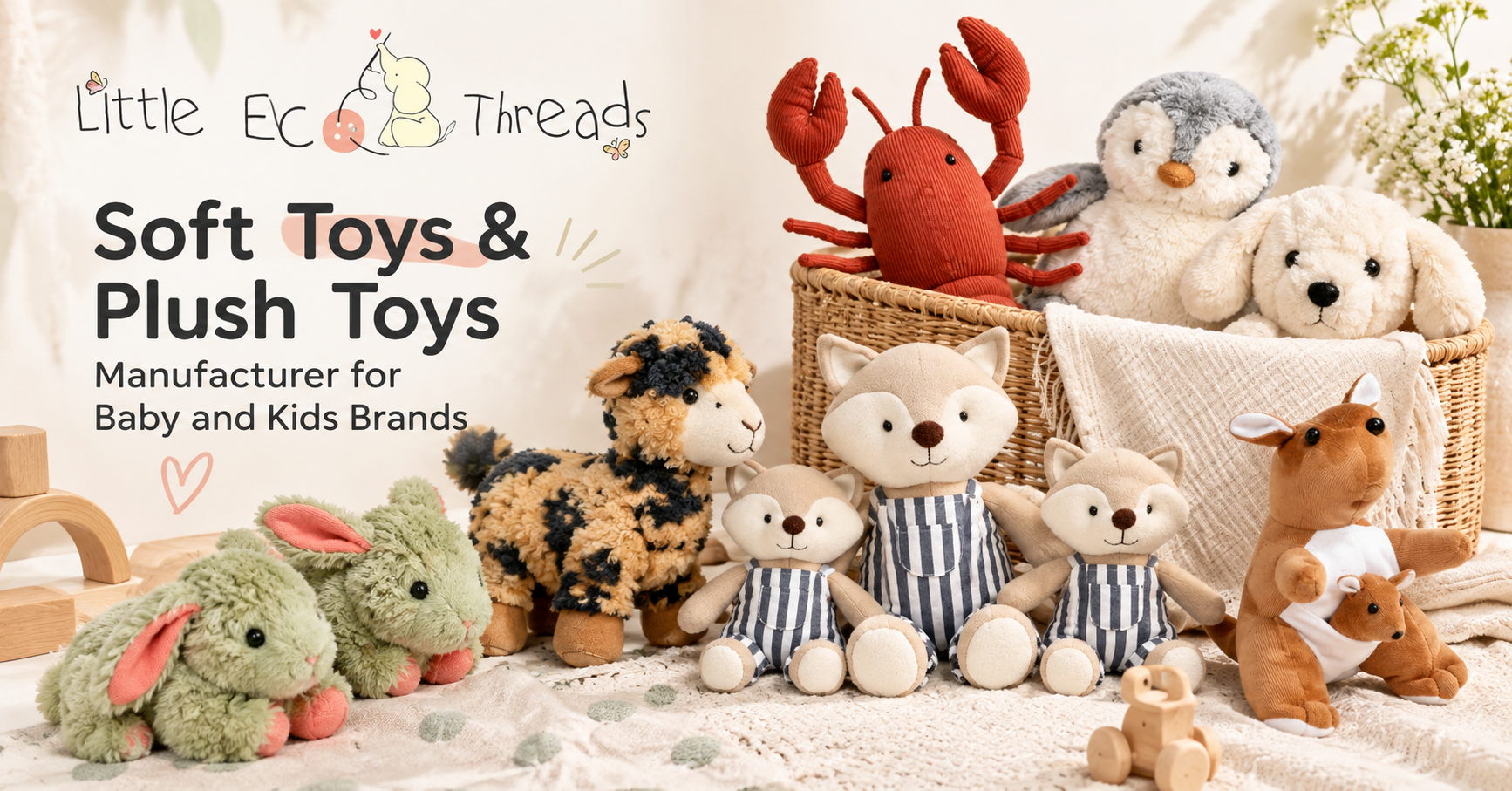
Soft toys are often one of the first things a baby holds and something many children keep close as they grow. This is one reason why many baby and children's brands include soft toys in their collections. A plush rabbit or a small comfort toy can go well with a romper, swaddle or blanket. It can also be included in a gift set or offered as an extra product with a customer's purchase.
At Little Eco Threads, we manufacture soft toys and plush toys for brands, retailers, importers and distributors who want to create their own designs in bulk.
In this guide, we cover different types of soft toys, fabric options and important construction details. This can help you understand what to consider when planning your collection and what questions to ask a manufacturer.
Soft Toys for Baby and Children's Brands
Brands add soft toys for different reasons, and it helps to be clear about yours before you start designing. Some want a low-risk item that gives customers a reason to buy from the brand for the first time. Others already sell clothing or nursery textiles and want something that completes a look or a gift.
A soft toy is also one of the easier ways to carry a brand's visual identity into a physical product. The colour palette, the fabric feel and the character style can all echo the rest of the range. A muslin bunny in the same tone as a swaddle, or a small plush bear that matches a knitted set, gives customers a clear reason to buy more than one item.
There is a practical side too. Soft toys are compact, easy to ship and easy to bundle. They work well as standalone products, as part of a gift set, or as a small add-on at checkout. Whether that suits your business depends on your customers, but it is worth thinking through early because it affects the size, packaging and price point of the toy.
Types of Soft Toys We Manufacture
Soft toys cover a wide range of formats. The list below covers the styles most commonly developed for baby and children's ranges. The exact scope of any project is worked out with the brand, based on the design and the materials involved.
- Plush animals and stuffed animals. The classic format. Bunnies, bears, cats, dogs, elephants, dinosaurs and other animals, from small handheld sizes to larger cuddly toys. In the US market these are usually searched for as stuffed animals, while UK and Australian buyers tend to say soft toys, cuddly toys or plushies. It is the same product, but the wording can matter for how you name and describe your range.
- Baby soft toys. Simple, rounded designs made for very young children. These usually have minimal detailing, softer fabrics and embroidered features instead of hard attachments. They are the core of most newborn and infant ranges.
- Comfort toys and lovey-style products. A soft head or animal figure attached to a small blanket or fabric square. These are popular for babies and toddlers who like to hold something familiar, and they pair naturally with muslin and cotton blankets.
- Nursery and room decor toys. Soft toys designed to look good in a nursery as well as be played with. These tend to lean on muted colours, simple shapes and a coordinated look with bedding or wall decor.
- Rag doll style toys. Soft fabric dolls with simple faces and stitched details. They work well for both babies and young children, and give brands a way to offer something more character-led without moving into complicated construction.
- Teddy bears. A category of their own, and one that is searched for constantly. Bears can be developed in different sizes, fabrics and finishes, from a classic plush teddy to a cotton or knitted version.
- Character and brand-led toys. Soft toys based on an original character created by the brand, such as a mascot, a storybook figure or a signature animal. These need clear artwork or reference designs so the finished toy stays true to the character.
- Seasonal and gifting toys. Festive designs, such as Christmas soft toys, and small themed toys developed for gift sets and limited-run collections.
Fabrics and Materials for Plush Toys
The fabric shapes almost everything about a soft toy: how it feels, how it looks on a shelf, how it holds up after washing, and which age group it suits. It is one of the first decisions to make and one of the hardest to change later.
- Cotton and organic cotton. Cotton stuffed animals are a common choice for baby ranges. The fabric is breathable, comfortable against skin and works well for simple, clean designs. Organic cotton is often requested by brands that already use it in their clothing or textiles, so a toy can match the rest of the collection.
- Muslin. A lightweight, open-weave cotton that softens with washing. Muslin works well for lovey-style toys, small comfort toys and designs where a relaxed, slightly crinkled look is part of the appeal.
- Plush and pile fabrics. These give the classic soft, fluffy feel that most people picture when they think of plush toys. Pile length, density and softness vary a lot between fabrics, so it is worth requesting samples and comparing them by hand.
- Knit and jersey fabrics. Useful for toys with a stretchy, snuggly feel, or for brands that want a soft toy to match a knitted or jersey collection.
- Velour, fleece and minky-type fabrics. Popular for very soft, cuddly finishes. They feel different from cotton, so they suit different products and different customers.
Not every fabric is available for every design, and the right choice depends on the toy's shape, the age group and the market you are selling into. If your brand has a specific material preference, such as organic cotton or certified fabrics, mention it at the start. It is much easier to plan a toy around a material than to swap the material in halfway through development.
Custom Soft Toys for Brands
Most brands that approach a manufacturer for soft toys have a design or a concept in mind, not an off-the-shelf catalogue. Customisation can happen at several levels, and it helps to decide which parts matter most to your product.
- Shape and size. The silhouette is what makes a toy recognisable. Even small changes in ear shape, head proportions or limb length change the character. Size affects fabric use, filling, packaging and shipping, so it is worth settling early.
- Fabric and colour. Fabric type, pile, colour matching and combinations. Colour references such as Pantone codes or physical swatches give the most reliable results.
- Prints and patterns. Printed fabrics can be used for parts of a toy, for example ears, inner ears, or a blanket panel on a comfort toy.
- Embroidery. Embroidered eyes, noses, mouths and small motifs are widely used on baby soft toys because they avoid loose parts. A brand logo can also be embroidered on a foot, a tag or a chest patch.
- Character design. If the toy is based on an original character, sharing artwork from several angles and any colour or style guidelines helps the final sample match the concept.
- Details and finishing. Ribbon, bows, contrast stitching, small knit accessories or clothing for the toy. Each detail adds time and cost, so it is worth keeping the ones that add real value.
- Labels. Brand labels, care labels and any market-specific labelling requirements. The position and size of labels can affect how the toy looks and feels.
- Packaging. Poly bags, gift boxes, hang tags, window boxes or bundled gift set packaging. Packaging is often designed after the toy, but it is better planned alongside it.
What to Consider When Developing a Soft Toy
A soft toy looks simple, but there are quite a few decisions inside it. The points below come up in most projects, and thinking about them in advance usually saves a round or two of samples.
- Age group. This drives almost everything else. A toy for a newborn is designed differently from one for a four-year-old. Younger age groups usually mean simpler shapes, embroidered features and no small attachments.
- Size. Small plush animals suit gift sets and pram toys. Larger cuddly toys work as standalone items. Think about how the child will hold and carry the toy, not only how it looks on a shelf.
- Fabric selection. Consider softness, appearance and how the fabric copes with washing. A fabric that looks great in a photo may not be the best fit for a toy that will be chewed, dragged and washed regularly.
- Filling. The filling affects how the toy feels, how it holds its shape and how it behaves in the wash. Firmer filling gives a more structured toy, while lighter filling gives a floppier, more huggable one. Ask about the filling material, how evenly it is distributed and whether it suits the intended age group.
- Stitching and construction. Seam strength, stitch density and the way the toy is closed all matter. Soft toys get pulled, squeezed and thrown around, so the construction needs to handle that.
- Embroidery and attached details. Embroidery is generally preferred for baby toys. If the design uses attached parts such as ribbons or appliqué, they need to be secured properly and checked against the requirements of the age group.
- Colour and print. Colours can look different on different fabrics. Approve colours on the actual fabric, not only on a screen.
- Washability. Parents want to know how to clean a soft toy. Machine washable toys are a frequent search in the UK, so decide whether your toy should be machine washable, surface washable or hand wash only, and make sure the construction and care label reflect that.
- Finishing. Trimming loose threads, checking symmetry, shaping the toy and ensuring a consistent look across the batch. These small details are what separate a sample from a product that is ready for sale.
- Packaging. Think about how the toy will be stored, shipped and presented. Compressed packaging saves space but can affect how the toy looks when opened.
- Intended market. Safety standards, labelling rules and customer expectations vary by country. A toy intended for the UK, US or Australia may need different labelling or testing, so name your target market early.
Soft Toy Manufacturing for Different Collections
The same toy shape can be developed quite differently depending on where it sits in your range.
- Newborn collections. Keep it simple. Soft fabrics, embroidered features, small sizes and gentle colours. Toys for this group are often designed to sit alongside blankets, swaddles and sleepwear in gift sets.
- Nursery ranges. Here the look matters as much as the feel. Coordinated colours, neutral tones and shapes that suit shelves, cots and nursery styling. Many nursery toys are bought as much for decoration as for play.
- Children's lifestyle collections. For toddlers and older children, brands can lean into character, colour and personality. Slightly larger sizes, more detailed designs and a stronger identity tend to work well here.
- Gifting ranges. Presentation carries more weight. Toys developed for gifting often come in gift packaging, sets or bundles with other products. Size, packaging and a good first impression matter a great deal.
- Seasonal collections. Christmas soft toys, themed designs and limited editions have tighter timelines and often smaller runs. Planning the development schedule around the selling season is essential.
Quality and Safety Considerations
Soft toys are handled, chewed, hugged and washed, often by very young children, so the standard for construction and finishing is higher than for many other textile products.
Construction starts with the basics: strong, even stitching, secure seams, properly attached components and consistent filling. Material choice matters as well, since fabrics and threads need to suit the age group and hold up through the intended use. Finishing then brings it together, with clean trimming, careful shaping and a check that each toy in a batch looks like the approved sample.
Testing is a separate and important step. Toy safety requirements differ between markets. For example, EN 71 is widely referenced in the UK and Europe, ASTM F963 applies in the US, and Australia has its own mandatory standard. The requirements that apply to your toy depend on the target market and the age group, so it is worth confirming them with a qualified testing laboratory before production. Brands should not assume that a toy passes just because the materials look suitable.
A good manufacturing partner will talk openly about these points, ask what markets you are selling into and be honest about what can and cannot be done for a given design.
Soft Toy Manufacturing at Little Eco Threads
Little Eco Threads is a manufacturer and supplier of baby and children's products based in India. We work with brands, retailers, importers, wholesalers and distributors who need products made in bulk, and soft toys are part of that range alongside our textile products.
We usually begin with the brief: what the toy is, who it is for and which market it will be sold in. From there, we discuss design, fabric options and construction, and move into sampling. The aim is to work out the details before bulk production starts, so that what is approved is what gets made.
We already work with cotton, organic cotton and muslin fabrics for other baby and children's products. This helps us guide brands when choosing materials that match their existing collections. If you already sell clothing or nursery products, a soft toy can be made using similar fabrics, colours and designs so that everything looks like part of the same range.
Every project is different, so we prefer to understand your requirements first. Things like fabric, size, customisation and quantity can be discussed once we know what you are planning to create.
Why Soft Toys Can Be Part of a Broader Baby and Children's Range
A soft toy is rarely sold on its own. It is often part of a bigger collection, such as a newborn gift set, a nursery theme, or a range where different products use the same colours and fabrics. If a brand already sells rompers, blankets, swaddles or sleepwear, adding a matching soft toy can make the collection feel more complete and give customers another product to choose.
It can also make shopping easier for customers. Someone buying a blanket may also want a matching bunny or another soft toy. A person looking for a gift may prefer a ready made set where all the products match instead of choosing each item separately.
For this to work, the soft toy should look and feel like it belongs with the rest of the collection. The fabric, colours, design and finishing all play an important role in creating a matching range.
If you are planning to develop your own soft toy or plush toy collection, whether it is a small range of baby soft toys or a wider collection of animals and characters, you can get in touch with Little Eco Threads. You can share your idea, target market and age group with us, and we can discuss the next steps with you.