Sustainable Fabrics for Children's Clothing
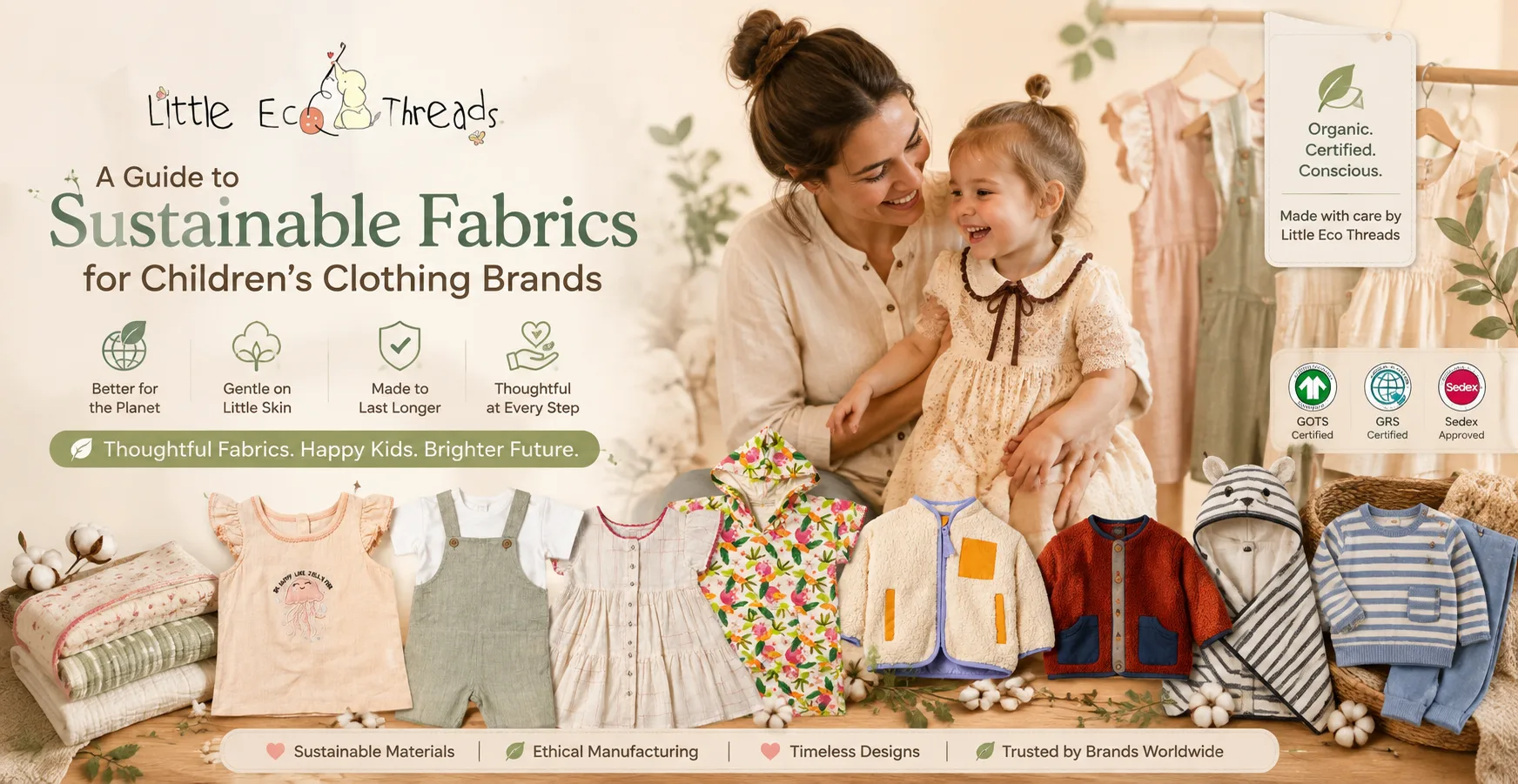
Choosing sustainable fabrics for children's clothing is more complex than choosing the fabric that sounds most natural. Children's garments need to feel soft, survive frequent washing, handle crawling and play, meet safety expectations, and still support a credible sustainability story.
That is why sustainable kidswear depends on more than a fabric label. Brands need to consider fibre source, processing, dyeing, durability, care, certifications, manufacturing consistency, and whether the material is right for the specific product.
This guide explains the main sustainable fabrics used in children's clothing, where each one works best, and what brands should ask before choosing materials for babywear, kidswear, and private label collections.
Why Fabric Choice Matters In Sustainable Kidswear
Take two garments: one made for an adult and one made for a toddler. Which one needs the fabric to work harder? Usually, the children's garment.
Children's clothing needs to handle:
- Softness against delicate skin
- Breathability and temperature comfort
- Crawling, climbing, stretching, and play
- Frequent washing
- Colour and print durability
- Shrinkage control
- Safe trims and finishing
- A reasonable lifespan before the child outgrows it
Sustainability in kidswear is not only about whether a fabric is natural, organic, or recycled. A sustainable fabric that loses shape quickly, pills badly, or needs specialist care may not be the best choice for real families.
For brands, the better question is not "Which fabric is most sustainable?" It is "Which sustainable fabric is right for this garment, age group, climate, price point, and care expectation?"
What Makes A Fabric Sustainable?
Before comparing materials, it helps to look past broad words like "natural," "organic," "green," or "eco-friendly." None of those terms, on their own, explain the full impact of a fabric.
A more useful fabric assessment looks at:
| Factor | What To Check |
|---|---|
| Raw material source | How the fibre is grown, extracted, recycled, or regenerated. |
| Water and chemical use | What happens during farming, dyeing, printing, washing, and finishing. |
| Processing method | Whether the fibre needs heavy chemical processing before it becomes wearable fabric. |
| Durability | Whether the garment lasts through real use and repeated washing. |
| Certifications | Whether claims are backed by standards such as GOTS, GRS, or OEKO-TEX STANDARD 100. |
| Care requirements | Whether parents can wash and dry the garment easily. |
| End of life | Whether the material can biodegrade, be reused, be recycled, or is likely to become waste. |
| Manufacturing consistency | Whether the fabric can be cut, sewn, dyed, printed, and finished reliably at scale. |
When you compare materials this way, there is rarely one winner. Organic cotton, linen, muslin, hemp, Tencel, recycled polyester, and recycled cotton each solve different problems.
Organic Cotton For Children's Clothing
organic cotton is one of the most familiar sustainable clothing materials for babywear and kidswear. It is soft, breathable, absorbent, and commercially easy for parents and retail buyers to understand.
Textile Exchange defines organic cotton as cotton produced and certified according to organic agriculture standards. It also notes that organic cotton systems rely on ecological processes and avoid toxic and persistent synthetic agrichemicals and genetically modified seeds.
For children's clothing, organic cotton works well for:
- Baby bodysuits
- Rompers
- T-shirts
- Pajamas
- Dresses
- Everyday basics
- Lightweight sets
- Skin-contact garments
The limitation is that organic cotton is not automatically the same as GOTS certified organic cotton. Organic cotton usually refers to the farming stage. GOTS can go further by covering certified organic fibre content, processing, environmental criteria, social criteria, traceability, and labelling requirements within the certified scope.
For brands, this means documentation matters. If a product will be marketed as organic, ask whether the fibre, fabric, facility, and finished product claim are properly supported.
GOTS, GRS, Sedex And Other Certification Checks
Certifications help brands avoid unsupported sustainability claims. They do not make every product perfect, but they do clarify what has been independently checked.
For brands comparing GOTS options, GOTS certification is especially relevant for organic textile claims. The Global Organic Textile Standard is described by Global Standards as covering published material, processing, environmental, social, traceability, and labelling requirements within the certified scope.
GRS is relevant when a brand uses recycled materials. Textile Exchange explains that the Global Recycled Standard verifies recycled content, includes chain of custody, and adds social, environmental, and chemical requirements for certified processing.
OEKO-TEX STANDARD 100 is different again. It tests textiles and components for harmful substances. OEKO-TEX notes that Product Class 1 has the strictest requirements for babies and children up to age three.
Sedex is not a fabric certification. It is more relevant to responsible sourcing and supplier transparency. Sedex describes its platform and SMETA audit as tools for assessing supply chain sustainability, labour, health and safety, environmental performance, and ethics.
For brands working with a factory that can support GOTS, GRS, and Sedex, the strongest question is still specific: what exact certificate, audit, material, facility, and product scope applies to my order?
Muslin For Babywear And Newborn Products
Muslin is a lightweight, loosely woven cotton fabric used heavily in babywear. It is valued because it is breathable, soft, and often becomes softer after washing.
Muslin is especially useful for:
- Swaddles
- Burp cloths
- Bandana bibs
- Lightweight blankets
- Baby quilts
- Summer rompers
- Soft nursery textile products
Its open weave allows airflow, which makes it useful for warm-weather baby products and newborn essentials. The trade-off is durability under stress. Muslin is not usually the best fabric for rough toddler playwear because the loose weave can distort or wear faster than more structured fabrics.
For sustainable kidswear brands, muslin is a good example of why fabric choice should match use. It can be excellent for baby textiles and poor for hard-wearing play garments.
Linen For Warm-Weather Kidswear
Linen comes from flax. It is often considered a strong sustainable fabric because flax can grow well in suitable conditions with fewer inputs than many conventional crops, though total impact still depends on processing, dyeing, finishing, transport, and garment use.
In children's clothing, linen works well for:
- Summer rompers
- Shirts and shorts
- Dresses
- Resort wear
- Relaxed separates
- Breathable warm-weather sets
Linen is breathable and can soften over time, but it also wrinkles easily and may feel structured before washing. Some brands treat that texture as part of the product's character. Others may find it harder to sell to customers expecting a smooth, low-maintenance finish.
The practical takeaway: linen can be excellent for warm-season sustainable children's clothing, but it should be tested for shrinkage, hand feel, seam behaviour, and care expectations before bulk production.
Hemp, Tencel And Regenerated Fibres
Hemp is durable and fast-growing, and it can be useful in rugged playwear or outerwear blends. On its own, it may feel coarse, so it is often blended with cotton to improve comfort. Availability and cost can also be more challenging than cotton.
Tencel is a branded fibre family from Lenzing, including lyocell and modal fibres. It is often used when brands want a soft, smooth, moisture-managing hand feel. In kidswear, Tencel or lyocell blends may suit sleepwear, drapey tops, or soft summer pieces.
Regenerated cellulosic fibres such as lyocell, modal, and viscose start from plant cellulose, often wood pulp, but they require industrial processing to become fibre. That does not automatically make them bad. It means brands should ask about sourcing, processing, chemical management, certification, and supplier transparency instead of assuming "plant-based" is enough.
Recycled Materials In Children's Clothing
Recycled materials can reduce reliance on virgin inputs and give existing waste another use. In kidswear, the most common examples are recycled polyester and recycled cotton.
recycled polyester is often used for swimwear, outerwear, fleece, activewear, and performance garments. Textile Exchange includes recycled polyester under preferred synthetics and notes that standards such as RCS and GRS can support chain of custody for recycled textiles.
Recycled cotton can be made from pre-consumer cutting waste, factory scraps, or post-consumer textiles. It can suit casual basics and blended fabrics, though recycled cotton fibre length and consistency can vary.
Recycled is not automatically impact-free. Brands should ask:
- What is the recycled input?
- Is it pre-consumer or post-consumer?
- What percentage of the final fabric is recycled?
- Is the claim supported by GRS or another relevant standard?
- Does the fabric perform well after wash and wear testing?
- Is the material suitable for the age group and garment type?
For babywear worn directly against the skin, natural fibres such as organic cotton or muslin may be a better starting point. For swimwear, outerwear, and activewear, recycled polyester can be more appropriate because performance matters.
Corduroy And Denim: Durability As Sustainability
Durability is often overlooked in sustainable fabric discussions. A fabric that lasts longer, washes well, and can be handed down may support a better sustainability outcome than a fragile material that needs replacing quickly.
Corduroy and denim are both durable cotton-based fabrics. They are useful for:
- Dungarees
- Overalls
- Pinafores
- Jackets
- Cooler-weather trousers
- Hard-wearing playwear
They are heavier than muslin or linen, so they suit cooler-weather pieces better than summer basics. Brands can also explore organic cotton denim or corduroy when they want to combine durability with more responsible fibre sourcing.
The key is testing. Denim and corduroy should be checked for colourfastness, shrinkage, seam strength, button safety, wash behaviour, and comfort before production.
Natural, Recycled And Regenerated Fibres
These categories are often confused, but they describe different material routes.
| Fibre Type | Examples | What It Means |
|---|---|---|
| Natural fibres | Cotton, linen, hemp, wool | Fibres from plants or animals, processed into yarn and fabric. |
| Recycled fibres | Recycled cotton, recycled polyester | Fibres made from pre-consumer or post-consumer waste. |
| Regenerated cellulosics | Tencel lyocell, modal, viscose | Fibres made from cellulose that is dissolved and re-spun into fibre. |
Natural does not automatically mean low-impact. Recycled does not automatically mean suitable for every garment. Regenerated does not automatically mean unsustainable. Each material needs to be judged by sourcing, processing, durability, certification, and use.
How Children's Clothing Brands Should Choose Fabric
For founders developing sustainable kids clothing, a structured process works better than choosing from a swatch card based on feel alone.
Ask these questions before finalising a material:
- Will the fabric feel comfortable against the child's skin?
- Is it breathable enough for the climate and season?
- Does it suit the garment's purpose: sleepwear, playwear, swaddles, party wear, swimwear, or outerwear?
- How does it behave after repeated washing?
- Does it shrink, twist, pill, fade, or lose shape?
- Can it be cut and sewn consistently in production?
- Does the supplier have stable availability?
- What certifications or test reports support the claim?
- Is the care label realistic for parents?
- Does the material support the price point and MOQ?
An experienced children's clothing manufacturer should be able to help brands connect fabric choice with product use, production method, quality control, and documentation. Good children's clothing manufacturing decisions bring material selection, pattern development, testing, finishing, and production planning into the same conversation.
A Practical Fabric Selection Example
Imagine a founder developing a first summer babywear collection. The original plan is to use a viscose blend marketed as eco-friendly. On paper, it sounds appealing. In production, the better questions are more practical:
- Is it soft enough for newborn skin?
- Does it breathe well in a hot climate?
- Does it shrink or twist after repeated washing?
- Can it be sourced consistently at the required MOQ?
- Does the supplier have documentation for the claim?
- Will parents understand the care instructions?
After testing, the better option might be a lighter muslin, a soft organic cotton jersey, or a linen-cotton blend. The point is not that one fabric is always superior. The point is that sustainable fabric selection should be product-led.
Little Eco Threads works with brands on exactly this type of decision, connecting material choice with sampling, fit, trims, construction, wash performance, certification scope, and production planning.
Common Fabric Sourcing Mistakes
These mistakes come up often when brands choose sustainable materials:
- Choosing a fabric because it is labelled "eco-friendly" without checking what that means.
- Ignoring durability and wash performance.
- Treating natural fibres as automatically sustainable.
- Treating recycled materials as automatically suitable for skin-contact garments.
- Forgetting that dyeing, printing, and finishing can change the sustainability story.
- Making GOTS, GRS, or OEKO-TEX claims without current documentation.
- Choosing a fabric that photographs well but does not perform well in real use.
- Ignoring care requirements that parents may not follow.
- Separating fabric choice from garment manufacturing realities.
Avoiding these mistakes does not require advanced textile science. It requires better questions before committing to fabric, sampling, and bulk production.
Final Takeaway: Sustainable Fabrics Need Practical Testing
There is no single perfect fabric for sustainable children's clothing. Organic cotton, muslin, linen, hemp, Tencel, recycled cotton, recycled polyester, denim, and corduroy all have benefits and limitations.
The right choice depends on the product, age group, season, care requirements, certification needs, cost, MOQ, and how the garment will be used.
For brands developing sustainable children's clothing, the best fabric strategy is specific, documented, and tested. Ask where the fabric comes from, how it is processed, what certification supports the claim, and how the garment performs after washing.
Little Eco Threads helps brands turn sustainable materials into practical, comfortable, and production-ready kidswear, with ethical manufacturing considered alongside comfort, quality, and documentation. If you are planning a new organic cotton, muslin, linen, recycled, or mixed-fabric collection, contact Little Eco Threads to discuss fabric options, sampling, certifications, and production.
FAQ: Sustainable Fabrics For Children's Clothing
What are the best sustainable fabrics for children's clothing?
The best sustainable fabrics for children's clothing depend on the product. Organic cotton is often strong for basics and babywear, muslin is useful for newborn products, linen suits warm-weather pieces, denim and corduroy support durable playwear, and recycled polyester can work for swimwear or outerwear.
Is organic cotton better than recycled polyester for kidswear?
Not always. Organic cotton is usually better for breathable, skin-contact garments such as baby bodysuits and pajamas. Recycled polyester may be better for swimwear, outerwear, and activewear where stretch, durability, or quick drying matter.
Is GOTS certified organic cotton worth it for children's clothing?
GOTS certified organic cotton can be valuable when a brand wants to make a credible organic textile claim. Brands should check what the certificate covers and whether the claim applies to the fabric, facility, or finished product.
Is muslin a sustainable fabric?
Muslin can be a good sustainable fabric when made from responsibly sourced cotton and used in the right product. It works especially well for swaddles, burp cloths, bibs, and lightweight baby textiles, but it may not be the best option for rough toddler playwear.
What certifications should sustainable kidswear brands check?
GOTS is relevant for organic textile claims, GRS for recycled material claims, and OEKO-TEX STANDARD 100 for harmful-substance testing. Sedex and SMETA can also support responsible sourcing and ethical manufacturing review at the supplier level.