
Sustainable Apparel Manufacturing: A Guide for Brands
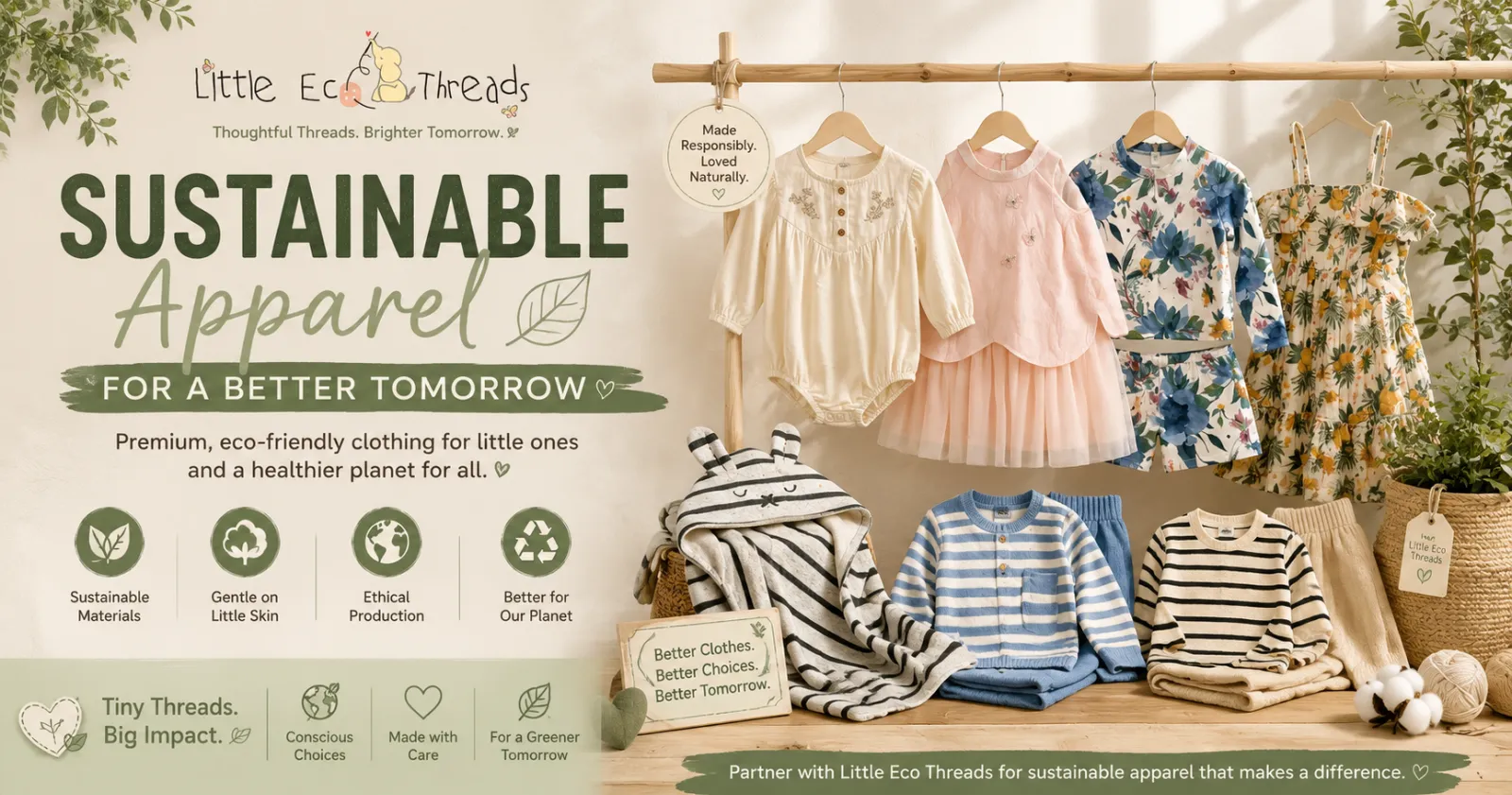
Sustainability has become more than a marketing claim in the global fashion industry. Today, brands are expected to prove that their products are genuinely made with the environment in mind. This article explores what sustainable apparel manufacturing really looks like in practice, from reducing water consumption and using safer dyes to building transparent supply chains and creating garments designed to last beyond a single season. It also explains how these manufacturing decisions strengthen customer trust, help businesses prepare for evolving global regulations, and support long term profitability. Throughout the article, we will also see how manufacturers like Little Eco Threads are helping fashion brands, startups, and retailers around the world turn these sustainability goals into practical, scalable manufacturing solutions.
For decades, making clothes has come with a cost to the environment. A single pair of jeans can require thousands of litres of water, from growing the cotton to washing and finishing the final garment. Dyeing processes have also left a lasting impact, with untreated wastewater polluting rivers in many parts of the world. On top of that, a garment often travels through three or four countries before reaching a store, and every stage of that journey adds to its carbon footprint.
None of this is new to people working in the fashion industry. What has changed is the growing pressure from customers, retailers, and regulators who now expect brands to take meaningful action instead of making empty promises.
Around the world, sustainable fashion has gone from being a niche interest to something many shoppers simply expect. Consumers have become much better at spotting greenwashing and are looking for genuine proof behind a brand's environmental claims. They want to know where a T shirt came from, how it was made, and whether the sustainability claims can actually be verified. Retailers are asking more detailed questions before choosing manufacturing partners, while regulators in many regions are gradually turning what were once voluntary sustainability commitments into legal requirements.
This is where sustainable apparel manufacturing becomes important. It is no longer a passing trend but a practical approach to producing clothing in a way that can stand up to customer expectations, retailer requirements, and regulatory scrutiny. It covers every stage of production, from the water used to grow fibres and the chemicals used during dyeing to the way garments are packaged before they reach customers.
In this article, we will explore what sustainable apparel manufacturing looks like in practice. We will examine the materials, production methods, and business decisions that set it apart from conventional manufacturing, and why more fashion brands around the world, from new startups to established retailers, are making it a central part of how they operate.
Reducing Water Consumption Through Smarter Manufacturing
Cotton is thirsty. Conventional cotton farming remains one of the most water-intensive stages in the entire textile supply chain, and it's a major reason the fashion industry carries such a heavy footprint before a single garment is even sewn.
Sustainable apparel manufacturing tackles this problem from several directions at once, rather than looking for one single fix.
Organic cotton is one starting point. It's grown without synthetic pesticides or fertilisers, using methods (crop rotation, healthier soil, rainwater harvesting) that typically require less irrigation than conventional cotton farming. It isn't a cure-all by itself, but paired with better field management, it meaningfully eases pressure on water supplies in regions where water is already scarce. This is one reason organic apparel manufacturing has moved from a niche interest to a mainstream sourcing consideration.
Dyeing is a second, often overlooked opportunity. Traditional dyeing processes can use enormous volumes of fresh water per kilogram of fabric, much of it discarded after a single use. Newer techniques (low liquor ratio dyeing machines, foam dyeing, digital printing) achieve similar colour results using a fraction of that water.
Then there's what happens inside the factory walls: treating and reusing water on site rather than drawing fresh water at every stage, and returning cleaner wastewater to the local environment instead of untreated runoff.
For a fashion brand sourcing garments from overseas, this isn't an abstract concern. Water scarcity is a supply chain risk as much as an environmental one. Factories in water stressed regions face slowdowns, quality issues, and rising costs as water becomes harder to secure. A manufacturing partner that has already invested in water efficiency is, in very practical terms, a steadier one to build a long-term relationship with.
Safer Materials, Cleaner Processes
Ask most people what sustainable clothing manufacturing means, and organic materials are usually the first thing that comes to mind. Fewer people think about what happens in the dye house, but that's often where the real risks, and the real opportunities, sit.
Conventional textile dyeing and finishing can involve a long list of chemicals, some of which pose genuine risks to the workers handling them and, in small residual amounts, to the people wearing the finished garment. This is where certifications like OEKO-TEX and GOTS earn their keep. OEKO-TEX Standard 100 tests a finished textile for harmful substances, giving a brand a way to confirm, rather than simply assume, that a garment is safe against skin. GOTS, the Global Organic Textile Standard, goes further still, covering the organic status of the fibre, environmental criteria across processing, and the social conditions under which a garment was made.
This is what sustainable textile manufacturing looks like once you move past the marketing language: safer chemistry, better working conditions, and a more consistent final product. Choosing safer dyes and reducing chemical use isn't only about ticking a compliance box. It changes daily conditions on a factory floor, where workers once handling hazardous substances now work with safer alternatives instead.
This matters on two fronts for a fashion brand operating anywhere in the world. Shoppers are increasingly likely to check for exactly these kinds of certifications before buying. And cleaner processes reduce legal and reputational risk. A chemical safety scandal or product recall costs far more, in every sense, than investing in safer production from the outset. An ethical clothing manufacturer that takes this seriously isn't just doing the right thing; it's protecting its brand partners from risks they may not even realise they're carrying.
Cutting Carbon Emissions Across the Supply Chain
A garment's carbon footprint doesn't appear at one single point. It builds gradually in the energy used to spin yarn, knit or weave fabric, run dye houses and finishing lines, and then again in the shipping required to move a product from mill to warehouse to shop shelf.
Sustainable apparel manufacturing addresses this at multiple stages rather than chasing one big fix. Renewable energy (solar panels on factory rooftops, or purchasing renewable power where the local grid allows) cuts the emissions tied to production itself. Energy-efficient machinery does the same job using less power, which also happens to lower a factory's running costs.
Logistics is a lever that's easy to overlook. Consolidating shipments, favouring sea freight over air freight where timelines allow, and sourcing components closer to where garments are actually assembled can all substantially cut a product's transport emissions. Responsible sourcing plays a role here too: manufacturers who map their supply chains carefully, and who prioritise suppliers demonstrating lower-impact growing and processing methods, an approach Little Eco Threads builds into its own sourcing decisions, are in a far better position to make smart choices about how materials move, rather than simply accepting whatever route happens to be cheapest.
Brands are increasingly expected to answer for emissions they don't directly control. Retailers and larger partners now ask suppliers to report on supply chain emissions, not just their own offices and stores. A brand that can already answer these questions, because its manufacturing partner tracks this information as standard practice, holds a real advantage over one scrambling to find answers under pressure.
Building Transparent and Responsible Supply Chains
Here is a simple question that many fashion brands find difficult to answer: if a customer asked exactly where the fabric in your best selling product came from, could you explain its journey from start to finish? Surprisingly, many brands cannot. It is not because they are hiding anything, but because supply chains have traditionally been so complex that gaining complete visibility has never been easy.
This is what traceability really means. It is the ability to follow a garment's journey all the way back, from the finished product to the factory where it was stitched, the mill where the fabric was made, and the farm or facility where the raw fibre originated. It sounds straightforward, but in an industry where a single T shirt may pass through suppliers in several different countries, achieving that level of transparency is far from simple.
Traceability also goes hand in hand with responsible sourcing and supplier transparency. Today, brands are expected to know much more than who made their products. They also need to understand the working conditions, the materials used, and the environmental practices followed throughout the manufacturing process. This is where the choice of manufacturing partner becomes especially important. Little Eco Threads, for example, believes in maintaining open communication with the brands it works with by sharing information about sourcing, production methods, and materials instead of treating that information as confidential. This makes it much easier for brands to answer detailed questions with confidence, whether those questions come from customers, retailers, journalists, or regulators.
In the end, a supply chain is only as trustworthy as its least transparent stage. That is why transparency has become more than an ethical responsibility. It is now a genuine business advantage. Customers are more likely to stay loyal to brands they trust. Retailers increasingly prefer suppliers that can support their sustainability claims with clear evidence. At the same time, regulators are moving in the same direction, making transparency an essential part of doing business rather than an optional extra.
Creating Garments That Are Built to Last
There's a quiet irony sitting at the heart of fast fashion: garments designed to be replaced quickly often end up costing brands more in the long run, through returns, complaints, and reputational damage, than garments built to last would have cost in the first place.
Sustainable apparel manufacturing treats durability as a design decision rather than an accident. That means stronger construction: reinforced seams, careful stitching, fabric tested for how it holds up after repeated washing rather than just how it looks on day one. It means selecting materials for their long-term performance instead of their lowest possible price. And it means a level of craftsmanship that, frankly, takes more time and attention than churning garments out as fast as possible.
Why file this under sustainability rather than simply "quality"? Because the most sustainable garment is often the one that never needed replacing. A jacket worn for five years carries a dramatically lower environmental footprint, per year of use, than five separate jackets each worn for a single season. Reducing overconsumption isn't only about persuading people to buy less; it's about making sure what they do buy lasts longer, which is arguably the easier habit to build a brand around.
Manufacturing partners can make or break a brand's reputation here, since quality problems tend to surface only once a product is already in a customer's hands. Little Eco Threads builds its production around exactly this kind of long-term thinking, favouring craftsmanship and material choices that hold up well after the tenth wash rather than just the first photoshoot. For brands competing in a market where shoppers are quick to leave a critical review over a garment that falls apart, that difference shows up in customer trust faster than most people expect.
Circular Fashion, Explained Simply
"Circular fashion" is one of those phrases that gets used constantly and explained rarely. In plain terms, it means designing and making clothes with their entire lifecycle in mind, not just how they're produced, but what happens to them once a customer is finished wearing them.
Picture the alternative the industry has mostly run on for decades: a straight line. Raw materials go in one end, a garment comes out the other, and once its useful life ends, it's thrown away, usually into landfill or incineration, because most fabric blends are difficult to separate and recycle. Circular fashion tries to bend that line back on itself. Recycled fibres, made from post-consumer textile waste or reclaimed ocean plastic, reduce the need to extract new raw materials in the first place. Designing garments so their fabric can eventually be recycled again, rather than blending so many different fibres together that recycling becomes impossible, keeps that loop open for longer.
Reusing materials wherever it's practical is another piece of the puzzle: offcuts from cutting patterns can become smaller accessories or trims instead of factory waste. Reducing textile waste at the manufacturing stage, through better pattern efficiency and tighter production planning, means less material is discarded before a garment is even finished.
A brand doesn't need to reinvent itself overnight to make use of any of this. Circular manufacturing practices can be introduced gradually, one material choice or one product line at a time, and even modest steps, a recycled-fibre blend here, a take-back scheme there, start shifting a brand's overall footprint in a genuinely measurable direction.
Looking Beyond the Garment
It's easy to focus entirely on fabric and forget that a garment's environmental impact doesn't end once it's sewn. Everything that happens afterward (packaging, transport, storage) carries its own footprint, and it's often more within a brand's control than people assume.
Sustainable packaging is the most visible piece of this puzzle. Swapping plastic polybags for recycled or biodegradable alternatives, cutting unnecessary packaging layers, and shipping in recycled cardboard are all straightforward changes with a real cumulative effect, especially at scale. This is eco friendly clothing manufacturing in its least glamorous form: dozens of unremarkable operational choices that add up to something significant.
Waste reduction inside the factory matters just as much, even where customers never see it directly. Efficient cutting techniques that minimise fabric offcuts, responsible disposal of whatever waste remains, and careful inventory planning that avoids overproduction all add up across thousands of units.
Efficient transportation, touched on earlier in this article, is worth a second mention here in the context of everyday operations: consolidating orders, planning shipments further ahead, and working with partners who ship intelligently rather than reactively all reduce the carbon cost of simply getting a product from factory to customer.
What ties all of this together is something a little less tangible, but arguably more important: a genuine commitment to continuous improvement. Done properly, sustainability isn't a box that gets ticked once. It behaves more like an ongoing practice, where a manufacturer that's water efficient this year turns its attention to packaging next year, and to logistics the year after that. Brands working with partners who think this way benefit from a relationship that keeps improving alongside them, rather than one that considers the job finished after a single sustainability report.
Why Sustainability Has Become a Genuine Business Advantage
It's easy to overlook this part when sustainability gets filed under "environmental responsibility" alone: it's also, increasingly, just good business.
Start with trust. Consumers around the world have grown sceptical of vague environmental claims, and not without reason; plenty of brands have used sustainability language loosely over the years. Brands that can back up what they say, with real materials, documented processes, and evidence rather than adjectives, earn a kind of trust that translates directly into loyalty and repeat purchases. That trust is hard to build and easy to lose, which is exactly what makes it valuable.
The regulatory picture is moving just as quickly, and faster than many brands realise. Over the next couple of years, regulations in markets around the world will increasingly require brands to substantiate their environmental claims with real evidence rather than general marketing language; vague terms like "eco-friendly" or "green" won't hold up on their own for much longer. Digital "product passports" are being introduced for textiles, giving customers and regulators the ability to trace exactly what a garment is made of and where it came from. Separately, new extended producer responsibility rules mean brands will increasingly be expected to think about what happens to a garment after a customer is done with it, not only at the point of sale. Many countries are actively working through the details of their own versions of these rules right now. Brands that have already built sustainable, traceable manufacturing into their operations won't need to scramble when these requirements land; they'll already be positioned for them.
There's a simpler, longer-term argument too: sustainable practices tend to be efficient practices. Less water wasted, less energy wasted, less material wasted, these aren't only environmental wins. They're often cost savings, once the upfront investment has paid for itself.
This is precisely where the right manufacturing partner earns its keep. Little Eco Threads works with brands at very different stages, from founders launching a first small collection to established retailers managing several product lines at once, helping each of them translate sustainability goals into manufacturing decisions that are realistically achievable at their scale, rather than treating sustainability as an all or nothing commitment only large companies can afford.
Conclusion
Sustainable apparel manufacturing has come a long way from being something that was simply nice to have for fashion brands. Today, it has become an essential part of how successful fashion businesses operate. It is no longer just about meeting external expectations. It is about building a brand that can grow, adapt, and earn trust over the long term.
Every aspect of sustainable manufacturing connects back to this bigger picture. Reducing water consumption and carbon emissions helps protect the environment, but it also makes supply chains more resilient as natural resources become increasingly limited. Choosing safer materials benefits workers and customers while often leading to higher quality products. Greater transparency builds lasting trust that competitors cannot easily replicate. Strong craftsmanship reduces product returns, improves customer satisfaction, and encourages repeat purchases. Looking beyond the garment itself to packaging, logistics, and circular design shows customers, retailers, and regulators that sustainability is part of the business, not just part of its marketing.
Little Eco Threads follows this approach in its everyday operations. The company combines responsibly sourced materials, ethical manufacturing practices, skilled craftsmanship, transparent communication with brand partners, and flexible production that supports both emerging fashion brands and established labels. Rather than simply talking about sustainability, it focuses on putting these principles into practice throughout the manufacturing process.
Whether you are a fashion startup launching your first collection, a sourcing manager looking for a manufacturing partner you can confidently stand behind, or a retailer exploring more responsible ways to produce future collections, sustainable manufacturing is worth considering. Little Eco Threads would be happy to discuss how those goals can be turned into practical manufacturing solutions.