Australia's Sustainable Baby Clothing Market in 2026
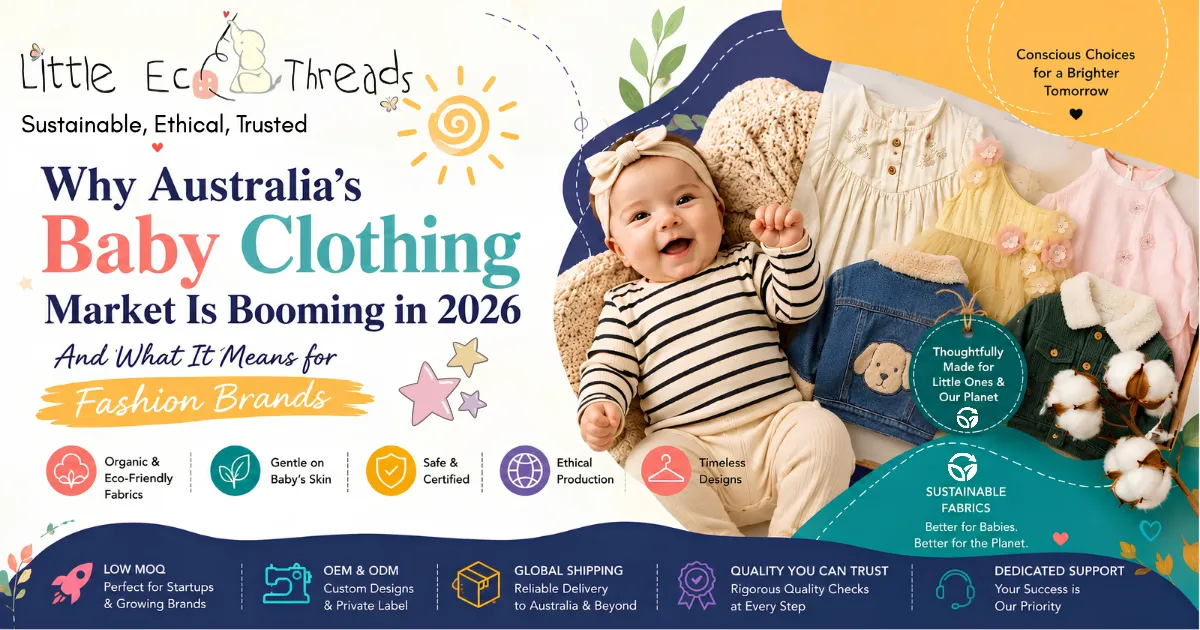
Australia has become one of the fastest-growing baby clothing markets in the Asia-Pacific region. Industry reports estimate that the country's baby apparel market is now worth around USD 6.3 to 6.4 billion, with steady annual growth of about 4% expected over the next few years.
At the same time, Australia's overall children's clothing market continues to grow despite rising living costs, showing that parents are still willing to spend on quality clothing for their children.
For fashion brands, retailers, startups, and importers, this creates a great opportunity. Australian parents are looking for better quality products, they care about sustainability, and online shopping has made it easier than ever for new brands to reach customers.
In this article, we'll look at what's driving the market, what parents are buying, where the biggest opportunities are, and what to consider when choosing a manufacturing partner.
Why Australia's Baby Clothing Market Is Growing
There's an odd little quirk in how spending feels. Spend a large sum on someone else and it often reads as generous, even impressive from the outside, but privately it rarely feels satisfying in a personal way. Spend that same sum on yourself and it can feel indulgent, even a little hard to justify, yet it delivers a kind of quiet personal satisfaction the first version never does.
A child sits in a strange middle ground between those two categories. Parents talk about baby purchases as spending "on someone else," but it rarely carries any of that generosity without reward feeling, because a child isn't really experienced as separate from the self. Buying well for a baby feels as personally satisfying as buying well for yourself, which is exactly why Australian parents keep raising the bar on what "well" means: not just softer fabric or a nicer print, but organic materials, transparent sourcing, and production they can feel good about.
Sustainability, in that sense, isn't a marketing layer bolted onto baby clothing. It's what turns a purchase into something a parent can feel personally proud of, not just generous about. That shift shows up clearly across several forces driving the market right now.
Parents Are Spending More on Each Child
Australia records more than 300,000 births every year. While birth rates have slowed slightly over time, spending on baby products has continued to increase. Parents are investing more in clothing that offers better comfort, higher quality, and longer lasting value.
Parents Are Choosing Quality Over Quantity
Most new parents today belong to the Millennial and Gen Z generations. Compared to previous generations, they are more willing to pay for products that are well made, safe, and thoughtfully designed. Instead of filling wardrobes with low-cost clothing, many parents now prefer a smaller collection of high-quality essentials and gift sets.
Sustainable Baby Clothing Is Becoming the New Standard
Organic cotton and other eco friendly fabrics are no longer seen as luxury options. Many Australian parents actively look for baby clothing made from organic cotton, bamboo, recycled fabrics, and other sustainable materials because they are gentle on a baby's skin and better for the environment.
Australian brands like Purebaby, Aster & Oak, Grown, and Wilson + Frenchy have helped make sustainable baby clothing much more common across the country. Today, many parents expect these options rather than seeing them as something special.
Online Shopping Continues to Grow
Online shopping has become one of the main ways Australians buy baby clothing. Millions of households shop online every month, making it much easier for new brands to sell directly to customers without depending entirely on physical stores. Marketplaces and social media have also helped smaller brands compete with well-known names.
Consumers Care About Sustainability
Australian shoppers are becoming more conscious about how products are made. Many parents now prefer clothing that lasts longer, can be passed on to younger siblings, or is made using environmentally friendly materials. Brands that genuinely care about sustainability are earning more trust from customers.
Strict Safety Standards Build Customer Confidence
Australia has strong safety standards for baby and children's clothing. Products must meet strict requirements for things like fire safety, chemical limits, and product labeling. Although these rules require extra care from manufacturers, they also help customers feel more confident about the products they buy and encourage higher-quality clothing in the market.
Local Brands Continue to Grow
Australian parents enjoy supporting brands that offer unique designs, quality products, and transparent manufacturing practices. This gives new brands an opportunity to succeed by focusing on quality, originality, and trust instead of competing only on price.
Key Consumer Trends in 2026
Several trends are shaping Australia's baby clothing market this year.
- Organic cotton remains one of the most popular fabric choices because parents trust it to be soft, safe, and comfortable for babies.
- Gender-neutral clothing is becoming more common, with many parents choosing neutral colours and simple styles that can be used for more than one child.
- Minimalist designs with soft colours and clean patterns continue to attract parents who prefer timeless clothing over heavily printed designs.
- Eco friendly materials such as bamboo, recycled fabrics, and Tencel are becoming more popular alongside organic cotton.
- Comfort is a top priority. Parents look for clothing with soft fabrics, stretchable fits, smooth stitching, and designs that allow babies to move freely.
- Smaller seasonal collections are being introduced throughout the year by many brands, instead of launching one large collection every season.
- Baby gift sets continue to be a strong seller, especially for baby showers and newborn gifts.
- Matching family outfits, including coordinated clothing for parents, siblings, and babies, remain popular because they perform well on social media and appeal to modern families.
Opportunities for Fashion Brands
A Stable and Growing Market
Australia may not have the fastest-growing baby clothing market in the world, but it offers something equally valuable: a stable economy, clear regulations, strong online shopping habits, and customers who are willing to pay for quality. These factors make it an attractive market for both new and established fashion brands.
Growing Demand in Smaller Market Segments
Although several well known brands already lead the premium baby clothing category, there are still many opportunities in areas such as adaptive baby clothing, gender neutral collections, sustainable everyday essentials, and affordable organic clothing.
Better Pricing Opportunities
Australian parents understand the value of quality products. Many are willing to pay more for organic fabrics, ethical manufacturing, and durable clothing, allowing brands to earn better profits while delivering products customers genuinely appreciate.
More Businesses Are Launching Private-Label Brands
Retailers, online stores, and entrepreneurs are increasingly creating their own baby clothing brands instead of selling existing labels. Private label manufacturing allows businesses to build their own identity, control pricing, and stand out from competitors. Choosing the right manufacturing partner becomes one of the most important decisions in this process.
Opportunities Beyond Australia
Brands that successfully meet Australian quality and safety expectations are often well prepared to expand into nearby markets such as New Zealand and other Asia-Pacific countries that value similar product standards. The same pattern is playing out in other premium markets, from the growing UK sustainable kidswear market to Germany's certification-driven demand.
What Fashion Brands Should Look for in a Manufacturing Partner
Finding the right manufacturer can have a huge impact on the success of a baby clothing brand. If you are weighing up partners, it helps to work through a structured set of supplier questions. Some of the most important things to consider include:
- Low minimum order quantities, allowing brands to launch without investing heavily.
- Organic and eco-friendly fabrics with recognised certifications.
- Ethical production practices and fair working conditions.
- Strong quality checks throughout the manufacturing process.
- Manufacturing that meets international quality and safety standards.
- OEM and ODM services for brands that need either custom designs or ready to customise collections.
- Custom branding for labels, packaging, and trims.
- Clear communication and dependable customer support.
- On-time delivery to keep product launches on schedule.
Little Eco Threads focuses on exactly these areas. As a sustainable baby clothing manufacturer and private label partner, the company works with organic and eco friendly fabrics, offers low minimum order quantities, and provides complete OEM and ODM manufacturing support.
Whether a brand needs small changes to an existing design or wants to develop an entirely new collection, Little Eco Threads offers the flexibility needed to bring those ideas to life.
Why Sustainability Matters More Than Ever
Parents Expect Honesty
Today's parents want to know exactly what they're buying. They read labels, check materials, and look for trusted certifications before making a purchase. Brands that openly share how their products are made earn far more trust than those making vague environmental claims.
People Care About the Environment
Consumers are becoming more aware of the environmental impact of clothing production. This has increased demand for organic cotton, recycled materials, and manufacturing processes that reduce waste and use safer materials.
Retailers Expect Responsible Suppliers
Many Australian retailers now ask suppliers to provide information about fabric sourcing, safety testing, and manufacturing practices before accepting new products. Brands that already have these standards in place find it much easier to work with retailers.
Sustainability Helps Brands Stand Out
As more companies enter the baby clothing market, having a genuine commitment to sustainability helps brands build trust and create a stronger identity. Customers are far more likely to remember brands that combine quality with responsible manufacturing.
Long-Term Business Growth
Using better materials and responsible production methods often leads to higher product quality, happier customers, and stronger repeat business. These are all important for building a successful brand over the long term.
How Little Eco Threads Supports Growing Brands
Little Eco Threads works with fashion brands, retailers, importers, and startups that want reliable baby clothing manufacturing without setting up their own production facilities. That covers sustainable apparel in organic and eco friendly fabrics, private label and custom product development for brands building their own identity, and full OEM and ODM services, all at minimum order quantities low enough for startups and small businesses to launch without heavy upfront investment.
The support behind the product range matters just as much: careful quality checks throughout production, ethical and transparent manufacturing practices, global shipping into Australia and other markets, and the capacity to scale as a brand grows. For a business entering Australia's market, that combination takes the weight of sourcing, production, and quality management off the founder, and leaves them free to focus on building the brand and serving customers.
You can browse the Little Eco Threads catalog to see the range across categories.
Takeaway
Australia's baby clothing market continues to grow because parents are spending more on quality products, sustainability is becoming a priority, online shopping is expanding, and customers are placing greater trust in brands that offer safe and responsibly made clothing.
For fashion brands, retailers, and entrepreneurs, 2026 presents an excellent opportunity to build a strong presence in this market. Success will depend on offering products that parents truly value and working with a manufacturing partner that can consistently deliver quality, flexibility, and sustainable production.
If you're planning to launch a private-label baby clothing brand or expand your existing collection, Little Eco Threads can help turn your ideas into high-quality products with reliable manufacturing, sustainable materials, and flexible production solutions.